Tamil Nadu Model: Lesson in containing RSS without a ban
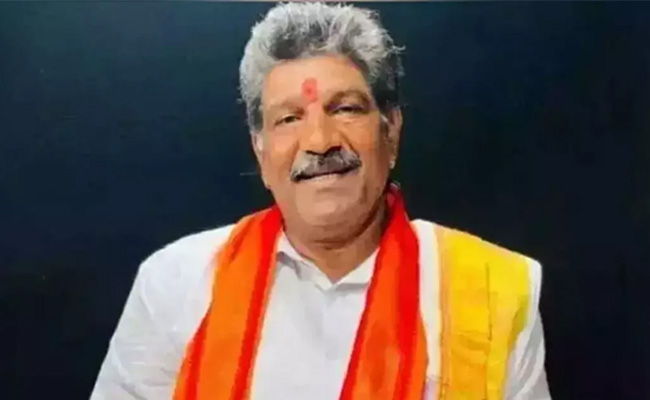
A year before the Karnataka Assembly elections, RSS functionary Kalladka Prabhakar Bhat made a controversial statement at a VHP event in Mangaluru, saying that “the saffron flag could replace the Tricolour as the national flag someday.” The same year, Bhat was invited to inaugurate the postgraduate students’ council at Mangalore University — an incident that many saw as proof of how deeply the RSS ideology has penetrated public institutions.
The Rashtriya Swayamsevak Sangh (RSS) describes itself as a cultural and nationalist organisation. However, its record and actions often tell a different story. Over the years, several of its leaders have made remarks against the national flag, the national anthem, the Constitution, and secularism. The organisation has also faced allegations of involvement in violence targeting minority communities, documented by judicial commissions and human rights groups.
The RSS Network: Cultural Front, Political Reach
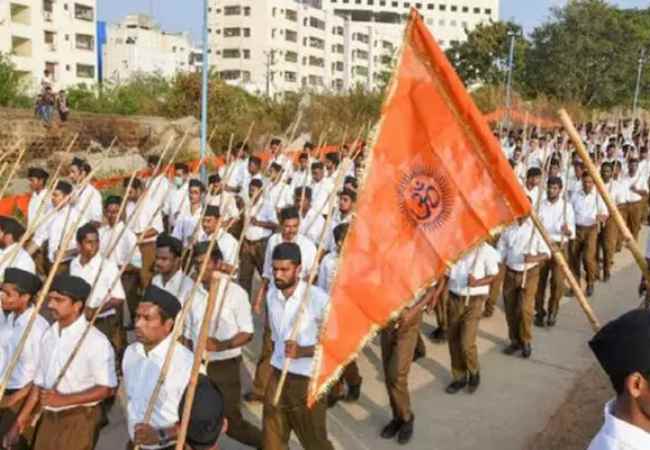
The RSS projects itself as a cultural movement, but its structure and influence are deeply political. Through its daily shakhas, paramilitary-style drills, ideological sessions, and a vast network of temples and educational institutions, it has built one of the largest organised networks in India.
The RSS can easily shift roles presenting itself as a cultural body in normal times, as a mobilising force during communal tensions, and as the BJP’s grassroots machinery during elections. This flexibility gives the organisation a wide reach and makes it a significant force in both social and political life.
A Wake-Up Call for Secular Governments
Non-BJP, secular state governments have recently started recognising the challenges posed by the RSS’s growing influence. In Karnataka, thousands of RSS Vijayadashami rallies were held across the state this year with full administrative support, even as other organisations faced restrictions.
The large turnout prompted Karnataka IT and Biotechnology Minister Priyank Kharge to write to Chief Minister Siddaramaiah, urging the government to regulate RSS activities in public spaces. Following this, Siddaramaiah directed the Chief Secretary to study the Tamil Nadu model a governance-based method of restricting RSS activities without imposing an outright ban.
The Tamil Nadu Model: Restricting Without Banning
The DMK-led Tamil Nadu government has developed a practical model to contain the RSS through administrative measures rather than confrontation. Using executive orders, police directives, and departmental circulars, the state limits RSS activities in government offices, schools, and public spaces. This approach avoids legal complications while ensuring that public institutions remain ideologically neutral.
It is a model that focuses on governance rather than politics using existing laws to prevent misuse of public property for ideological mobilisation.
Key Measures Taken by Tamil Nadu
- Restricting Use of Government School Premises
In September 2024, the School Education Department issued a circular instructing headmasters not to allow any external events on school premises without prior permission. Local authorities have since applied this rule to prevent RSS shakhas and non-school activities in government campuses.
- Detaining RSS Members for Violations
In October 2025, 39 RSS members were detained in Porur, Chennai, for holding a shakha inside a government school without permission. In another case, 47 workers were detained for trying to organise a Vijayadashami event in a government institution. These actions reinforced that public property cannot be used for political or ideological purposes.
- Ban on RSS Events in Government Premises
The Tamil Nadu government has prohibited RSS from holding shakhas, training camps, or public meetings on government land, in buildings, or in aided institutions. The aim is to prevent ideological indoctrination and maintain secularism in state institutions.
- Extending Restrictions to RSS-Affiliated Bodies
In February 2023, the Higher Education Department issued a notification barring student organisations affiliated with the RSS, such as the Akhil Bharatiya Vidyarthi Parishad (ABVP), from conducting political or ideological activities on campuses without prior permission. Vice-Chancellors and principals were directed to ensure that the secular ethos of universities like Anna University and Madras University is maintained.
- Denying Permissions for Route Marches and Rallies
On Gandhi Jayanti, the Tamil Nadu government denied permission for RSS route marches across the state, citing law-and-order concerns. The Madras High Court later allowed limited marches under strict conditions, including a participant cap, sound restrictions, and fixed routes. The RSS was also made responsible for maintaining order and cleanliness at the venues.
- Using Legal Remedies to Uphold Restrictions
While the Madras High Court later directed the police to allow route marches at select locations, the state appealed to the Supreme Court, defending its right to impose reasonable restrictions. This shows Tamil Nadu’s determination to use every available legal and administrative tool to maintain public order and prevent ideological influence in public spaces.
- Monitoring by the State Intelligence Wing
The Tamil Nadu Intelligence Wing regularly monitors RSS activities and submits quarterly reports to the Home Department. Based on these inputs, several RSS programmes have been stopped for violating state rules. In 2024 alone, 15 such events were cancelled in Chennai. The government also extended these restrictions to “quasi-government” premises like temples managed by the Hindu Religious and Charitable Endowments Department. Between 2023 and 2025, over 100 RSS event permissions were denied across Tamil Nadu.
For Karnataka, a Lesson in Secular Governance
For Karnataka and other non-BJP states, Tamil Nadu’s approach offers an example of how to protect secular governance within the law. The model avoids direct confrontation while ensuring that public institutions do not become tools of ideological influence.
Adopting such a model is not about political rivalry; it is about upholding the Constitution and the secular principles on which the country stands. When any organisation is allowed to hold mass rallies with full administrative backing, use schools or temples for mobilisation, and turn religion into a political weapon, it becomes a threat to democratic governance.
Tamil Nadu has shown that it is possible to act firmly and lawfully to preserve the state’s secular fabric. Whether Karnataka and other governments can implement similar measures with the same resolve and political courage will be a true test of their commitment to the Constitution.
Let the Truth be known. If you read VB and like VB, please be a VB Supporter and Help us deliver the Truth to one and all.
HC orders preservation of Sunjay Kapur's assets on plea by Karisma Kapoors' children

New Delhi (PTI): The Delhi High Court on Thursday directed preservation of the assets of late Sunjay Kapur, ruling that all "suspicious circumstances" raised by the industrialist's children from his marriage with actor Karisma Kapoor have to be completely removed by his third wife, Priya Kapur, before the acceptance of his purported last will.
Justice Jyoti Singh passed the interim order on an application filed by Karisma Kapoor's children to restrain Priya Kapur from alienating their father's assets, reportedly worth Rs 30,000 crore.
The interim application was filed in a suit by the children, challenging their late father's purported will of his assets.
"Having heard and on examination of the material on record, I have the considered view that all legitimate suspicious circumstances raised by the plaintiffs will have to be completely removed by defendant number one (Priya Kapur) before the document is accepted as the last will," the judge said.
"Plaintiffs have made out a prima-facie case that the assets which are subject matter need to be protected, preserved, pending disposal of the suit," she added.
Justice Singh ordered that the equity shareholdings in the three Indian companies of the deceased cannot be changed and also restrained the disposal of his personal effects, including artwork.
The court said if the assets are not preserved and Priya Kapur ultimately fails to prove the validity and genuineness of the will, the deceased's children from his marriage with Karisma Kapoor -- his second wife -- and his mother Rani Kapur would be deprived of their legitimate shares.
"I have restrained from alienating, transferring, pledging, liquidating or in any other manner changing the equity shareholdings in the three Indian companies. I have restrained from withdrawing the PF amount. I have restrained from withdrawing monies from the three accounts except to the extent of discharging liabilities towards the children," the judge said.
The court clarified that it has not passed the order with respect to immovable foreign assets.
A detailed copy of the verdict is awaited.
Sunjay Kapur died on June 12, 2025, after collapsing during a polo match in England. He had reportedly suffered a sudden cardiac arrest.