The ‘full term’ decision of the coalition government
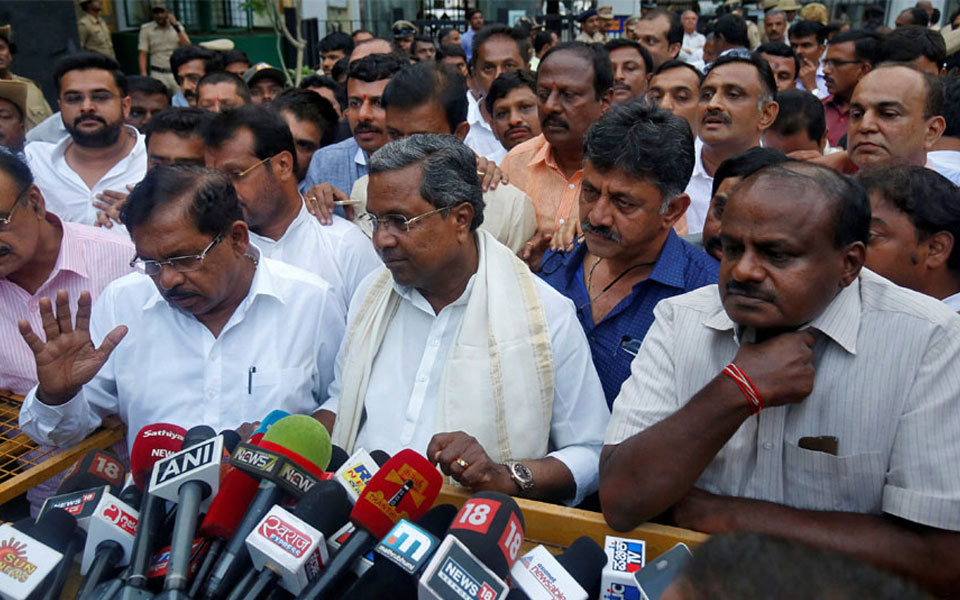
We all are well aware of the fact that state has a coalition government. It would be partial truth to say this government came to this agreement because they wanted to keep BJP out of power. Some people wanted to keep Siddaramaiah out of the power circles too. The results were conducive for that. If this coalition didn’t happen, would the JD(S) still maintain a distance from BJP? This question has no easy answer. Though Devegowda had said they would stay far from BJP, Kumaraswamy hadn’t bolstered it with his statement. He followed the wait and watch method. Even if JD(S) maintained a distance, the party feared that BJP would split their party and come to power. Congress stretched the hand of coalition having realized BJP would take the same route to form the government.
The desperation on this was so much that when Cong accepted HD Kumaraswamy as CM of the coalition government, the party didn’t have clarity on the aspect of whether he’d be the full term CM or for some particular time frame in the five years tenure they have. It has just been days since the coalition government has come into existence, the discussion on whether HDK is a full term CM is coming to the forefront. If this question has not been dealt with right now, this would definitely end the coalition government rather unceremoniously.
Was it imperative for Cong to join hands with JD(S) is the primary question. Even if JD(S) and BJP had formed the government, they would have never offered CM’s seat to HDK is the biggest truth. While accepting the ‘terms and conditions’; Cong should have negotiated clarity on whether it would be partial time by both parties in the CM’s chair. Both parties should have known keeping BJP out of power is important for both. But the results pushed DK Shivakumar and Parameshwar to be inevitable candidates. Siddu’s grip loosened on Cong and DKS held the reins. If JD(S) stretches hand of coalition with BJP, DKS and Parameshwar would have lost the opportunity. Hence, it was important to form the government immediately. And the ‘term’ discussion is in the forefront only now. While Parameshwar has said no decision has been taken on ‘full term CM’, HDK has been stating he would be the CM for the entire term. Siddu also reiterated Parameshwar’s words after discussion with high command of his party and said full term CM is something that wasn’t discussed earlier. That may mean HDK would have to vacate the seat after half a term. But Kumaraswamy has gone silent over the matter now. The silence is rather strategic too.
In less than 3 days of being in power, HDK has already spoken about ‘resignation’ because he feels he is at the beck and call of Cong High command and not that of the people of the state. ‘Loan waiver cannot be done in 24 hours. Farmers need to give me more time. If not, I’d waive off the loans,’ he says. Indirectly, he has indicated Cong is against loan waiver decision. ‘Beck and call’ words are against the spirit of democracy. Hence CM HDK has taken the voters and put them in the witness box. He says he does not need to be indebted to them because they didn’t give him majority seats. That he cannot waive off the loans in 24 hours is a fact.
HDK must have known he’d never get the majority to waive off loans, hence this promise was probably made in overconfidence. Today HDK sits in the CM’s chair owing to his own reputation, and not as a Cong man. If people wished for it, they could have given a massive blow to HDK by rejecting him and giving majority to BJP too. Hence HDK should know he is to be accountable to people of the state, and not Cong high command. To seek time to execute loan waiver is what a seasoned politician would do. The new CM has also threatened them with ‘resignation’ demon. Should the coalition government collapse tomorrow, HDK has already prepared his own pitch. This is an indirect warning to Cong too.
Let the Truth be known. If you read VB and like VB, please be a VB Supporter and Help us deliver the Truth to one and all.
KSRTC introduces gender ticketing in buses across Kerala
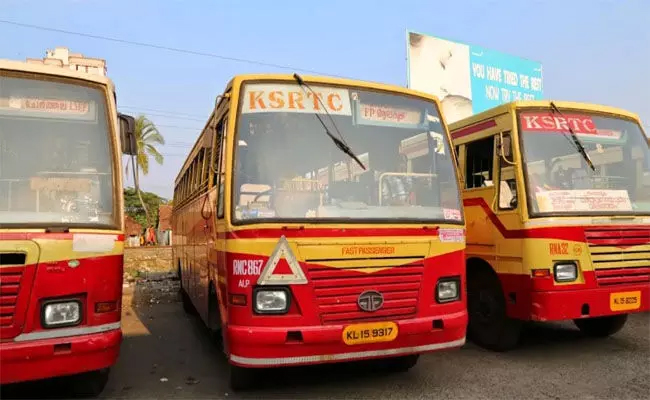
Thiruvananthapuram (PTI): The KSRCTC on Saturday began implementing gender ticketing in buses operating across the state.
According to a Kerala State Road Transport Corporation (KSRTC) circular issued on Friday, the gender ticketing system is intended to record whether a passenger is a woman, a man or a child in tickets issued on KSRTC buses from Saturday.
To facilitate the system, Electronic Ticketing Machines (ETMs) have been updated.
The circular stated that conductors in all KSRTC depots should record the gender category of passengers while issuing tickets through the ETMs.
Options for women, men, and children have been included in the ETMs to identify passenger categories when issuing tickets.
The printed tickets generated by the ETMs will also indicate the passenger's category, officials said.
The UDF had promised free KSRTC travel for women across the state during the Assembly election campaign.
UDF, which won 102 of 140 seats, would soon form the government after the Congress party finalises the discussion on the next Chief Minister.
The introduction of gender ticketing is being viewed as an effort to estimate the number of women travelling daily on KSRTC buses before implementing the poll promise.
Some conductors have reportedly raised concerns over the additional time required to record passenger details, especially during rush hours.