What Mamdani’s win means for the world
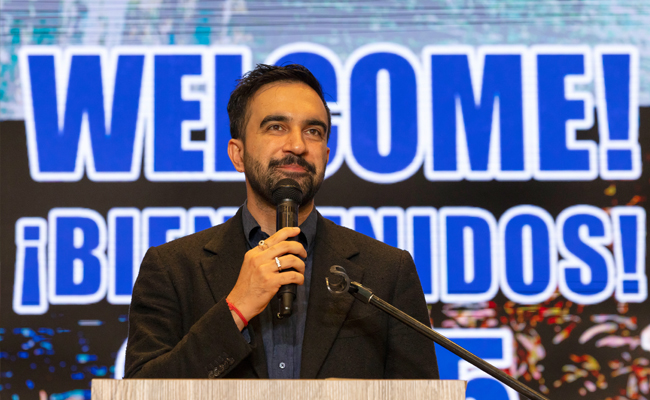
Zohran Mamdani has been elected as the new Mayor of New York City, the most populous and economically powerful city in the United States, often seen as a global hub for finance, commerce, and technology. The election drew worldwide attention and became one of the biggest political talking points in recent times. Mamdani’s victory as the first person of South Asian descent, the first Muslim, and the youngest in over a century to become New York’s mayor is nothing short of historic.
While these achievements alone are remarkable, Mamdani’s win carries deeper meaning, not just for American politics, but for the global political landscape. His rise to power in one of the world’s most influential cities is expected to create ripples across political systems and inspire movements far beyond the United States.
When the election process began, Mamdani wasn’t even considered a serious contender within his own Democratic Party. His chances were pegged at barely one percent, and many dismissed him as inexperienced. His turnaround from an underdog to the Mayor of New York is an inspiring story that will find a place in history. Standing up to some of New York’s biggest political heavyweights, Mamdani’s journey has become a modern-day David versus Goliath story, driven by perseverance, conviction, and a clear ideological purpose that will inspire young politicians across the world.
As the campaign progressed, several powerful leaders, including the US President Donald Trump, openly opposed him. Major American corporations also poured money into the race against Mamdani. According to Forbes, at least 26 billionaires collectively spent more than $22 million to support his opponents and run negative ads. Unmoved by these efforts, Mamdani stayed focused on grassroots support. His campaign attracted over 40,000 small donors, with an average contribution of just $98, the lowest in the race. In doing so, he proved that corporate money in politics has its limits.
Besides financial opposition, Mamdani faced intense racist and Islamophobic attacks. He was accused of sympathizing with terrorism, with his main opponent Andrew Cuomo even endorsing such sentiments indirectly. Despite this, Mamdani never hid his Muslim identity and campaigned on a message of inclusion and equality. Instead of responding to hate with hate, he stayed calm and focused on real issues that mattered to people.
His promises, from free childcare and public-funded affordable housing to city-owned grocery stores, rent freezes, and higher taxes on the wealthy, resonated deeply with ordinary New Yorkers. People realized that these were the issues that truly impacted their lives. At a time when most politicians rely on empty rhetoric and divisive narratives, Mamdani’s focus on everyday concerns set him apart.
Unlike many politicians who shy away from ideological labels, Mamdani proudly called himself a “Democratic Socialist” and promised to live by those values. In the heart of global capitalism, his unwavering ideological clarity stood out. Even when Trump mocked him as a “Crazy Marxist,” Mamdani remained composed and refused to engage in vindictive politics.
In a world witnessing rising anti-immigrant sentiment and nationalist movements, Mamdani’s election, an immigrant becoming the Mayor of New York, offers hope. It reinforces the idea that migration continues to be a powerful force shaping human progress and cultural exchange.
During the campaign, a video of Mamdani eating biryani with his hands went viral. While many saw it as a celebration of his cultural roots, others mocked it as “unsanitary” and “third world.” Such comments reflected a lingering colonial mindset rooted in Western superiority. Mamdani, however, stayed true to his heritage, even playing “Dhoom Machale” at his victory event.
What made Mamdani stand out even more was his clear stand on the Palestinian issue. He called Israel’s actions in Gaza a “genocide” and compared the situation to “apartheid.” In a city with about 1.3 million Jewish residents, the second-largest Jewish community in the world, his position was both bold and principled. Mamdani declared that as mayor, he would honor any International Criminal Court warrant against Israeli leaders, including arresting Benjamin Netanyahu if he visited New York. While critics accused him of antisemitism, Mamdani clarified that he opposed Zionism, not Judaism, standing firm on humanitarian grounds.
Even after his victory, it’s widely expected that Mamdani will face hurdles in governing. Trump had earlier threatened to cut federal funding to New York if Mamdani won. But Mamdani has remained defiant, saying he would not be intimidated and would instead asked Trump to “turn the volume up.” His resilience offers a lesson to leaders everywhere about standing firm on values, even under pressure.
In the United States, both major political parties, the Democrats and Republicans are often seen as “the same wine in different bottles,” with little difference in ideology or policy. It remains to be seen whether Mamdani’s victory will push the Democratic Party toward ideological introspection.
Mamdani’s victory has undoubtedly turned a new leaf in the present political scenario across the world. It has opened about a new ray of hope for the dwindling “issue based inclusive politics” all around the globe. It is curious to know how Mamdani’s own journey unfolds after a new chapter in his political journey. Whether his promise of issue based inclusive politics with “Democratic Socialism” at its helm reaches its logical end is another equally curious thing to watch out in the near future.
Let the Truth be known. If you read VB and like VB, please be a VB Supporter and Help us deliver the Truth to one and all.
Lt Gen NS Raja Subramani to be India's next Chief of Defence Staff
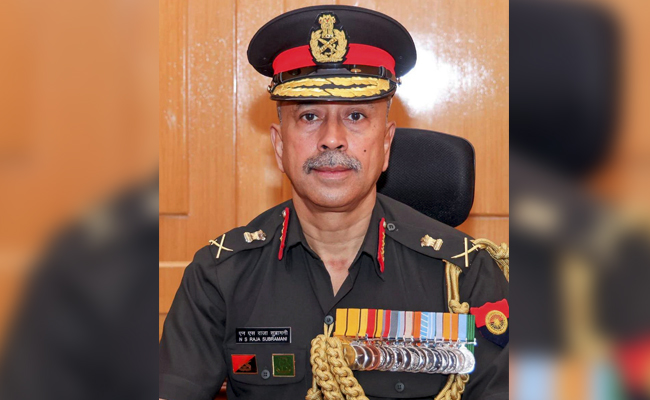
New Delhi (PTI): Lt Gen NS Raja Subramani will be India's new Chief of Defence Staff (CDS) and his key task is set to be to implement the ambitious theaterisation plan that seeks to ensure tri-services synergy.
He will succeed Gen Anil Chauhan whose tenure will come to an end on May 30.
Gen Chauhan, a former Eastern Army Commander, took charge as the country's senior-most military commander in September 2022, over nine months after the first CDS, General Bipin Rawat, died in a helicopter crash in Tamil Nadu.
The government has appointed Lt Gen NS Raja Subramani (Retd) as the Chief of Defence Staff, who will also function as the secretary of the Department of Military Affairs, the defence ministry said on Saturday.
Lt Gen Subramani is currently serving as the military adviser to the National Security Council Secretariat.
Prior to that, he was the Vice Chief of the Army Staff from July 1, 2024 to July 31, 2025, and was General Officer Commanding-in-Chief of the Central Command from March 2023 till June 2024.
As Chief of Defence Staff, Lt Gen Subramani's primary task will be to implement the theaterisation model to bring in tri-services synergy by rolling out integrated military commands.
The officer is a graduate of the National Defence Academy and the Indian Military Academy. He was commissioned into the eighth battalion of the Garhwal Rifles on December 14, 1985.
Lt Gen Subramani is an alumnus of Joint Services Command Staff College, Bracknell (UK), and the National Defence College, New Delhi. He holds a Master of Arts degree from King's College London and an MPhil in defence studies from Madras University.
In his illustrious career spanning over 40 years, Lt Gen Subramani has served across a wide spectrum of conflict and terrain profiles and tenanted a host of Command, Staff and Instructional appointments.
He commanded the 16 Garhwal Rifles in Counter-Insurgency operations in Assam as part of Operation Rhino, the 168 Infantry Brigade in Jammu and Kashmir, and the 17 Mountain Division in the Central Sector, all during a challenging operational environment.
He also has the distinction of commanding two Corps, including the Indian Army's premier strike Corps on the Western Front.