When questioning government becomes Un-Indian
Should one not question the government if it fails to protect the nation’s borders? Is it unpatriotic to ask why foreign troops are occupying Indian land or attacking our soldiers? And more importantly, who decides what makes someone a “true Indian”?
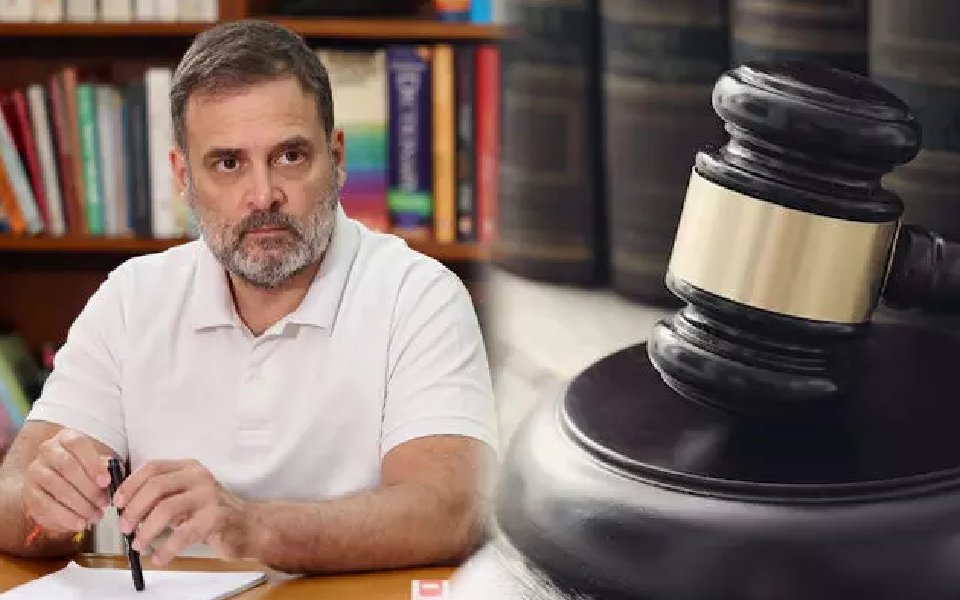
These uncomfortable questions have returned to the forefront after a recent observation by the Supreme Court. In a case involving Rahul Gandhi, the Court remarked that “a true Indian would not make such a statement.” This was in reference to Gandhi’s past remarks questioning the central government’s silence over the deadly Galwan clash at the China border, an incident where Chinese troops had reportedly occupied over 2,000 square kilometres of Indian territory and launched a brutal assault on Indian soldiers.
Gandhi had raised these concerns during the 2022 Bharat Jodo Yatra and even earlier in Parliament. He questioned the government’s handling of the border situation a subject that had already sparked heated debate in the House. A defamation case was filed against him for these remarks. In response, Rahul Gandhi approached the Supreme Court, challenging the summons issued by a Lucknow court. The Allahabad High Court had earlier stayed the summons.
While the Supreme Court has now stayed the proceedings, it did not hold back from making a remark that has since sparked outrage. Its comment that “a true Indian would not say such a thing” has added a dangerous layer to the ongoing national conversation. Already, in the name of citizenship documents, we’ve seen people being made to prove their identity, from ration shops to the Election Commission. Now, the highest court of the country has indirectly introduced a new filter: what one must or must not say to be considered “truly Indian.”
This is alarming.
Ironically, the same Supreme Court has on multiple occasions defended the right to free speech. Just this March, it quashed an FIR against Congress MP Imran Pratapgarhi for posting a poem on Facebook, asserting the need to protect freedom of expression. The Court has also warned against curbing dissent in the name of national security. It has consistently said that hate speech should not be allowed under the guise of free speech. But in this case, the Court seems to have not only questioned Rahul Gandhi’s right to speak, it has gone a step further to question his very Indianness.
Rahul Gandhi is not just any citizen. He is a democratically elected Member of Parliament. And yet, simply for questioning the government, he faced the disqualification. When Parliament refuses to allow serious discussion on issues like border security, where else can opposition leaders take their concerns, if not to the people? If even that space is now being policed, then democracy itself is in danger.
When our soldiers are killed, when our land is occupied, is it not the duty of every Indian to question the government? And if an elected leader does just that, asks questions, demands answers, and is told that such statements make him less of an Indian, then we must ask: who gets to decide what being Indian means?
The judiciary, which is expected to uphold the Constitution and protect dissent, must not blur the lines between patriotism and blind loyalty. Otherwise, we risk normalising a mindset where questioning those in power becomes a crime, and silence is rewarded.
Every time something happens along the Pakistan border, even something minor, BJP leaders, including the Prime Minister, don’t hold back from making statements. But when Chinese troops invade our land and harm our soldiers, opposition leaders are told to keep quiet. And now, even the Supreme Court appears to echo that silence.
Time and again, when the opposition asks hard questions on national security, the response is that such statements “lower the morale of our soldiers.” But when a government hides its own failures behind our soldiers’ sacrifices, who else if not opposition leaders are supposed to raise their voice?
This isn’t new. Back in the 1960s, when China launched an attack on India, the then Prime Minister Nehru was widely criticised and held responsible for the deaths of Indian soldiers. Even when the slogan “Hindi-Chini Bhai Bhai” was being promoted, China betrayed India. Hundreds of our soldiers died. The country lost precious territory. The BJP still blames Nehru for that defeat. Books like Himalayan Blunder, written by military officers, questioned leadership decisions at the time. Yet, no one called them “anti-national” or questioned their Indianness.
When attacks like Pulwama happen, or fighter jets crash during high-stakes operations like Operation Sindhoor, the ruling party wraps itself in the flag and avoids all accountability. But when Rahul Gandhi raises his voice about Chinese aggression, he is told even by the Supreme Court that a “true Indian” would not speak this way.
What does this say about the current state of our democracy?
It says that authoritarianism is no longer limited to political circles. It is now creeping into institutions that are supposed to check power, not protect it. When leaders are told what not to say, when dissent is painted as betrayal, and when the definition of an Indian is narrowed to suit political convenience, we have a crisis on our hands.
In a democracy, the job of the opposition is not to clap for the government, but to question it. Especially when soldiers die, and land is lost.
And if that act of questioning now makes someone less Indian, then perhaps it’s not Rahul Gandhi we should be worried about, it’s the very idea of India we need to protect.
Let the Truth be known. If you read VB and like VB, please be a VB Supporter and Help us deliver the Truth to one and all.
Lt Gen NS Raja Subramani to be India's next Chief of Defence Staff
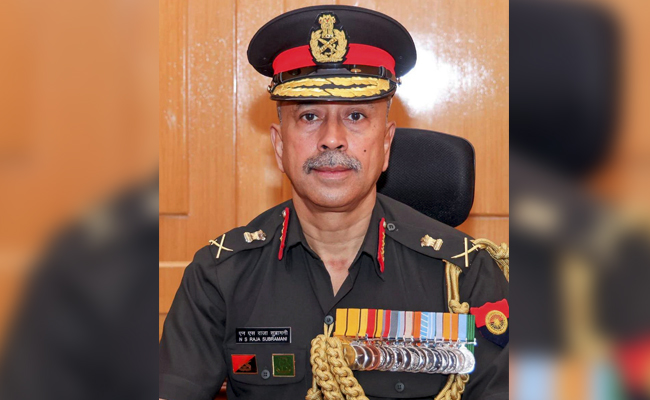
New Delhi (PTI): Lt Gen NS Raja Subramani will be India's new Chief of Defence Staff (CDS) and his key task is set to be to implement the ambitious theaterisation plan that seeks to ensure tri-services synergy.
He will succeed Gen Anil Chauhan whose tenure will come to an end on May 30.
Gen Chauhan, a former Eastern Army Commander, took charge as the country's senior-most military commander in September 2022, over nine months after the first CDS, General Bipin Rawat, died in a helicopter crash in Tamil Nadu.
The government has appointed Lt Gen NS Raja Subramani (Retd) as the Chief of Defence Staff, who will also function as the secretary of the Department of Military Affairs, the defence ministry said on Saturday.
Lt Gen Subramani is currently serving as the military adviser to the National Security Council Secretariat.
Prior to that, he was the Vice Chief of the Army Staff from July 1, 2024 to July 31, 2025, and was General Officer Commanding-in-Chief of the Central Command from March 2023 till June 2024.
As Chief of Defence Staff, Lt Gen Subramani's primary task will be to implement the theaterisation model to bring in tri-services synergy by rolling out integrated military commands.
The officer is a graduate of the National Defence Academy and the Indian Military Academy. He was commissioned into the eighth battalion of the Garhwal Rifles on December 14, 1985.
Lt Gen Subramani is an alumnus of Joint Services Command Staff College, Bracknell (UK), and the National Defence College, New Delhi. He holds a Master of Arts degree from King's College London and an MPhil in defence studies from Madras University.
In his illustrious career spanning over 40 years, Lt Gen Subramani has served across a wide spectrum of conflict and terrain profiles and tenanted a host of Command, Staff and Instructional appointments.
He commanded the 16 Garhwal Rifles in Counter-Insurgency operations in Assam as part of Operation Rhino, the 168 Infantry Brigade in Jammu and Kashmir, and the 17 Mountain Division in the Central Sector, all during a challenging operational environment.
He also has the distinction of commanding two Corps, including the Indian Army's premier strike Corps on the Western Front.