When the oppressed fail to understand the oppressed
VB Editorial | August 18, 2025
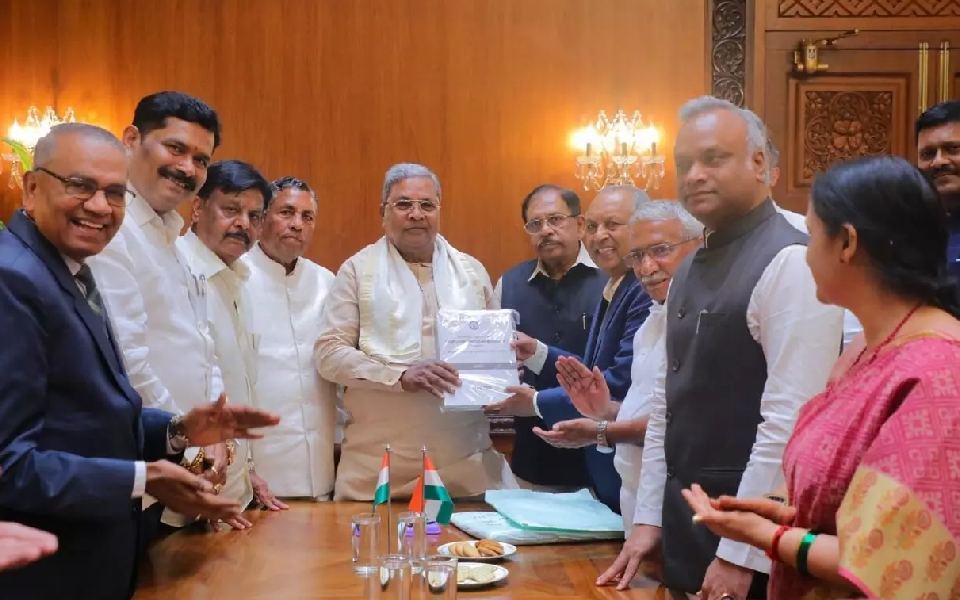
“Who else but the ones who have suffered can truly understand the pain of the suffering?” asked Akka Mahadevi in one of her vachanas. Her words carry a timeless truth: only those who have tasted pain can truly recognise it in others. Gandhi and Ambedkar are often compared through this lens. Gandhi, despite his compassion, could never feel the sting of untouchability the way Ambedkar did, because Ambedkar lived it, carried it, and fought it from within.
But the same truth now shows us its bitter side. The demand for internal reservation within the Scheduled Castes has revealed an uncomfortable reality, sometimes, even the oppressed fail to understand the pain of the oppressed.
In Karnataka, instead of building a united struggle for meaningful implementation of reservation, Dalit communities are fighting each other. Suspicion and mistrust are being fuelled. Instead of seeing the real adversaries, Dalits are searching for enemies within. In this, the upper castes have already won half the battle. By making Dalits clash among themselves in the name of reservation, they have diverted attention away from the real fight, the fight against the caste system itself.
And what has become of reservation today? Across the country, dominant castes that already enjoy wealth and power now demand their share of it. The so-called “poor” among the upper castes managed to secure 10% reservation for themselves, without waging any long struggle, without facing the humiliation that Dalits endured for centuries. This single act has weakened the very spirit of reservation. It is like handing the keys of the henhouse to the fox. What chance then do the hens have? That is exactly the situation Dalits find themselves in.
Upper-caste politics has grown shrewder. Knowing that reservation cannot be scrapped openly, the strategy now is to dilute it step by step. And it is working. Dominant castes keep inching into the fold of reservation, cornering opportunities. Meanwhile, Dalits despite having reservation on paper, remain underrepresented in the judiciary, in the executive, and across positions of real power.
The Madiga community complains that the Holeyas take more than their share. It may be true that Holeyas got relatively more benefits. But the larger question is being ignored: how much has reservation as a whole really transformed even the Holeyas’ lives? How many educated Dalit youth today, despite having degrees, are still unemployed? These questions cut deeper than internal rivalries.
When the upper castes secured their 10% quota, Madigas and Holeyas should have stood shoulder to shoulder and protested. But no such united struggle came. Protests, if any, were scattered, symbolic. Meanwhile, the Modi government is pushing privatisation year after year. With fewer government jobs left, reservation itself is losing meaning. If it is to survive, it must extend into the private sector. Yet, no serious mass movement has been waged for this demand.
During the announcement of internal reservation, the Supreme Court revived the “creamy layer” debate. But why is it that only the cream of the Dalit pot is visible to our judiciary? When it is clear who is snatching away their share of reservation, is it not the greatest irony that Dalits are now dividing themselves into left and right factions, searching for enemies within? Madigas paint Holeyas as oppressors; Holeyas see Madigas as rivals. But do Dalit leaders really not know who has truly grabbed their rights? Or are they being dangled as mere bait, fish caught in the nets of upper-caste political strategies?
After Justice Nagamohan Das submitted his report, insecurities deepened further. Holeya leaders expressed fear that their community would face injustice, sparking anxiety within Madiga groups. Instead of calming these fears with facts, many leaders fanned them, acting less like protectors of their people and more like pawns of upper-caste politics. If Dalits are split in two and internal reservation is pushed through, the results will not strengthen them. It will weaken them. Socially, Dalits will be pushed to the margins. Politically, their representation will shrink. And that political shrinking will bring harsher consequences for their social and economic future.
Akka Mahadevi’s words remind us that those who have lived through pain must be the first to embrace others’ pain as their own. But today, Dalits in Karnataka risk forgetting this wisdom. By allowing division, they risk falling into the very trap set by the caste system itself.
The time has come to see clearly who the real adversary is. Dalits must stop mistaking each other for enemies. They must unite with their grassroots brethren, not fight them. Otherwise, history will record this moment as a tragedy: when the oppressed failed to understand the oppressed.
Let the Truth be known. If you read VB and like VB, please be a VB Supporter and Help us deliver the Truth to one and all.
Real Madrid fines Valverde and Tchouaméni half a million euros each for altercation
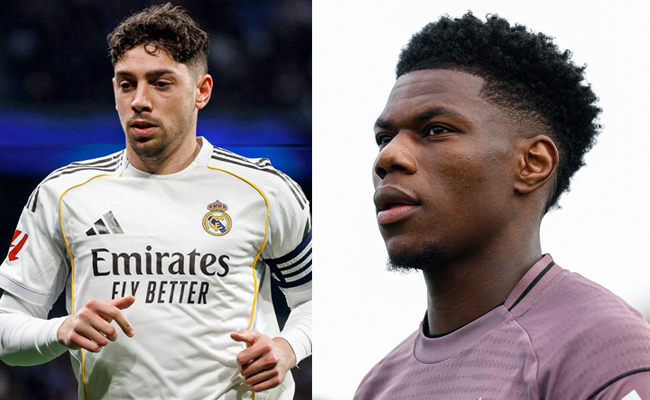
Barcelona (AP): Real Madrid slapped players Federico Valverde and Aurélien Tchouaméni with half-a-million-euro ($588,000) fines on Friday for their altercation during practice.
The massive fines came a day after the midfielders tussled when the team trained. Valverde said in a post on social media on Thursday that no punches were thrown. But Valverde knocked his head on a table and he suffered a small cut that required a brief hospital visit.
On social media, Valverde initially called it a “meaningless fight” with a teammate and said “everything has been blown out of proportion."
His employers, however, considered it a significant enough breach of team discipline to nail both Valverde and Tchouaméni with fines that bite even the bank account of a top soccer player. The half-a-million euro penalties reflect the reputational damage the club was enduring in a chaotic end to a disappointing season.
In a statement, the 15-time European champion said its disciplinary action was concluded after both players expressed to the club “their complete remorse for what happened and apologized to one another.”
Madrid added they also apologized to their teammates, the coaching staff and club supporters, as well as showing their willingness to accept whatever disciplinary action the club deemed “opportune.”
Tchouaméni was back training with Madrid on Friday, two days before they play at Barcelona in a clasico. Madrid has to win otherwise Barcelona will be crowned La Liga champion.
After being notified of the fine, he posted a public apology to the club and its fans on social media.
“What happened this week in training is unacceptable,” Tchouaméni wrote. "I say this while thinking about the example we are expected to set for young people, whether in football or at school.
“Above all, I am sorry for the image we projected of the club.”
Valverde was not at practice due to the head knock.
Both players are set to play in the World Cup next month, with Tchouaméni playing for France and Valverde for Uruguay.
Chaotic end to a poor season
===================
The run-in between the players, who for seasons have played side by side in Madrid's midfield, came after they argued this week in previous training sessions. But tempers boiled over on Thursday. Spanish media was rife with reports that the players previously disagreed over the club's decision to let coach Xabi Alonso go after just months on the job.
It was not the only altercation involving Madrid players during training this week. Álvaro Carreras confirmed he was in a “minor” incident with a teammate. Spanish media said he and fellow defender Antonio Rüdiger got into a scuffle.
Álvaro Arbeloa, the coach who was promoted from Madrid's reserve team when Alonso was fired in January, will face tough questions on what went wrong inside the changing room when he gives a press conference on Saturday ahead of the clasico at Camp Nou.
Madrid is facing a second consecutive campaign without a major trophy amid rumors in the Spanish media that club president Florentino Pérez is considering bringing back Jose Mourinho to straighten out his underperforming team.