Why does govt fear Koregaon?
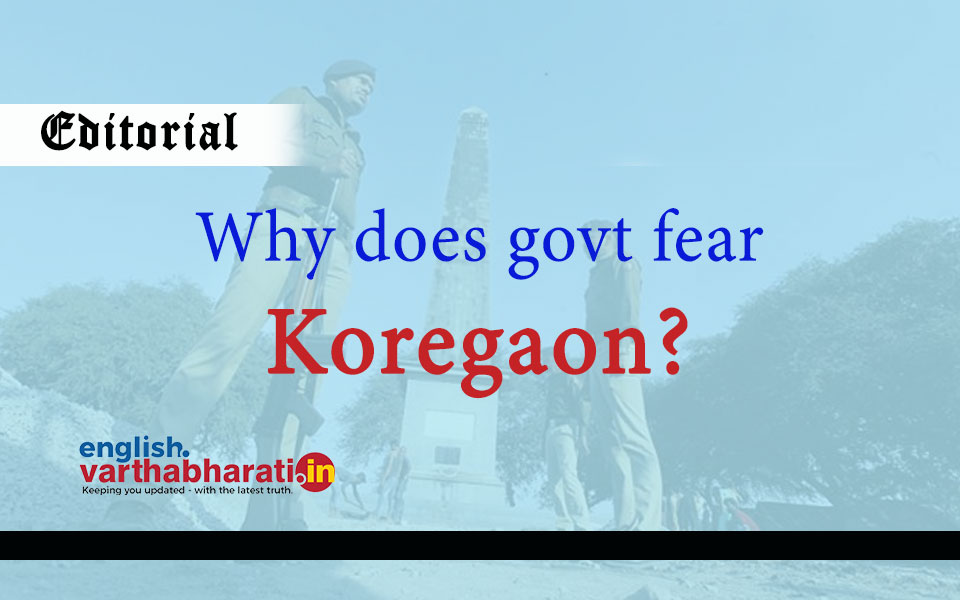
Today is Koregaon Vijayotsava Day. As is the normal practice, thousands of Dalits will gather around Koregaon Vijay Stambh to pay their respects. But then, the whole place is surrounded by policemen. The government seems to have decided to stop the celebration in some way or the other.
Last year Sangh Parivar and police department together had launched an attack on the Dalits who had set out to celebrate Koregaon Vijay Diwas. The government has foisted many cases on those who participated in the procession and jailed them under various charges.
This year, Koregaon has been turned into a fortress. Will the Dalits be able to break this security cordon and reach their symbol of resilience that lies inside the fort, remains to be seen. Ambedkar started the practice of paying obeisance to Koregaon Vijay Stambh on January 1, 1927.
For the first time, he had reached Koregaon with his followers and paid respects to Dalit Mahar soldiers who were martyred in a small ceremony held at Bhima Koregaon.
He showed to the Dalits of this country for the first time that Koregaon is a symbol of pride and victory. This is the day when just 500 Mahar soldiers defeated an army of more than 2000 people belonging to Peshwa Bajirao. Koregaon day is about celebrating the victory of Dalits against the casteism of Peshwas in the history of this country.
The government is now eyeing this celebration and wants to abort it. The reason behind this is pretty obvious. This victory is a triumph against the same ideology that the Sangh Parivar and RSS is trying to impose on the people of this country.
Since the Dalits crushed it under their feet, this day is humiliating for the Sangh.
Hence the government wants to end this celebration. The history of Koregaon is somewhat a glowing remainder for the Manuvadis of what they couldn't erase off people's minds. Which is why this attempt by the government to undo this part of history, sponsored by the government.
Shivaji, no doubt, is among the most prominent rulers that lived in India. Sangh Parivar is pushing he hindutva agenda by invoking the name of Shivaji. RSS has partially succeeded in twisting the narrative of how the Dalits and lower castes fought for Shivaji resisting the Mughal invasion. We have e to understand that the Sangh wants us to accept the Peshwa version of hindutva by way of referring to Shivaji. Peshwas were ministers in the palace of Shivaji who later usurped power from his hands and ruled the regions themselves.
They were known for loot, plundering and violence all across the country. Their armies even looted the temples and mutts. The attack on Sringeri mutt in Karnataka and Bangladesh, and the violence that followed is still a hunting part of history for people here.
When Shivaji built an army against the Mughals he was supported by Dalits, Muslims and lower castes.
Shivaji is not from the Maratha community. He belonged to the Bhonsle community which is essentially lower caste. His army included men from Muslim, Koli, Bhandari, Mahar, Shenavi, and other members from across 56 communities that were essentially lower caste.
All his 11 commanders in chief were Muslims. In a letter written to the queen in 1672, an English officer John Fire mentions about 66,000 muslim soldiers in Shivaji's army. About 11 of his his close security guards were Muslims.
This shows his trust on a community in his fight against the Mughals. When he went to meet Afzal Khan, one of his bodyguards was a dalit and the other was a Muslim. One of Afzal Khan's security guards was a Kulkarni. When Kulkarni launched an assault on Shivaji to kill him, he was done to death by Shiva, a dalit, who was Shivaji's guard.
This is mentioned in Abhang written by Sant Tukaram that if not for Shiva, Shivaji wouldn't have survived. At the same time, we also need to take into consideration the fact that Rajputs and Brahmins had openly joined hands with the Mughals, and they fought for the Mughals. Mughal army chief Raja Jayasimha was a Rajput.
When he fought Shivaji, he had performed Koti Chandi havan praying for the victory of Mughals. About 400 brahmins had taken part in this event.
Jayasimha had spent about Rs 2 crore for this, a whopping amount during those days. Shivaji and his son Sambhaji were held in this war, to Jayasimha.
A Muslim soldier paid with his own life and set Shivaji free.
After all that, Brahmins posed challenges for Shivaji's coronation as well. Their only problem was that he was from lower caste and shouldn't be occupying a seat of power.
A Kashi returned Brahmin priest Gaga Bhatta was brought forcibly to perform the rituals. When he had to apply Tilak on Shivaji's forehead, he chose to do this with his left toe instead of using his finger. Jyotiba Phule remembers this as a dark day in the history of India.
Shivaji built an army of Dalits and Muslims to fight the Mughals and even succeeded. Then the Peshwas snatched the kingdom from Shivaji's hands. Peshwas were Chitpavan brahmins and their caste came to forefront again in this fight for power.
Situation of Dalits went from bad to worse with those in the army being humiliated and chased out. This hit the peak during the time of second Bajirao.
At the same time, British waged a war against Bajirao. The team of Mahars who had had enough at the hands of their king, joined hands with the British. The team of Mahars who fought an army of more than 20,000 soldiers of Bajirao, won the war.
Impressed by this victory, British erected a pillar of victory to commemorate this moment of glory for the Mahars. While Shivaji brought all together, the Peshwas split then all on caste and surrendered the whole region to the British by making it easy for them.
After this victory, Mahar regiment was started in British army. For the very reason, Koregaon is a question of life and death for the identity of Dalits.
To stop this celebration is to challenge the dalit pride.
This country does not need the Hindutva of Peshwas but that of Shivaji's. If the conspiracy of bringing in the ideology of Peshwas in the guise of Shivaji has to be stopped, Koregaon has to Demian alive in the hearts of every indian.
If the government tries to stop the celebration forcibly, it may lead to violence. By trying to stop the celebrations, the government is also attempting to defeat the ideology of Ambedkar. This is highly condemnable. The government has to ensure the celebration goes on without any problems by supporting and providing it all the security needed.
Let the Truth be known. If you read VB and like VB, please be a VB Supporter and Help us deliver the Truth to one and all.
Punjab CM Mann lays foundation stone of Rs 14.63 crore sports stadium in Sangrur
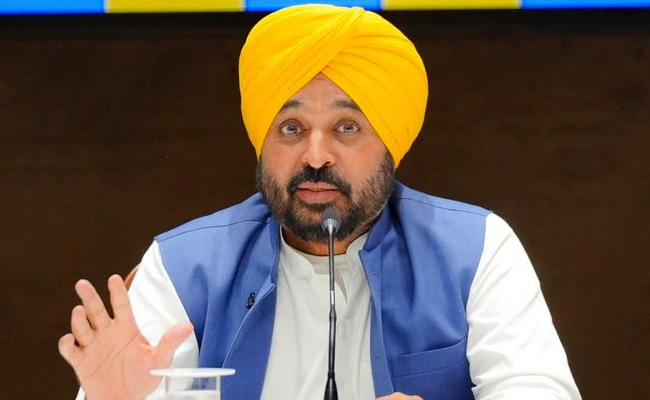
Sangrur (PTI): Punjab Chief Minister Bhagwant Mann on Thursday laid the foundation stone of a Rs 14.63 crore modern sports stadium here, underscoring that expanding access to quality playgrounds alongside a strong education system is key to steering the youth towards "purpose, performance, and global achievement".
The stadium coming up on 4.38 acres in Satouj will offer professional training and host a wide range of sports including badminton, handball, judo, netball, basketball, volleyball, football, gymnastics, kabaddi and karate, according to an official release.
"It is a historic day for the region as this stadium is coming up at a cost of Rs 14.63 crore. This stadium will be constructed over an area of 4.38 acres, and the complex will host various sporting activities," Mann said.
"The stadium will have a 200-metre athletic track, pavilion for spectators and players and a multipurpose indoor sports hall," he said.
While highlighting the wide range of facilities being created, Mann said professional training opportunities will be provided to children and youngsters in the stadium, adding that this project will ensure that the area emerges as a sports hub.
Emphasising the importance of balanced development, he said, "When there is a good school for education and a proper ground for sports, a child can bring glory to their village, state, and country on the global stage."
Reaffirming the Punjab government's focus on youth development, Mann said, "It is a matter of immense pride and satisfaction that the Punjab government is successfully providing world-class facilities for education and sports."
This project will help in further breaking the backbone of drugs by fostering sporting culture in the state, and it will help in channelising the unbounded energy of youth of state in a positive manner, he said.
Such stadiums will play an important role in helping the youth stay away from the curse of drugs and in order to encourage the youngsters to realise their dreams of winning medals in national and international sporting events, the CM said.
Later, Mann launched an ultra-modern community health centre here that aims to benefit the residents of 85 villages. It is equipped with round-the-clock emergency services, surgical facilities, treatment for serious illnesses and specialist care for children, he said.
Mann alleged that previous governments neglected regions like Dirba and kept development restricted. He said his government is reversing this by investing public money back into villages through hospitals, schools, libraries and roads.
"To impart quality health services to people, we have dedicated the CHC at village Kauhrian... This ambitious project has been completed at a cost of Rs 13.23 crore and the centre has a capacity of 30 beds," he said.
He further noted, "The CHC will also have paediatric specialists for treating children's diseases, and free treatment along with all necessary tests for mothers and children will be provided."
Mann added that dental treatment will also be provided by a specialist at the facility.