World peace in the shadow of nuclear weapons
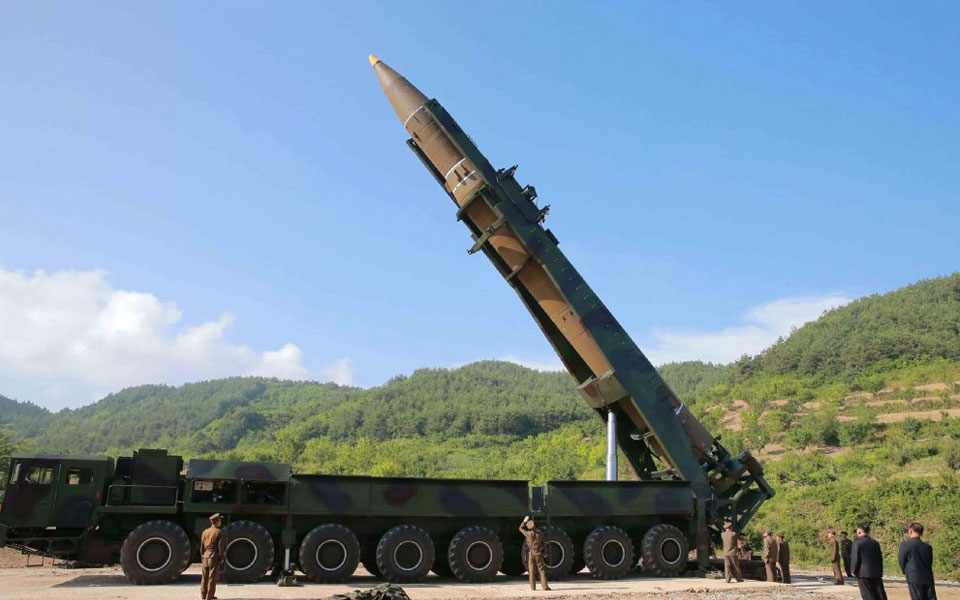
The recent developments pertaining to world peace really make us wonder if the whole world is peaceful because of nuclear weapons. Would America, which launched an attack on Iraq on the pretext of that country possessing weapons of mass destruction, stay mum if Iraq actually had possessed those deadly weapons? This question remains unanswered even till date.
A nuclear war is just waiting for a tipping point to be unleashed across the globe is a fact well known to all. However, it should be irony of times that if peace prevails in the world today, it is also because of the nuclear weapons that are sitting duck somewhere. Their presence is threatening enough. Powerful nations are declaring war upon each other in their talks. Small countries that do not have nuclear weapons are being taken under the wings of stronger nations.
On one hand, nations talk about nuclear disarmament, and on the other they are demonstrating to smaller nations the inevitability of possessing nuclear weapons. Big countries do not want smaller nations to have nuclear weapons. If they do, the big ones force small nations to give up the nuclear weapons. Today, the situation is such that small nations would be consumed with fear for their security if they do not have those weapons. This is the contradictory situation that exists in the world. Big nations that preach peace are also equally responsible for wars across the world.
Let’s consider North Korea and United States of America. Both nations would speak in most threatening terms with each other that they’d press the button to unleashing nuclear warfare with each other’s nation as target. A war was almost predicted to be certain.
The world could heave a sigh of relief after talks transpired between America and North Korean leaders Donald Trump and Kim Jong Un respectively at the meeting in Singapore on June 12, 2018. Trump has reiterated his commitment to offer security assurances and Kim has offered an assurance to get rid of nuclear weapons in North Korea. Kim and Trump held a press conference together and declared that America would put a stop to joint military marches with South Korea. These marches had kept North Korea under a war threat since long. Not only this, America declared that it would withdraw 32,000 soldiers from the region. But the other nations seldom believe that North Korea will completely disarm itself of nuclear weapons. So long as America sets the rules of the game, other countries will seldom pay heed to it.
History is testimony that America is solely responsible for the competition over stocking up on nuclear warfare since long. America dropped atom bombs on Hiroshima and Nagasaki in 1945. The bombs wreaked hellish havoc in the history of mankind. After this destruction, American President Harry Truman had said the country was ready to drop nuclear bomb on North Korea in 1950, just five years after Hiroshima and Nagasaki destruction.
From then on, America as continued its threatening stance on the world regarding an assault on other countries, especially North Korea, using nuclear weapons. America added nuclear weapons in Korean region. As a response to this, North Korea had to make and stock up nuclear weapons in order to ensure its own safety should things go bad around its borders. North Korea tested nuclear weapons in 2006, 2009, and 2013 only to send across a strong message. The President of America George Bush had categorized North Korea along with Iran when America went to war with Iraq in 2002. Hence North Korea often feared an America attack anytime. Even then, North Korea had said it was ready for a nuclear disarmament to peace talks and economic growth, should America engage in peace talks with them.
If America thinks a country can be attacked or brought under control by imposing sanctions, this method has been a grand failure even by its own experience with North Korea. At some point North Korea threatened to launch a nuclear attack on America sooner or later.
North Korea depends on global trade for its food supply since the country has hilly terrain that is not suited for cultivation and growing food. The country which gave 60% exchange to its import was being hounded with sanctions. North Korea was projected as an evil country, using all forms of mass media. This forced North Korea to secure its nuclear weapon stock with even more care.
A situation was created where North Korea suspected the country to be vulnerable to an attack from external forces, especially America anytime, and this forced the country to clam up. Because North Korea entered the game as an equal player, America stepped back for a bit and both met as equals in this game. With things having reached this stage, it seems like a miracle that both countries have come together on conducive and responsible terms. One can never forget the role of South Korea President Moon. Now the onus lies on America to stay committed to its words and ensure peace prevails between both countries after ages, minus the nuclear weapons.
This changed situation has a very significant message for India as well. The immature politicians in India keep speaking irrelevant things against Pakistan and declare verbal war against the neighbouring country every now and then. This has given rise to insecurity among both nations. Whenever India tested nuclear weapons Pakistan has done the same too. Both countries are suffering a diplomatic breakdown in the recent times like never before. That Pakistan is ruled by its army is an open secret.Saffron terrorists or Hindutva terrorists dictate peace talks in India. Only diplomatic efforts can save the bridge between both countries.
In its recent report, a Swedish agency had said Pakistan has more nuclear weapons as against India. What are the reasons for impoverished Pakistan to stock up on costly nuclear weapons? Indian diplomacy and politics plays a major role in this response mechanism. If a war breaks out between both countries the pain and loss will be endless. Everything would stand destroyed at the end of it. Hence, America is hesitating to launch an assault on Iran. United Nations is watching the whole situation with the eye of an eagle. Those politicians who wish India goes to war with Pakistan need to understand this loss.
Let the Truth be known. If you read VB and like VB, please be a VB Supporter and Help us deliver the Truth to one and all.
Allahabad HC orders probe into 'reinstatement' of teacher in UP's Barabanki
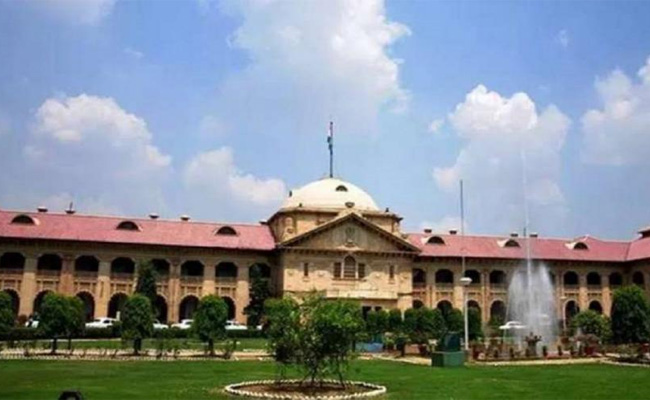
Lucknow (PTI): The Lucknow Bench of the Allahabad High Court on Friday ordered a probe by the special task force (STF) into alleged irregularities in the rejoining of a teacher at City Intermediate College in Barabanki, observing that the reinstatement appeared to be prima facie illegal.
The court also directed the recovery of the salary paid to the teacher during the disputed period.
A bench of Justice Rajeev Singh passed the order on a petition filed by the college management committee. The court expressed doubts over the roles of the District Inspector of Schools (DIOS), Barabanki, the college principal and the teacher concerned and hence, directed a detailed inquiry into the matter.
Taking note of alleged manipulation of records and misleading submissions, the court ordered the immediate transfer of the Barabanki DIOS to ensure a fair probe. It also directed the initiation of disciplinary proceedings against the then joint director of education of the Ayodhya division.
In its order, the court found that the teacher, Abhay Kumar, was initially appointed as an assistant teacher in 2018 but joined an Eklavya Model Residential School in Chhattisgarh as a lecturer in June 2024 without obtaining permission from the management. His subsequent request to retain the lien was rejected.
Despite this, he was allowed to rejoin the Barabanki College in September 2025 on the directions of the joint director of education and the DIOS, and was even paid the salary for October 2025. The court termed the rejoining "wholly illegal" and lacking any legal basis.
The bench also expressed concern over lapses in communication within the education department and directed the Uttar Pradesh chief secretary to ensure that official orders are communicated through email and WhatsApp as well, to prevent disputes.
The matter is next listed for hearing on May 28 when a compliance report is sought.