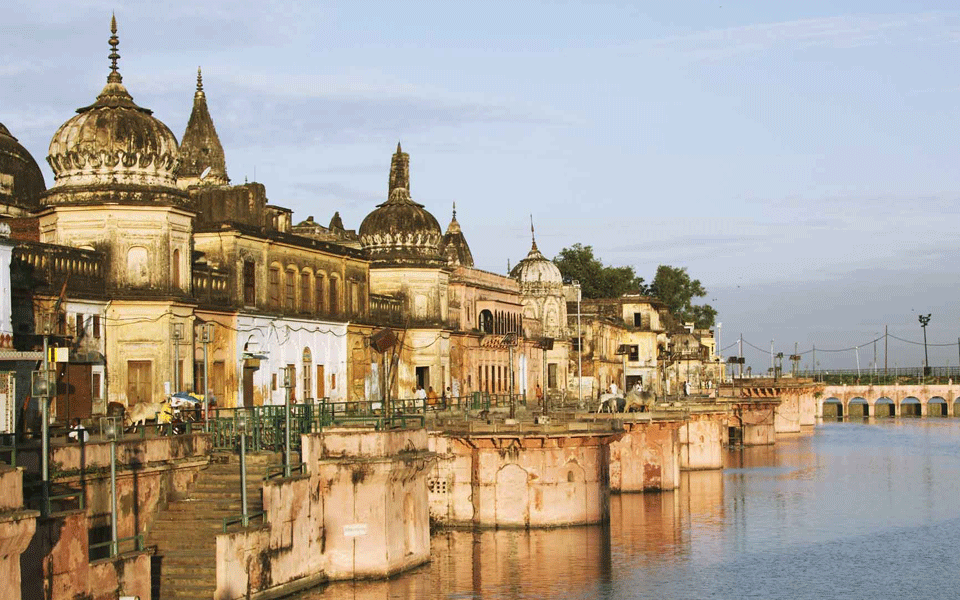
Ayodhya as Cultural Smart City: A Mediation Proposal for the Mosque-Temple Dispute
This article was first published in www.thewire.in and is written by Abusaleh Shariff
Given the well-known defects of the Indian democratic system, now compounded by the fact that the political winners are hell bent on imposing a unitary stream of ideas on anyone and everyone, the judiciary’s biggest challenge is to stand firm as an independent arbiter of the rule of law.
Even though prosecutions for the 1992 crime of demolishing the Babri Masjid are hanging fire, the Supreme Court earlier this year decided to explore the possibility of a mediated resolution to the Ayodhya dispute. Significantly, the court’s push for mediation came against the backdrop of leaders from the ruling Bharatiya Janata Party declaring that they are prepared to do what it takes to ensure that a Ram temple is built at the disputed site regardless of what the court says.
For several months now, a small team of court-appointed mediators have been meeting with the stakeholders to the case to explore the possibility of an out-of-court settlement. In line with the apex court’s directions, the process has been conducted behind closed doors. No information about the progress, or lack thereof, has leaked so far.
On Thursday, the court asked the three member panel to submit a report by July 18. This news has once again revived interest in the Ayodhya issue itself, and in what the possible contours of a just and honourable settlement could be.
The entangled dispute is the result of an admixture of facts, beliefs, truths and even lies, all at the same time. The situation, as it stands today, would not have emerged if the Babri mosque had not been demolished on December 6, 1992. The perpetrators of the demolition have not been punished so far, and despite the court’s directions, there is no sign that the case involving them is being actively pursued. At stake are the garima and maryada of a nation, its identity in the globalised world, and all of its 1.35 billion citizens. Yet the lack of political, media and even judicial interest in the crime that was committed is manifest.
The solution
There is no problem in the world which cannot be settled through negotiation. It is the duty of every citizen of this nation to strive for such a solution, even if it is through the process of mediation. The process is important, not the people involved in the mediation. It does not really matter who is mediating, as long as they pursue prudent, logical and democratic steps; and provided the government of the day is open to implement the negotiated elements through budgetary allocations and appropriate legal backing.
In our view, the conditions precedent to any mediated settlement must include the following:
-
The criminal case that pertains to the Babri masjid demolition must be hastened and a decision must precede the ‘mediated compromise’.
-
A national legislation must be passed making it a criminal act to demand any repeat of the same process of demolishing or removing a pre-existing mosque, be it in Mathura or in Varanasi, two sites that the Sangh parivar has spoken of in the past.
-
The mediated compromise formula must be accepted, endorsed and kept in abeyance until the criminal case is decided.
-
No individual found guilty of having conspired to demolish the Babri masjid, or any organisation he or she has been a part of, can play any role in the management or administration of the temple or the Ayodhya smart city project, which is explained below.
Mediated formula
The whole town of Ayodhya must be declared a ‘National Cultural Smart City’, directly financed and managed by the Central government. It should not be administered by the state government. Here are some other suggestions.
-
The Central government must create a department to manage the Ayodhya smart city within the Union home ministry.
-
The smart city’s planning must be overseen by the best city planners and architects, from around India and abroad.
-
The planning can create a space such as the one at Rajpath in New Delhi.
-
The Ram temple construction can take place at the very site where the idol of Ram Lalla is now worshiped. All three parts to the disputed land, currently apportioned on a one-third basis between the ‘Hindu’ side, the ‘Muslim’ side and the Nirmohi Akhara, must be assigned to the temple.
-
A broad open space should be beautified in the form of parks, lakes, museums, libraries, playgrounds, visitor centres and markets for cultural and traditional products and so on.
-
At the end of the other side of this open space, a beautiful mosque designed to suit the architecture of the smart city should be constructed. It can be a modern artistic structure.
-
The whole smart city must be managed by a body (managing committee) of 100 members. Women must form at least one third of these members.
-
The Hindu community must be represented by 70 members in this committee.
-
25 members must be Muslims, representing local areas and also drawn from all major states of India. Women must form at least one third of these members.
-
The remaining five members must belong to recognised minorities other than Muslims.
-
The minorities will dedicate their services to both the construction, maintenance and development of the Ayodhya smart city – the cultural capital of India. Muslims from all over India will lend their services to the communities all over the smart city.
-
Another body of experts and advisors is created so that representation is given to citizens from across India and even abroad.
This smart city model will become an example for all cities, towns and villages to follow. There cannot be a better administration in which all citizens join ‘shoulder-to-shoulder’ to protect the glory of the Indian ethos.
Abusaleh Shariff (ashariff@usindiapolicy.org) is chief scholar at the US-India Policy Institute. Views expressed are his own and do not represent any institution or organisation he belongs.
This article was first published in www.thewire.in and is written by Abusaleh Shariff
Let the Truth be known. If you read VB and like VB, please be a VB Supporter and Help us deliver the Truth to one and all.
Chhattisgarh Vedanta power plant blast: Death toll rises to 20; sixteen workers undergoing treatment
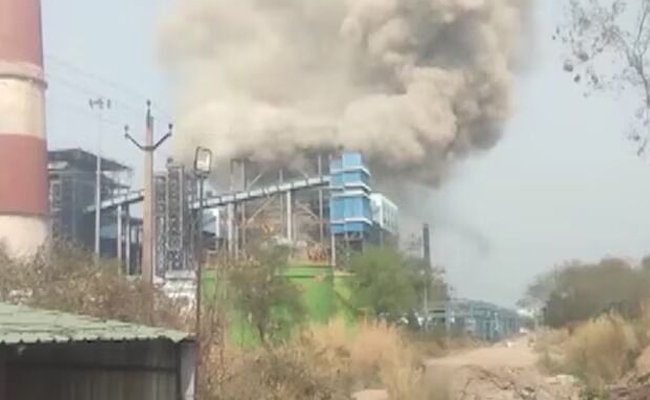
Sakti (Chhattisgarh) (PTI): The death toll in a blast at the Vedanta power plant in Chhattisgarh's Sakti district has mounted to 20 with seven more workers succumbing to injuries, while 16 others are undergoing treatment at different hospitals, officials said on Wednesday.
The deceased include six labourers from West Bengal, five from Chhattisgarh, three each from Jharkhand and Uttar Pradesh, two from Bihar, and one from Madhya Pradesh.
The opposition Congress has demanded registration of an FIR against the plant management and a judicial inquiry into the incident.
The explosion occurred on Tuesday afternoon in a steel tube carrying high-pressure steam from the boiler to the turbine at the Vedanta Ltd power plant located in Singhitarai village, leaving several workers with severe burn injuries.
According to officials, four workers died on the spot, while nine others succumbed to injuries soon after the incident.
Seven more workers have died in hospitals, raising the toll to 20, Sakti Collector Amrit Vikas Topno told PTI on Wednesday.
He said that a total of 36 workers were affected in the blast, and 20 of them died.
"Of the 16 injured workers, five are undergoing treatment in hospitals in Raipur, while 11 others are in hospitals of Raigarh, the neighbouring district of Sakti," he added.
Topno added that every possible effort was being made to provide the best medical treatment to the injured.
The deceased were identified, and their family members are being contacted. Arrangements have been made to transport the mortal remains to their native villages via ambulance following the postmortem examination and to provide immediate financial assistance, he said.
Chief Minister Vishnu Deo Sai has announced a compensation of Rs 5 lakh to the families of each deceased worker and Rs 50,000 for those injured.
Vedanta Power has also announced a Rs 35 lakh compensation for the family of each deceased worker, along with employment support.
The company will also provide Rs 15 lakh to each injured person, ensure salary continuation until recovery, and offer counselling support, a statement from the plant management said.
The chief minister has ordered an inquiry by the Commissioner of the Bilaspur division, assuring strict action against the guilty.
He directed officials to ensure free and proper medical treatment for all injured and emphasised that no negligence in their care would be tolerated.
The district administration has also ordered a separate magisterial probe, while the company has initiated its own internal investigation.
Collector Topno has appointed the Sub-Divisional Magistrate (SDM) of Dabhra to conduct the magisterial inquiry.
The SDM has been asked to submit a report within 30 days covering key aspects, including the cause of the accident, whether it was due to technical or human error, and details of safety inspections carried out at the plant.
Meanwhile, the opposition Congress has demanded registration of an FIR against the plant management and a judicial inquiry into the incident.
State Congress communication wing head Sushil Anand Shukla on Wednesday alleged negligence on the plant management's part and accused the government of attempting to shield those responsible.
He also demanded compensation of Rs 1 crore for the families of the deceased and Rs 50 lakh for the injured.
The construction of a 1,200 MW coal-based thermal power project (two units of 600 MW each) in Singhitarai, originally owned by Athena Chhattisgarh Power Ltd, started in 2009, but remained stalled between 2016 and 2022.
Vedanta acquired the plant in 2022, after which a 600 MW unit was completed and commissioned in August last year, while the second unit is still under construction.
The deceased have been identified as Amrit Lal Patel, Thanda Ram Lahre, Udhab Singh Yadav, Rameshwar Mahilange, and Nadeem Ansari (all from Chhattisgarh); Susanta Jana, Sheikh Saifuddin, Manas Giri, Kailash Mahto, Shibnath Murmu, and Dipankar Singh (West Bengal), Tarun Kumar Ojha, Abdul Karim and Ashok Parhiya (Jharkhand), Raju Ram, Pappu Kumar and Brijesh Kumar (Uttar Pradesh), Aakib Khan and Ritesh Kumar (Bihar), and Chitranjan Dhulai of Madhya Pradesh, officials said.