Can you use digital copies of DL, insurance when asked by police? Mangaluru Traffic DCP answers
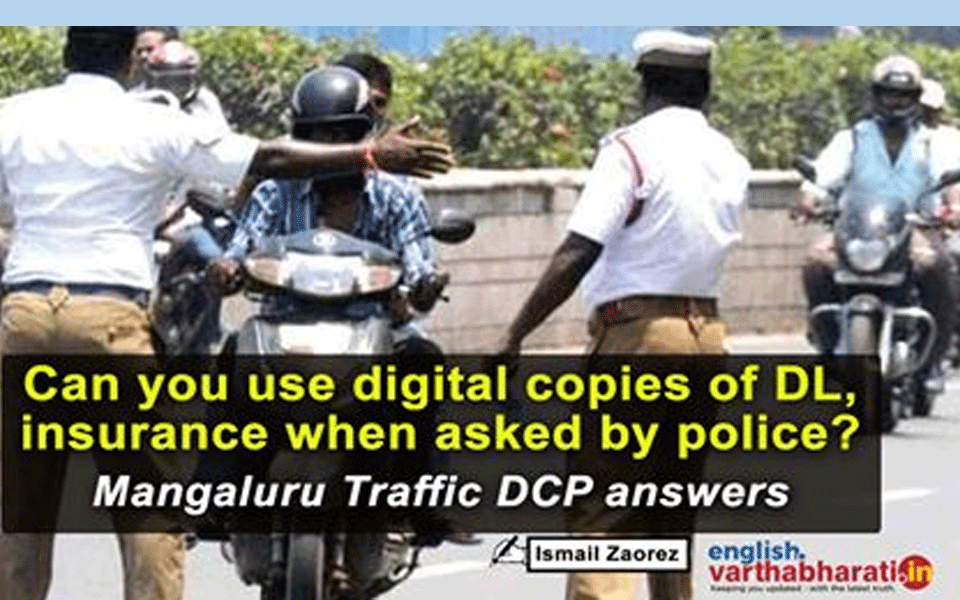
Ever since the amended Motor Vehicle Act with revised fines for traffic violations has been implemented across the country there are various doubts in the minds of motorists regarding the amendments and changes that has been brought into the Act.
One of the major doubt that has been raised on social media platforms and groups is whether or not the motorists can produce digital versions of Driving License, Vehicle Registration Certificates (RC), Vehicle Insurance and other relevant documents on smartphones.
Although some people raised their doubts regarding the use of digital versions/soft copies of documents, many also complained that the officers were allegedly not accepting it during regular vehicle checking.
The answer to this question however is, YES you can use digital versions of your DL, RC, Insurance and other relevant documents. The amendment to Motor Vehicle Act was made much earlier than the latest amendments to enable motorist to produce digital documents on smartphones. The amendment had also made it mandatory to the concerned authorities and officials to accept the documents provided by motorists on their smartphones.
In a circular issued by the Ministry of Road Transport and Highways, dated 19 November 2018 amendment was made in rule 139 of Motor Vehicle Act 1989 to allow people to carry driving license and registration copy in a digital format and produce before concerned authority when prompted.
However, a normal scanned copy of these documents will not be valid. One has to scan these original documents on DigiLocker or mParivahan Apps powered by Central Government on their smartphones.
Commenting on the matter Mangaluru Deputy Commissioner of Police (Traffic and Crime) Lakshmi Ganesh added that the digital documents can be provided using Digilocker and mParivahan Apps and one need not mandatorily carry original documents with them while driving. However Lakshmi Ganesh said that the Apps doesn’t provide or store details of PUC (Pollution Under Control) certificate and that the motorists have to carry original PUC Certificate along while driving.
“All the officers, authorities are bound to accept documents from these two digital platforms. Nobody can refuse to do so. It is an order from Central government and an amendment that has been brought into the law” he said.
What's DigiLocker, how to use it
DigiLocker is a platform for issuance and verification of documents and certificates in a digital way. It eliminates the use of physical documents. The app can be downloaded from Google Play Store or App Store. DigiLocker issues e-documents to individuals in a standard format and makes them electronically available, including CBSE, Registrar Office, Income Tax department, etc. With DigiLocker, it is easier to validate the authenticity of documents as they are issued directly by the registered issuers. People can even sign the self-uploaded documents using the eSign facility in the app.
What is mParivahan, how to use it
mParivahan App provides transport service access to citizens through a mobile based application. This app empowers citizen with instant access to various information, services and utilities related to the Transport Sector. Aimed to bring convenience to citizen and transparency in the system.
It is a genuine government app for all India RTO vehicle registration number search. It provides complete information about a car like - Owner Name, Registration date, Registering Authority, Insurance Validity, Fitness Validity. Along with above features, you can also verify DL details and create virtual DL and RC in this app.
Let the Truth be known. If you read VB and like VB, please be a VB Supporter and Help us deliver the Truth to one and all.
AIITA welcomes Karnataka’s ban on obscene songs in school events
Bhatkal: The Karnataka unit of the All India Ideal Teachers Association (AIITA) has welcomed the Karnataka government’s decision to strictly ban school children from dancing to obscene songs during educational and cultural programmes in government, aided, and private schools across the state.
AIITA Karnataka State President M. R. Manvi congratulated the government for taking what he termed an important step to preserve the sanctity of education.
“Such decisions to safeguard the dignity of school children and uphold the values of education are the need of the hour. This rule should not be limited to government schools alone but must be strictly implemented in all private educational institutions as well,” he said.
He further urged the government to address other concerns within school programmes.
“The government should not only prohibit obscene dances in the name of school anniversaries, but also ensure that plays and dialogues that incite religious hatred are avoided. Schools should be centres of harmony, not platforms for spreading hatred,” he added.
According to a recent circular issued by the Department of School Education and Literacy, obscene dances are adversely affecting the mental health and moral values of students.
In this regard, schools have been advised to use songs that promote nationalism, positive thinking, the greatness of Kannada culture, and value-based traditions instead of inappropriate content during programmes.
The circular also emphasises that students should be dressed in decent attire.
AIITA also backed the department’s warning that disciplinary action would be taken against head teachers if such guidelines are violated. The association has further demanded that district Deputy Directors of Public Instruction strictly monitor the implementation of these rules.