Fight Against Coronavirus: The Dharavi Model
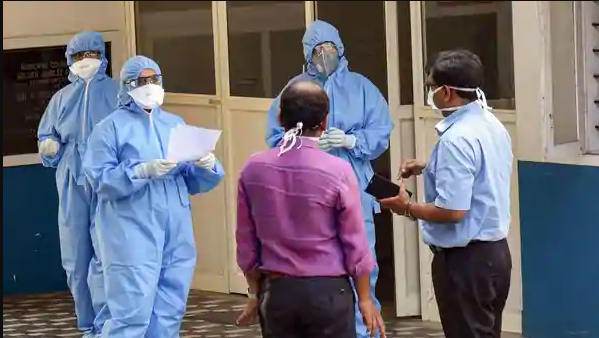
Having received accolades from the World Health Organization (WHO) for its efforts to contain the spread of the Coronavirus, Mumbai’s Dharavi – Asia’s largest slum and one of the largest slums in the world – has emerged as a role model for the entire country in tackling the dreaded Coronavirus. Dharavi that had so far garnered global attention for its stark poverty, hunger, and diseases has now attracted attention for its fight against Coronavirus.
The WHO has praised the administration for the positive results that have emerged from its efforts to arrest the spread of the Coronavirus. Dharavi is proof of the significance of the two-pronged strategy of community-based operations and speedy testing in cutting the chain of the spread of the virus, the WHO said. Countries like Vietnam, Cambodia, Thailand, New Zealand, Italy, Spain, and South Korea, and Dharavi focused on community-based operations that succeeded in phases. Perhaps, if the operations had failed in Dharavi, the government would have blamed the slum-dwellers for Mumbai’s poor show in fighting the virus.
When the Coronavirus first reared its head in Mumbai, nobody bothered much but when Dharavi reported infections, the city was shocked out of its wit. An English daily even portrayed Dharavi as a ‘time bomb waiting to explode.’ The contention of the media was that the spread of the Coronavirus could be stopped through lockdown in Mumbai, but it would not have any impact on Dharavi.
About 15 lakh people live in Dharavi that is spread over 600 acres and on average, about five to eight people share a room of 100 square feet. How is it possible to stop the infection from spreading when people live in such close proximity and is it practical to expect people to be in quarantine in such living conditions? That’s why Dharavi was termed a time bomb waiting to explode and an outbreak of infection in Dharavi was considered the beginning of community transmission of the virus.
But, today, compared to other urban areas, the Coronavirus has been mostly in control in Dharavi. Now, Mumbai need not fear Dharavi. The main reason for the success in Dharavi is the work of not only the city corporation but also several NGOs who collaborated with the government. Fearing the danger that Dharavi could pose for Mumbai, the government also focused more on Dharavi.
In fact, WHO has developed exclusive health programs for backward areas such as Dharavi and has conducted several experiments in such areas with the involvement of many NGOs. Normally, in cities, Coronavirus operations are focused on people of upper classes.
Even today, people are subjecting themselves to expensive Corona tests and are quarantining themselves at expensive places in cities. But in slums like Dharavi, community-focused operations addressed the problem of the Coronavirus. Cleansing of slums, the government’s initiative in conducting testing on a war footing, and extensive food and medical supplies slowed down the spread of the virus in Dharavi. But such operations were not implemented in other urban areas of Mumbai.
It was possible to win the war against the Coronavirus in Dharavi as it was treated as an experiment. Unfortunately, though, the fight against Coronavirus has emerged as a money-making enterprise in many other areas with the virus spreading its tentacles rapidly.
Coronavirus first hit Kerala in India. Certain political forces tried to blame the state for this and incite an ethnic rift but unmindful of this, Kerala focused on discharging its duties with complete focus and dedication. While leaders of other states including Karnataka were mocking at Kerala, the leaders of Kerala started waging a battle against the virus with total preparedness.
The Kerala government did not leave out the common man from its operations and didn’t just focus on the rich. It took on the onus of providing treatment to everyone. As a result, Kerala did not just recover speedily but also became a global model state in fighting the Coronavirus. Karnataka that had mocked at Kerala is now in a situation where it has to hang its head in shame. States that tried to raise caste, religion, and other factors to camouflage the seriousness of the problem have completely failed in their battle.
The states that regarded the Coronavirus as a dreaded disease and protected both people and their livelihoods have won in their fight against the virus. Those who believe that the Coronavirus can be fought only through lockdown should learn from the Kerala and Dharavi models.
Let the Truth be known. If you read VB and like VB, please be a VB Supporter and Help us deliver the Truth to one and all.
Real Madrid fines Valverde and Tchouaméni half a million euros each for altercation

Barcelona (AP): Real Madrid slapped players Federico Valverde and Aurélien Tchouaméni with half-a-million-euro ($588,000) fines on Friday for their altercation during practice.
The massive fines came a day after the midfielders tussled when the team trained. Valverde said in a post on social media on Thursday that no punches were thrown. But Valverde knocked his head on a table and he suffered a small cut that required a brief hospital visit.
On social media, Valverde initially called it a “meaningless fight” with a teammate and said “everything has been blown out of proportion."
His employers, however, considered it a significant enough breach of team discipline to nail both Valverde and Tchouaméni with fines that bite even the bank account of a top soccer player. The half-a-million euro penalties reflect the reputational damage the club was enduring in a chaotic end to a disappointing season.
In a statement, the 15-time European champion said its disciplinary action was concluded after both players expressed to the club “their complete remorse for what happened and apologized to one another.”
Madrid added they also apologized to their teammates, the coaching staff and club supporters, as well as showing their willingness to accept whatever disciplinary action the club deemed “opportune.”
Tchouaméni was back training with Madrid on Friday, two days before they play at Barcelona in a clasico. Madrid has to win otherwise Barcelona will be crowned La Liga champion.
After being notified of the fine, he posted a public apology to the club and its fans on social media.
“What happened this week in training is unacceptable,” Tchouaméni wrote. "I say this while thinking about the example we are expected to set for young people, whether in football or at school.
“Above all, I am sorry for the image we projected of the club.”
Valverde was not at practice due to the head knock.
Both players are set to play in the World Cup next month, with Tchouaméni playing for France and Valverde for Uruguay.
Chaotic end to a poor season
===================
The run-in between the players, who for seasons have played side by side in Madrid's midfield, came after they argued this week in previous training sessions. But tempers boiled over on Thursday. Spanish media was rife with reports that the players previously disagreed over the club's decision to let coach Xabi Alonso go after just months on the job.
It was not the only altercation involving Madrid players during training this week. Álvaro Carreras confirmed he was in a “minor” incident with a teammate. Spanish media said he and fellow defender Antonio Rüdiger got into a scuffle.
Álvaro Arbeloa, the coach who was promoted from Madrid's reserve team when Alonso was fired in January, will face tough questions on what went wrong inside the changing room when he gives a press conference on Saturday ahead of the clasico at Camp Nou.
Madrid is facing a second consecutive campaign without a major trophy amid rumors in the Spanish media that club president Florentino Pérez is considering bringing back Jose Mourinho to straighten out his underperforming team.