Gandhi Anniversary: An Occasion to Gain legitimacy for Some
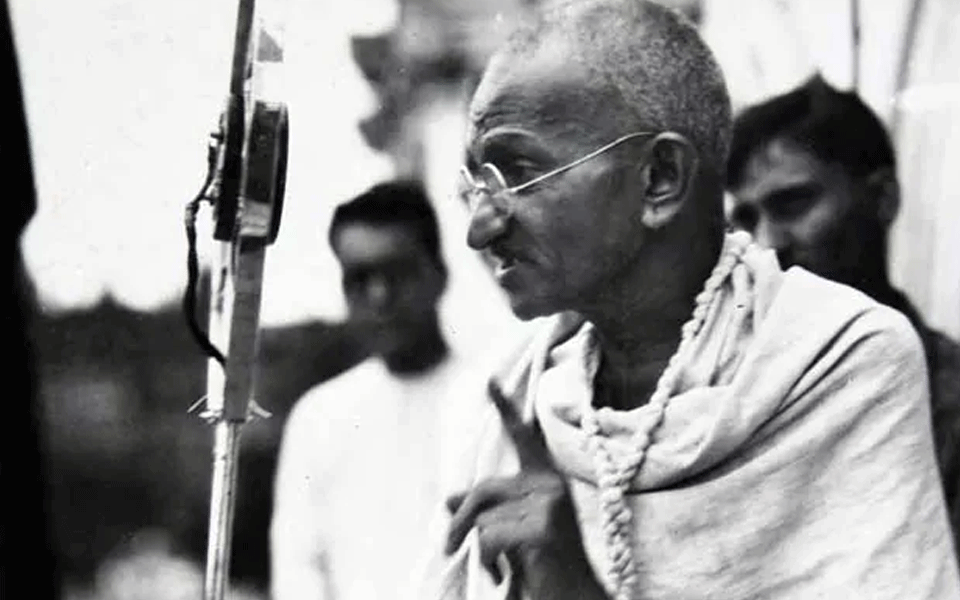
The media is full of articles and videos on the occasion of 150th birth anniversary of the ‘father of the nation’, Mahatma Gandhi. While there is a genuine attempt by most to recapture the teachings and path of Gandhi as relevant to contemporary India, there are those also those who are using the occasion to increase their own legitimacy. This is done be a clever maneuver of picking bits and pieces from his writing or incidences and also by quoting him partly leaving out the part critical to those quotes.
This is true about Hindu nationalists; the RSS combine in particular. While on one hand in a clever move they have picked up Gandhi as the symbol of cleanliness drive, leaving out his core message of communal amity, on the other now attempts are on to show that Gandhi was impressed by the discipline and lack of divisiveness in RSS. RSS Supreme leader, Mohan Bhagwat, writing on the RSS website says, “Gandhiji... visited a shakha near his place of residence in Delhi during the tragic days of Partition. He spoke to the swayamsevaks in the shakha. Its report was published in the Harijan, dated September 27, 1947. Gandhiji expressed his joy over the discipline of the Sangh swayamsevaks and complete absence of divisive feelings of caste and creed in them." To begin with the Harijan issue mentioned here is dated 28th September and not 27. Then while the quote is correct it leaves out the background and the further caution which gives the real portent of the quote.
Here Gandhi is recounting his visit to RSS in Wardha along with Jamanalal Bajaj, saying that these were his impressions in 1936. Since then the organization has grown. Then he adds, “But in order to be truly useful, self-sacrifice had to be combined with purity of motive and true knowledge. Sacrifice without these two had been known to prove ruinous to society.” Gandhi had visited the RSS shakha on 16th September, in the backdrop of many complaints from Muslims.
The meaning of the quote in the background of those complaints and the sentence following the part quoted by Bhagwat, gives the true picture of what Gandhi meant to convey to the volunteers of RSS Shakha.
This was not the first time that he had talked about RSS. In Harijan on 9th August 1942, Gandhi writes, “I had heard of the Rashtriya Swayamsevak Sangh and its activities; and also know that it was a communal organization”, this was in response to the slogans and some speech against ‘other’ community, about which a complaint was made. In this Gandhi is referring to the drill of RSS volunteers, who shouted that this Nation belongs to Hindus alone and once the British leave we will subjugate the non-Hindus. In response to the rowdyism indulged by communal organizations he writes, “I hear many things about RSS. I have heard it said the Sangh is at the root of all this mischief.” (Gandhi, xcviii, 320-32)
Rajmohan Gandhi in his book Mohandas (page 642) points out that “After independence, in the context of Delhi violence, Gandhi confronted the RSS chief Golwalkar, with reports of the RSS hand in Delhi violence, Denying the allegations Golwalkar also said that RSS did not stand for killing the Muslims. Gandhi asked him to say so publicly. Golwalkar said Gandhi could quote him on this. Gandhi did this in his prayer talk that evening, but he told Golwalkar that statement ought to come from him. Later he told Nehru that he did not find Golwalkar convincing.’
The most accurate perception of Gandhi on RSS is brought forward by Pyarelal, his secretary. He narrates an event in the wake of 1946 riots. A member of Gandhi’s entourage had praised the efficiency, discipline, courage and capacity for hard work shown by the RSS cadres at Wagah, a major transit camp for Punjab refugees: “Gandhi quipped back, ‘…but don’t forget, so had Hitler’s Nazis and the Fascists under Mussolini’. Gandhi characterized RSS as a communal body with a totalitarian outlook.” (Pyarelal, Mahatma Gandhi: The Last Phase)
The need for RSS to show that they were on the right side of Mahatma is cosmetic. RSS combine propounds ‘exclusive Hindu nationalism’, in contrast to Gandhi’s ‘all-inclusive Indian Nationalism’. Still they need to get the legitimacy from the greatest Hindus of his times, Gandhi. Gandhi is also the figure most well known in India and globally. As impact of RSS is on the rise, it wants to draw further strength by associating with names whose ideology was at cross purposes with their own. Sardar Patel, Subhash Chandra Bose are the major figures with whom RSS is trying identify, despite core differences in the type of nationalism propounded by them and the likes of Patel and Bose. Gandhi the tallest figure of freedom movement, was killed by one of the Pracharak’s (propagators) of RSS, Nathuram Godse. Godse’s was a well-planned ideological assault of Hindu nationalism on Indian nationalism
The major attempts of RSS have been to recreate a historical narrative of nationalism. In this they began with presenting medieval history as the period of oppression of Hindus by Muslim invaders, by trying to project that Hinduism is native religion and Islam and Christianity are foreign religions. The attempts to do all the ideological acrobatics to prove that Aryans were the natives has been another of the forceful exercises in operation. To cap it all the achievements of science and technology are also presented to be having their roots in this land. The crux of the matter boils down to glorify the so-called Hindu past along with the values of caste and gender hierarchies prevalent that time. To identify with Gandhi is yet another step in this direction.
These ideological manipulations have picked up with greater intensity during last few years. We do need to save Gandhi from the distorted forms in which he is being presented. We do need to focus on his struggles against injustice, and inclusive humane approach to problems of the nation and society.
Let the Truth be known. If you read VB and like VB, please be a VB Supporter and Help us deliver the Truth to one and all.
Zubeen Garg's drowning in Singapore highlights vessel operators' responsibility: legal experts
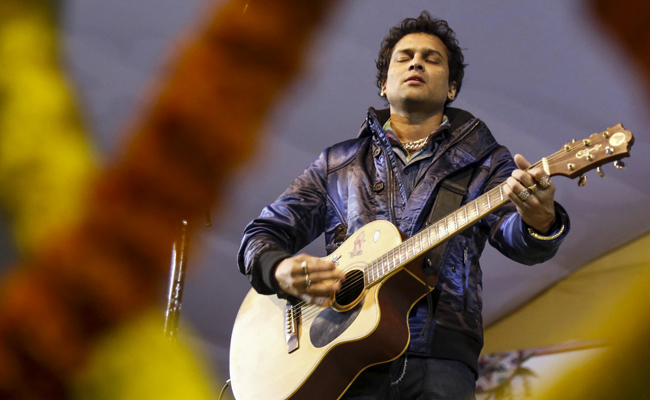
Singapore (PTI): The drowning of Indian singer-composer Zubeen Garg has brought the spotlight on rules and regulations that concern responsibilities of vessel operators when dealing with intoxicated passengers, according to a media report that cited legal experts.
A cultural icon in India’s northeastern region, 52-year-old Garg travelled to Singapore in September 2025 to perform at a live event. A day before his performance, he went on a yacht trip with a group of people. He drowned while swimming in the sea near Lazarus Island, which is a popular diving spot.
His death shook his home state Assam, where millions came out on the streets mourning. Later, police cases were registered against the organiser of the event, his manager and some others.
Nico Lee, managing director of the Triangle Legal law firm, told The Straits Times that Singapore has Maritime and Port Authority of Singapore (Port) Regulations under which there are provisions to debar drunk passengers.
The owner, agent or captain of the vessel must not allow persons under the influence of alcohol or drugs onboard if they are intoxicated to a point where they endanger safety of the vessel, its crew or any person in it.
“In terms of civil liability, it could be argued that a yacht captain is negligent, as he owes a prima facie duty of care to guests on board under general negligence principles,” Lee was quoted as saying by the newspaper.
The singer and his entourage of about 15 individuals were partying on a chartered vessel, which they had boarded at Marina at Keppel Bay.
A death certificate issued by the Singapore General Hospital listed his cause of death as drowning.
An autopsy report suggested that Garg had 333 mg of alcohol per 100 ml of blood in his system, which was four times the legal limit for driving in Singapore and is likely to have impacted his coordination.
Citing Garg’s case, Lee said the circumstances were serious, as the controller of the vessel knew that the guest was intoxicated. Also, he may not have understood or processed a safety briefing for all passengers.
“That combination makes reliance on an ordinary briefing inadequate. If intoxication reaches a level that endangers the safety of the vessel or persons on board, the person in charge should not permit boarding at all,” he said.
According to Lee, the vessel’s operators could also have assigned a crew member to directly supervise him or ensure that he received a one-to-one explanation when he was capable of understanding.
Part of the responsibility could be attributed to the guest if he chose to enter the water and ignore instructions or behave dangerously despite the yacht owner or charterer’s best efforts, Lee said.
Vanessa Sandhu from Clifford Law LLP told The Straits Times that a key question is whether the yacht captain or operator owed a “duty of care” to the passenger and, if so, whether a breach of that duty caused the death.
“A yacht captain and operator generally owe passengers a duty to take reasonable care for their safety while on board, including swimming or water activities. This may include providing safety equipment and issuing appropriate safety instructions,” the daily quoted Sandhu as saying.
“However, the standard of care is an objective one, based on what a reasonable captain or operator would have done in the circumstances. It is not an absolute obligation to prevent all harm,” she said.
During the coroner’s inquiry, the operators of the vessel had said that no one had forced the singer to consume alcohol or enter the water, and that the entire entourage was informed on the yacht about the necessity of wearing life jackets before going for a swim.
A coroner’s inquiry on March 25 ruled Garg’s death as accidental drowning. On April 1, the police said that investigations into the singer's death had concluded, with no evidence of foul play.
However, in Assam, where seven persons were arrested in connection with Garg’s case, and some of them charged with murder, the matter is being heard in the court. All the suspects have denied any wrongdoing.