
Hormuz Blockade: Why Your World Stalls
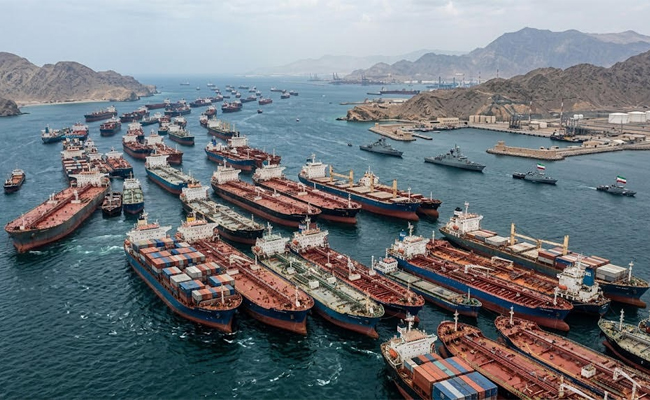
Three weeks ago, the third Gulf War started. And since that day, ordinary life for millions of people around the world — including us — has quietly started getting more expensive and more difficult. Let us understand why.
Everything begins with a tiny 54-kilometre-wide waterway called the Strait of Hormuz, near Iran. Think of it like a narrow gate between two rooms. Almost all the oil, gas, and goods from the Gulf countries pass through this one gate to reach the rest of the world. Now that gate is blocked. And the world is beginning to choke.
The Fuel Problem
On 16th March, the price of crude oil crossed $106 per barrel — the highest since Russia attacked Ukraine in 2022. Even Donald Trump released America's emergency oil reserves — the largest ever release — but traders are still not convinced the strait will reopen soon. About 10 to 15 percent of the world's oil supply is stuck.
Asian countries like India, China, Japan and Thailand are already cutting oil refinery production by 5 to 15 percent because the Gulf crude they are designed to process is simply not coming. The little oil that does arrive is the wrong type for their machines. Less production means less petrol, less diesel, less jet fuel — and higher prices at the pump for everyone.
Here is a scary number — if the blockade continues, countries in Africa may run out of jet fuel in just 23 days, Oceania in 36 days, and most of Asia in about 12 days. Some poorer nations have already started closing schools and cutting working days just to save fuel.
The Factory Problem
The Gulf is not just about oil. It supplies 24 percent of the world's aluminium — used in everything from milk packets to electric wires. The price of aluminium has jumped by ₹25,000 per tonne in just weeks. The Gulf also supplies nearly half the world's urea (fertiliser), a large portion of the plastics used in packaging, and critical chemicals used in making medicines — including the raw materials for aspirin and antibiotics.
India, being the world's largest maker of generic medicines, is directly affected. If these chemical raw materials stop arriving, medicine production slows down. Plastic companies in Asia have already declared "force majeure" — a legal term meaning "sorry, we simply cannot fulfil our contracts because the situation is beyond our control."
And then there is helium. Most people think helium is just for balloons. But it is actually used to cool the powerful magnets inside machines that make semiconductor chips — the tiny chips inside every phone, laptop, and car. Qatar used to supply one-third of the world's helium. That supply has now stopped. There is no easy backup.
The Food Problem
This is perhaps the most serious part. One-third of the world's fertiliser trade passes through the Strait of Hormuz. Countries like Kenya, Pakistan, Somalia, Sri Lanka and Tanzania get more than one-fourth of their fertiliser from the Gulf. Sudan gets more than half.
The price of urea has already jumped 35 percent since the war began. Sulphur, another crop nutrient, has risen 40 percent. The head of Yara, one of the world's biggest fertiliser companies, has warned this could be "catastrophic" for global food supply. In America, the agriculture minister has called it a "national security issue."
For farmers, the choice is brutal — pay double for fertiliser, use less and grow less, or wait and miss the planting season entirely. If fertiliser arrives late, it cannot help the 2026 harvest. Food that is not grown this season cannot be grown back next month.
What This Means For Us
We may not live near the Gulf. We may never have heard of the Strait of Hormuz before. But we will feel this — in rising petrol prices, costlier groceries, expensive medicines, and delayed goods. Even if the strait reopens tomorrow, experts say things will not return to normal quickly. Damaged refineries, broken factories, and cautious shipping companies will take months to restart.
This crisis is also a loud warning for every country — including India — to seriously rethink how deeply we depend on one single region for so many essential goods. True security means building alternative suppliers, stronger reserves, and smarter trade routes before the next crisis hits.
One small passage. One war. And slowly, the whole world is beginning to feel the heat.
(Girish Linganna is an award-winning science communicator and a Defence, Aerospace & Geopolitical Analyst. He is the Managing Director of ADD Engineering Components India Pvt. Ltd., a subsidiary of ADD Engineering GmbH, Germany.)
Disclaimer: The views and opinions expressed in this article are solely those of the author. They do not necessarily reflect the views, policies, or position of the publication, its editors, or its management. The publication is not responsible for the accuracy of any information, statements, or opinions presented in this piece.
Let the Truth be known. If you read VB and like VB, please be a VB Supporter and Help us deliver the Truth to one and all.
Karnataka issues nutrition advisory for govt events; recommends millets, healthier options
_vb_61.jpeg)
Bengaluru (PTI): The Karnataka government on Monday issued a nutrition advisory recommending healthier food and beverage options at meetings, functions, and other official gatherings held in the state.
The advisory has been issued by the Department of Karnataka Health and Family Welfare Services to promote healthy dietary and nutritional habits among officials and staff, noting that food, refreshments and beverages served in government offices and official programmes are "often not aligned with nutrition standards."
The advisory recommends serving snacks such as millet-based, low-fat and low-sugar foods, fresh fruits, vegetable salads, sprouts, roasted nuts and seeds during in-house office meetings and breaks.
Beverages such as green tea, low-fat buttermilk, and locally filtered or boiled water served in glass bottles or steel flasks have also been suggested.
According to the advisory, for larger government events, conferences and exhibitions, departments have been advised to include at least one millet-based item during snacks and a minimum of two millet dishes in meals, along with local cuisine and at least one regional recipe.
It also recommends the use of brown rice instead of white rice, freshly prepared vegetable salads, and fresh fruits or low-sugar fruit juices.
If non-vegetarian food is served, it should consist of well-cooked lean or white meat, the advisory stated.
In eateries operating within government office campuses, the department has recommended millet-based foods, fresh vegetable salads, boiled pulses such as horse gram or chickpeas, and low-fat beverages.
It suggests serving food using reusable metal plates and glasses.
The advisory also recommends avoiding microwave-heated food, industrially processed food, fried snacks, high-fat or heavily spiced dishes, carbonated drinks, high-sugar fruit juices, and alcoholic beverages.
It further discourages serving milk-based tea or coffee and plastic-bottled water during official events.
“Overall, hygiene and cleanliness should be maintained while serving food and water. Local cottage industries, self-help groups, prison kitchens, nutri-gardens and others should be preferred for placing food and beverage orders,” the advisory added.
_vb_54.jpeg)
_vb_07.jpeg)
_vb_34.jpeg)