No Gas, No Food, World Hungry
Imagine waking up one morning and finding that the price of wheat flour, rice, and milk has doubled overnight. Your grocery bag costs twice as much. Farmers in your village cannot afford fertiliser. The government is scrambling. This is not a nightmare. This is exactly what the Iran war could trigger — and it starts with something most of us never think about: natural gas.
How Does Gas Connect to Your Food?
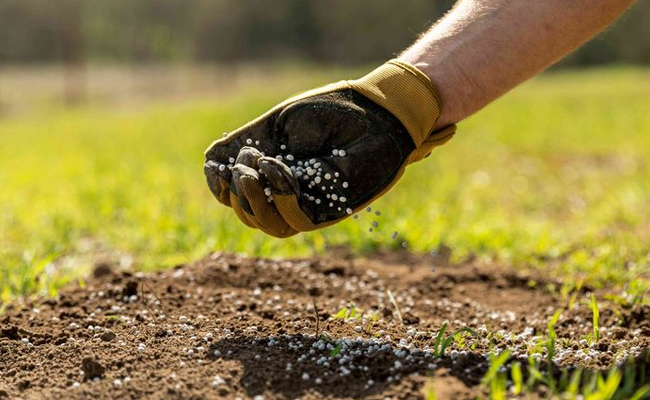
There is a process called the Haber-Bosch process — a scientific method that mixes nitrogen from air with hydrogen from natural gas to create ammonia. Ammonia is then turned into urea, which is the fertiliser that farmers spray on wheat, rice, and maize fields. Simply put — no natural gas, no fertiliser. No fertiliser, no food.
Around 80% of the cost of making fertiliser comes from natural gas. So when gas supply gets disrupted even for a few weeks, fertiliser factories slow down or completely shut. Farmers get less fertiliser. Crops grow weaker. Harvests fall. And your plate gets emptier.
The Strait of Hormuz — A Small Passage, Giant Problem
There is a narrow sea passage called the Strait of Hormuz, located between Iran and the Arabian Peninsula. Nearly 20% of the world's LNG (Liquefied Natural Gas) and 30% of global fertiliser exports pass through this tiny corridor every single day.
Major countries like Qatar, Saudi Arabia, and UAE export fertilisers — urea and ammonia — through this route to nations across Asia, Africa, and Europe. Now, with Iran's military threatening this passage, ships are scared to pass. Fertiliser is stuck inside the Persian Gulf. The world outside is waiting — and waiting costs lives.
Worst Timing in Farming History
This war has arrived at the worst possible moment for global agriculture. Right now, farmers across the Northern Hemisphere — in USA, Canada, Europe, China, India, Russia — are preparing for the spring planting season. This is the peak time when demand for nitrogen fertiliser is at its absolute highest.
Unlike oil, which many countries store in emergency reserves, no country in the world has a strategic fertiliser reserve. If shipments are delayed even by four to six weeks, farmers will use less fertiliser and the autumn harvest will permanently fall. You cannot redo a planting season. Once that window closes, it is gone.
Your Chicken, Milk and Eggs Are Also at Risk
Many people think a food crisis only affects vegetarians. That is wrong. When fertiliser shortages reduce grain production, the price of animal feed — corn and soybean — shoots up. Livestock farmers operate on very thin profits. When feed prices rise sharply, the cost of chicken, pork, beef, milk, and eggs rises with it. A fertiliser shortage can become a full dairy and meat crisis within just a few months.
India's Mungaru Season Is in Serious Danger
For India, this situation is deeply personal — and for Karnataka and South India, it hits even closer to home. India sources nearly 60% of its total LNG imports from Middle East countries — with Qatar alone supplying over 42% and UAE adding another 11%. This makes India the most Middle East-dependent LNG buyer in the entire world.
If India's fertiliser plants cannot get affordable natural gas, domestic urea production will fall sharply — exactly before the Mungaru planting season. Mungaru is what Karnataka and South Indian farmers lovingly call the Kharif (Mungaru) season — the monsoon-driven planting window arriving around June, when farmers sow rice, ragi, sugarcane, and maize riding the southwest rains. This single season produces over half of India's total food grain. Miss this window, and there is no second chance until next year.
The government will be forced to spend thousands of crores extra on fertiliser subsidies. Every family — from a rice farmer in Mandya to a vegetable buyer in Bengaluru — will feel this burden.
Food in Cold Storage Is Also at Risk
Even food that is grown successfully may not reach your kitchen. Our food system runs on a massive cold chain — refrigerated trucks, frozen warehouses, temperature-controlled ships. As LNG prices surge, running these refrigeration systems becomes extremely expensive. More food spoils before reaching the market. Less supply means higher prices.
Countries Will Hoard, the Poor Will Starve
When prices rise and harvests fall, countries panic and stop food exports to protect themselves — exactly as happened during the 2022 Ukraine war. Wheat, rice, and sugar exports get banned overnight. Nations that depend on food imports — especially in Africa and South Asia — face severe shortages, hunger, and social unrest.
One war. One strait. One gas shortage. And the entire world goes hungry.
(Girish Linganna is an award-winning science communicator and a Defence, Aerospace & Geopolitical Analyst. He is the Managing Director of ADD Engineering Components India Pvt. Ltd., a subsidiary of ADD Engineering GmbH, Germany.)
Disclaimer: The views and opinions expressed in this article are solely those of the author. They do not necessarily reflect the views, policies, or position of the publication, its editors, or its management. The publication is not responsible for the accuracy of any information, statements, or opinions presented in this piece.
Let the Truth be known. If you read VB and like VB, please be a VB Supporter and Help us deliver the Truth to one and all.
Govt considering sustainable data centre policy: Karnataka IT Minister
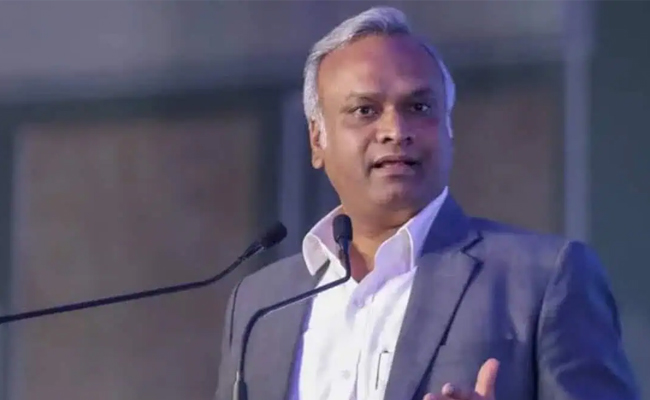
Bengaluru (PTI): Karnataka IT/BT Minister Priyank Kharge on Wednesday said the state government is considering a "sustainable data centre policy" amid concerns over significant environmental costs associated with their water and energy consumption.
Responding to a question by Doddaballapur BJP MLA Dheeraj Muniraj during the Question Hour in the assembly, he said, “We have 32 private data centres functioning in the state. He (MLA) wants data centres from the government side. We already have a data centre policy, which is under review."
Calling the data centres as "necessary evil," he said they are needed for AI, machine learning and emerging technologies.
"But data centres are also heavy water and energy guzzlers. So, we at the government are mulling a sustainable data centre policy, because our earlier data centre policy is two or three years old, and with changing technology, we are planning for sustainable data centres."
The Minister said the government's focus is shifting beyong Bengaluru, to coastal areas like Mangaluru.
"Since we can bring sub-sea cables there. We are discussing with private companies. I have written to the Union Telecom Ministry and sought a sub-sea landing at Mangaluru. They said they would provide assistance if private companies do it."
Pointing out that hyperscale data centres will not be suitable for Bengaluru due to absence of a port and water constraints, he said, "it would be better if it is on the sea side. So our focus is on edge, small, medium and large data centers, rather than hyperscale. Data centres requiring above 40 megawatt power will be hyperscale."
Explaining the economics of data centres, Kharge said, “One megawatt needs about Rs 70 crore. One acre can yield only one megawatt. We have to spend 25 million litres per megawatt per year for one data centre. Five questions on ChatGPT will consume 500 ml of water. That is how much the consumption is.”
However, new technologies have come that involve using treated water at data centres. “That’s why we’ll relook at our policy, and come up with a sustainable one."
Earlier, Muniraj urged the government to set up data centre parks in his Doddaballapur constituency, saying Bengaluru, the IT city was losing out on data centres as companies were moving to other cities.
According to him, Bengaluru is facing a shortage of colocation and large enterprise data centres, and there is no dedicated data centre park from the government, because of which large enterprises are leaving Bengaluru.
Noting that Bengaluru ranks behind Mumbai, Hyderabad, Chennai and Delhi in terms of data centres, the MLA said there is a growing need for large data centres.
For full-stack data centers, a 'Data Centre park' should be sanctioned for Doddaballapura, near which the KWIN (Knowledge, Wellbeing, and Innovation) City is coming up , he said, adding that "Amazon, Microsoft, Google, Meta, Alibaba, Tencent, Oracle, Apple, NTT -- all of them have offices in Bengaluru. Their data centres should be retained in Bengaluru."