Ramadan during the Covid-19 crisis
Although recorded history tells us that the world has seen many pestilences and pandemics in the years gone by, we the members of the present day human community are seeing the worst and deadliest medical crisis of our lifetimes for the first time. Let’s all hope and pray that this will be the last time too that the world faces such a predicament. The onslaught of the present pandemic was so swift and completely unexpected that it started ravaging the entire planet before confused governments could decide how to react. And, the result of this surprise attack is that there is no country in this world now which has not been affected by the problem.
The only reassuring thing is that as things stand now, not all countries are as badly affected as some of the severely affected ones, thanks to some rather extreme and seemingly harsh preventive measures they adopted. But for these countries to remain just as safe as they are at present, their governments and citizens too should continue to be very careful and not do anything in a hurry or with a false sense of security. Thankfully, India too happens to be in this list of less affected countries although I am personally of the opinion that for much better results the ban on overseas travel and the strict lockdown that we are all now going through for more than a month, should have been adopted at least a month earlier. However, despite this delay things here are not too bad and they can remain this way if we continue to heed every tiny bit of the scientifically correct advice that the authorities give us in the interests of our own safety.
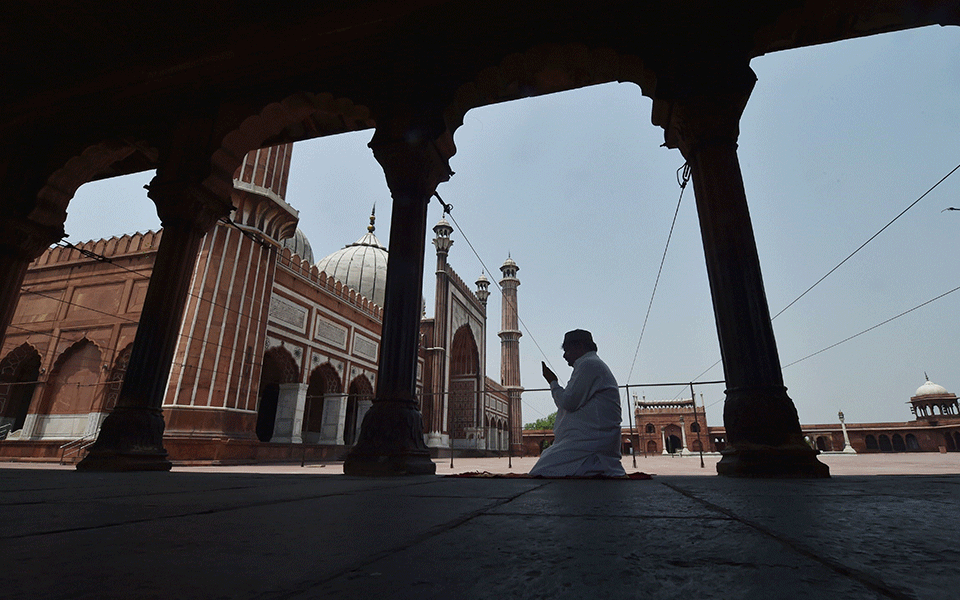
Muslims particularly, all over the world, cannot help feeling that the Covid-19 crisis has come at a very wrong time because it has cast a shadow over our lives at a time when we are observing Ramadan, a very holy and joyous month that marks a time of great socialising, collective festivity, community prayer and much enthusiastic shopping for the Eid that marks its finale. Yes, this Ramadan is going to be very different for us and there is simply no other way we can have it. But let’s all feel happy and grateful to Allah that although we will be forced to miss out on many of the exciting things that we used to do during every Ramadan, year after year, Inshallah, nothing will prevent us from getting our share of rewards from Him in the form of His benevolence and blessings this year too if we as good Muslims stay on the prescribed right path in all our religious obligations. So let’s all strive to stay on it and not harbour any sense of loss or regret that we are missing out on something.
The truth is that whatever we are missing out is something very trivial compared to the joy of remaining safe and sound and keeping our families, friends and neighbours too safe from the Covid-19 infection for which we still have neither cure nor vaccine. The only thing that is keeping us safe now and which can keep us safe in the near future too, is the social distancing that we have all been practising, although with great inconvenience. How well we adhere to it is going to be the most important factor that will decide how safe we are going to be in the days to come. This is especially so because medical scientists predict that this infection is very likely to make a comeback in the form of a second or even a third wave as this is how most viral pandemics have behaved in the past. Having understood this we should all go a step further and see that we do not become over-confident or over-enthusiastic even if our government relaxes some of the restrictions on us as it is likely to do very soon.
Let us all be just as careful as we are now for some more time even after the lockdown is lifted when it comes to socialising and inter-mingling with our friends and relatives and more importantly by refraining from our traditional shopping for new clothes, the wearing of which is an integral and even prescribed part of our Eid. It is only during our shopping sprees that we mix and jostle with other shoppers without being able to know how many infected and Covid-19 positive cases we might be bumping into. This easily avoidable exercise of shopping is simply not worth the risk we would be taking after having endured almost two full months of restraint, caution and inconvenience. In fact, those of us who are blessed with wealth and who do give away a part of it in our traditional charity of Zakath and Sadaqa, can in fact give away during this Ramadan a reasonable part of our shopping budget also as a gift of love to help the thousands of starving families of the now jobless people around us. We can thus feed them, clothe them, buy them medicines and even help all those who are stranded in Covid shelters to reach their distant home towns and reunite with their loved ones! Let everyone in pain and distress, irrespective of which community, caste or creed he or she belongs to, be the recipient of this kindness from us.
We all know that our religion, Islam preaches love and sacrifice. Can there be a greater act of love and sacrifice than this? I think not. So you please think about it too. So it does not matter at all if we do no shopping this year. It does not matter at all if we also celebrate Eid within our homes, wearing our old clothes. But let us not spill out on the streets giving ourselves the chance of getting infected by the deadly virus. Just as importantly, since our community members have already been needlessly targeted as the spreaders of the Covid-19 Virus, let us not give anyone a chance to blame us and besmear our community once again as being responsible for triggering a second wave of the infection if it does come!
This disclaimer informs readers that the views, thoughts, and opinions expressed in the text belong solely to the author, and not necessarily to the VarthaBharati.
(The author is a practising physician, writer and columnist based at Mysuru)
Email: kjnmysore@rediffmail.com
Let the Truth be known. If you read VB and like VB, please be a VB Supporter and Help us deliver the Truth to one and all.
Rs 30,000 cr loss a month: Oil companies bleed as fuel prices on hold amid global energy spike
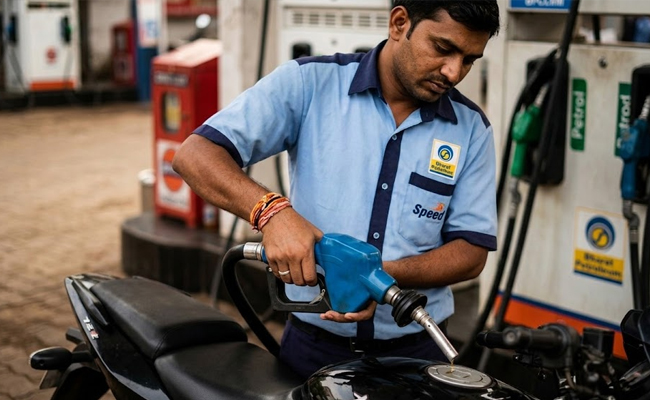
New Delhi (PTI): About Rs 700-1,000 crore loss per day. Rs 30,000 crore every month. India's state oil companies are quietly absorbing a massive financial hit to keep petrol, diesel and LPG prices unchanged even as global energy markets face a turmoil that is bigger than all previous crises combined.
While countries from Japan to United Kingdom have raised petrol and diesel prices by up to 30 per cent since the start of the West Asia conflict, fuel prices in India continue at two-year-old levels.
The war disrupted India's import of 40 per cent of crude oil (raw material for making petrol and diesel), 90 per cent cooking gas LPG and 65 per cent natural gas (used to generate electricity, make fertilizer, turned into CNG and piped to household kitchens for cooking), but state-owned oil companies have maintained uninterrupted fuel supplies with no rationing or shortage at any point in the last 10 weeks.
But this has come at a cost - Rs 30,000 crore under-recovery or loss every month for the three oil marketing companies - Indian Oil Corporation (IOC), Bharat Petroleum Corporation Ltd (BPCL) and Hindustan Petroleum Corporation Ltd (HPCL), two sources with direct knowledge of the matter said.
The under-recoveries - the gap between input costs and realised retail prices - rose sharply in March/April before tapering a bit. Daily under-recoveries during April were estimated at about Rs 18 per litre on petrol and Rs 25 per litre on diesel, translating into average losses of Rs 700-1,000 crore a day for OMCs, they said.
At a news briefing on developments in West Asia, Sujata Sharma, Joint Secretary in the Ministry of Petroleum and Natural Gas, said prices in the international markets, on which India relies to meet 88 per cent of its oil needs, have been volatile and supplies impacted.
Crude oil prices which were around USD 70 per barrel two months ago, are now at USD 120, she said. "It has been government's endeavour to keep prices stable so far and that there is no price increase for consumers," she said. "This has hit finances of OMCs... monthly under-recoveries are of the order of Rs 30,000 crore."
She, however, refused to say if retail petrol and diesel prices will continue to hold.
"As I said, the endeavour so far has been to see that there is no price increase," she said.
The three oil marketing companies (OMCs) have worked overtime to keep the supply lines running even when demand spiked due to panic buying.
The government intervention included excise duty reductions and absorption of part of the fuel cost burden. The special additional excise duty on petrol was cut to Rs 3 per litre from Rs 13, while excise duty on diesel was reduced to zero from Rs 10 per litre.
The under-recoveries would have swelled to nearly Rs 62,500 crore had the government not cut excise duty on petrol and diesel by Rs 10 per litre each.
The government, Sharma said, has taken a hit of Rs 14,000 crore a month in cutting the excise duty.
The Centre's effective absorption at peak crude prices was estimated at around Rs 24 per litre for petrol and Rs 30 per litre for diesel.
The February 28 strikes by the United States and Israel on Iran triggered a sharp escalation in West Asia tensions. Energy prices surged as the conflict widened and shipping risks intensified in the Strait of Hormuz - the shipping lane through which India and other countries imported crude oil, LPG and natural gas from Gulf countries. Tanker movement was disrupted.
The companies also faced additional costs from emergency crude sourcing, higher freight charges due to vessel diversions, elevated marine insurance premiums and refinery optimisation expenses. Despite these pressures, fuel and LPG supplies remained uninterrupted across the country.
The surge in crude prices and the decision to shield consumers from higher retail prices placed significant strain on OMC balance sheets and refining margins, sources said.
They added that the measures reflected a policy decision to prioritise consumer stability and economic continuity during a global energy shock.
Sources warned that a prolonged period of elevated crude prices could lead to higher working capital borrowings and force some recalibration of capital expenditure plans. However, investments linked to refining expansion, energy security infrastructure, ethanol blending, biofuels and transition fuels would continue with government backing, they said.
India's approach contrasted with measures adopted by several other economies, where fuel prices rose sharply after the conflict-driven energy shock.
Petrol prices increased by about 34 per cent in Spain, 30 per cent in Japan, Italy and Israel, 27 per cent in Germany and 22 per cent in the United Kingdom, according to estimates. Several countries also introduced rationing, conservation advisories, emergency relief packages or fuel caps.
In India, petrol prices remained Rs 94.77 per litre and diesel at Rs 87.67, with no rationing, mobility restrictions or supply disruptions, they added.
Sharma said the revenues that OMCs earn are used to buy crude oil, build infrastructure to process it into fuel and create channels that will take the fuel to consumers.
Their capex spending is all dependent on the revenues they earn, she added.