Securing Millions Abroad: Why India Avoids Taking Sides in War
A country's Supreme Leader is killed. His infant granddaughter is dead. A girls' school is bombed, killing 150 people. Hospitals are destroyed. And the world's largest democracy — India — is watching all of this in complete silence. No condolence. No condemnation. Just a cold, careful, calculated silence. Does that not disturb you?
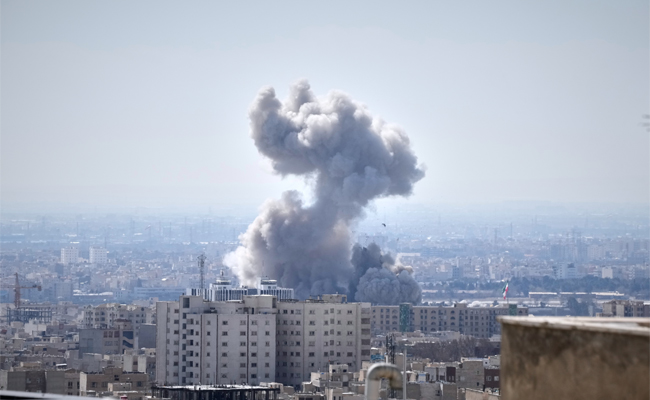
On February 28, America and Israel launched devastating missile strikes deep inside Iran. The very first attack killed Iran's Supreme Leader Ayatollah Ali Khamenei, along with five of his own family members, including a tiny baby granddaughter, and his closest advisors. Think about that for a moment. An entire family wiped out in seconds. Then came more horror. A girls' primary school in the city of Minab was hit, killing nearly 150 innocent people, mostly children, and injuring about 100 more. On March 1, hospitals in Tehran were damaged, including Gandhi Hospital — a hospital named after our own Mahatma Gandhi. The head of the World Health Organization called these attacks "deeply concerning."
And what did India say? External Affairs Minister Jaishankar did speak to Iran's Foreign Minister on the same day. But in all official statements, there was no condolence message. No mention of the children killed in schools. No word about the hospitals destroyed. Just a general line saying India is "deeply concerned about recent developments." That is it. Later, on March 3, another statement came expressing "grave anxiety." But still, nothing specific. Nothing human.
This has shocked many people, including India's own former diplomats. One former Ambassador with deep experience in international law gave a chilling warning. He said that if countries do not stand up against the growing practice of killing leaders of independent nations, they themselves could be "next in line." Think about that. If today it is Iran's leader, tomorrow it could be anyone.
Opposition parties have slammed the Modi government hard. They are asking — is this the same India that always stood for peace, sovereignty, and international law? They point out that India has responded more strongly in the past. In January 2020, when America killed Iran's top General Qasem Soleimani, India had at least called the situation "alarming." The Ministry of External Affairs had acknowledged that a senior Iranian leader was killed and stressed the importance of peace in the region. Iran's Foreign Minister even visited New Delhi that year and openly criticised President Trump during the Raisina Dialogue.
Again in June 2025, when America attacked Iran's nuclear sites, Prime Minister Modi himself called Iran's President within hours and expressed "deep concern." India later joined SCO and BRICS statements criticising the strikes. During that crisis, Iran even made a special exception for India, reopening its airspace only for Indian flights so that hundreds of Indians could return home safely. Iran helped us. And now, when Iran is bleeding, India is looking the other way.
So why this silence? Former Ambassador to Iran, Rakesh Sood, explained to The HINDU , that today's global politics is extremely complex, India's ties with Iran have weakened over the years, and Khamenei's past remarks about India had created bitterness. But beyond that, there are five deeper reasons.
First, India's bond with Israel has become very strong. Modi was the first Indian PM to visit Israel in 2017. After his recent speech in the Israeli Parliament saying India stands "firmly and fully" with Israel, the shift became clear. After the war began, Modi called Netanyahu and Gulf leaders but did not call Iran's President. Netanyahu even thanked Modi publicly. India clearly does not want to upset Israel.
Second, India-Iran trade has collapsed. Due to American sanctions, India stopped buying Iranian oil in 2018. Trade crashed from 17 billion dollars to barely 1.68 billion. Even the Chabahar port that India built is now in danger. India has already paid its full 120 million dollars and quietly pulled out most staff. Israeli missiles have even struck the Chabahar airport area.
Third, Khamenei had personally angered India by criticising its Kashmir policy in 2017, opposing Article 370's removal in 2019, and calling the Delhi riots a "massacre of Muslims" in 2020. This bitterness made India unwilling to mourn his death publicly.
Fourth, India does not want to upset its Gulf friends, especially the UAE and Saudi Arabia. A new defence partnership with the UAE was signed just this January. Since Iran has attacked facilities in these countries, India cannot be seen supporting Iran.
Fifth, India desperately needs America right now. A fresh trade deal was signed in February 2026. America has included India in its Pax Silica technology supply chain. With Trump threatening sanctions on anyone engaging with Iran, India simply cannot risk angering Washington.
But this silence has a price. India hosts the BRICS summit this year — a group that includes both Iran and the UAE. If India stays quiet too long, its reputation as a fair and independent voice will be damaged forever.
Silence is also a choice. And sometimes, silence speaks louder than words.
(Girish Linganna is an award-winning science communicator and a Defence, Aerospace & Geopolitical Analyst. He is the Managing Director of ADD Engineering Components India Pvt. Ltd., a subsidiary of ADD Engineering GmbH, Germany.)
Disclaimer: The views and opinions expressed in this article are solely those of the author. They do not necessarily reflect the views, policies, or position of the publication, its editors, or its management. The publication is not responsible for the accuracy of any information, statements, or opinions presented in this piece.
Let the Truth be known. If you read VB and like VB, please be a VB Supporter and Help us deliver the Truth to one and all.
2019 mud attack on engineer: Maharashtra court sentences BJP minister Nitesh Rane to one-month jail
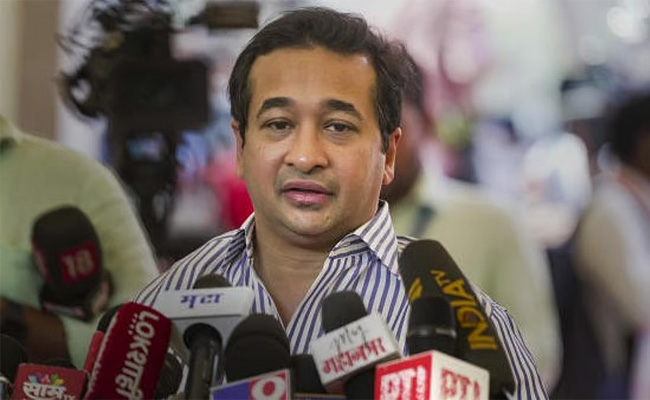
Mumbai (PTI): A court in Sindhudurg on Monday convicted Maharashtra minister Nitesh Rane in a 2019 case of pouring mud on an NHAI engineer when he was in opposition, and sentenced him to one-month imprisonment, noting that lawmakers are not supposed to take the law into their hands.
Later, the court suspended Rane's sentence, allowing him time to appeal before a higher court, while acquitting 29 other accused in the case.
"Even though Rane's intention was to raise a voice against the poor quality of work and inconvenience faced by the people, he was not supposed to humiliate or insult a public servant in public," additional sessions court judge V S Deshmukh stated.
"If such incidents continue to occur, public servants would not be able to discharge their duties with dignity," the judge noted.
ALSO READ: 19-yr-old woman found hanging from tree in UP village; juvenile held
Calling the act "abuse of power", the court held that "it is the demand of time to curb such tendency".
Rane, a son of former Union minister Narayan Rane, was among 30 people charged under various offences, including rioting, assault to deter a public servant, and criminal conspiracy. He was in Congress when the incident occurred.
All the accused, including Nitesh Rane, were acquitted of these offences, as the court found insufficient evidence to support most of these claims.
However, the court found Nitesh Rane guilty of an offence under section 504 (intentional insult meant to provoke a breach of public peace) and sentenced him to one month's jail.
Rane, then a Congress MLA, had called the Sub-Divisional Engineer of the National Highway Authority, Prakash Shedekar, to a bridge over the Gad river in Kankavli on July 4, 2019, for inspecting the work to widen the Mumbai-Goa Highway.
According to the prosecution, Nitesh Rane and his followers, frustrated by the poor quality of the roadwork and waterlogging, confronted the engineer. They poured muddy water on Shedekar and forced him to walk through slush in public.
The court, after perusing the evidence on record, noted that the informant (victim) was holding a high post in the National Highway Authority.
"Despite that, he was made to walk through the muddy water in public. It would have certainly humiliated and insulted him," the court remarked.
The judge held that Rane compelling Shedekar to walk through the muddy water "was nothing but an intentional insult to the informant," and provocation which will cause him to break the public peace.