Six-year tedious course for graduation, is it all worth it for Pharmacists in India?

Eleven years ago, in 2008, the government of India introduced a professional doctorate degree in Pharmacy, Pharma D. In 2012, the six-year professional course was officially recognized as a graduate degree in the country and those with completed Pharma D degree were made eligible to enroll for Ph.D.
One of the major reason the course was introduced in the country to improve the clinical pharmacy services. Also it is the only pharmacy service which is in direct contact with patient health care system.
Apparently, when we look at developed countries like United States and others the practice that goes into the healthcare system of their country is that a patient is only diagnosed by a doctor or physician and they are then referred to pharmacist with the diagnosis report who prescribe the medicine to the patients.
On the contrary, in India, doctors who are not qualified and knowledgeable enough to prescribe medicine, not only diagnose the patient but also prescribe the required medicine, thus leaving a loophole in the healthcare system of the country. Going by the practices of countries like US and after getting their Pharma D graduation after studying for six long years, it should be the pharmacists who should prescribe patients the medicine after initial diagnosis by the doctors and physicians.
On what can be touted as the injustice being done with the Pharma D students and graduates, the whole six-year course is brought down to only reading prescription and giving prescribed medicine at their medical shops. One of the major questions that arises here is whether one has to undergo six years of studies, tedious course, several practical and theoretical examinations to only sit in a shop and read prescription?
Another question that needs to be addressed is whether this is a part of bigger conspiracy wherein the corporate drug making companies are using Doctors to prescribe medicine of their respective brand? If so then is it not another loophole in the country’s healthcare system that needs to be immediately and ethically addressed?
I would surely not argue on the syllabus being covered in both the courses – MBBS and Pharma D, but would certainly argue on the recognition being given to the time and effort put in by a Pharma D student. It is for the Ministry of Health & Family Welfare, the Pharmacy Council of India and the All India Council for Technical Education, to discuss and come up with a practical solution for this injustice being done to students.
Disclaimer: The views and opinions expressed in this blog are those of the authors and do not necessarily reflect the official policy or position http://english.varthabharati.in
Author Asim Jawad can be reached on his e-mail address: asimjawad@hotmail.com
Story edited by Vartha Bharati English sub-editor: Ismail Zaorez
Let the Truth be known. If you read VB and like VB, please be a VB Supporter and Help us deliver the Truth to one and all.
SC to hear on May 4 PIL seeking stringent guidelines for issuing Aadhaar to adolescents, adults
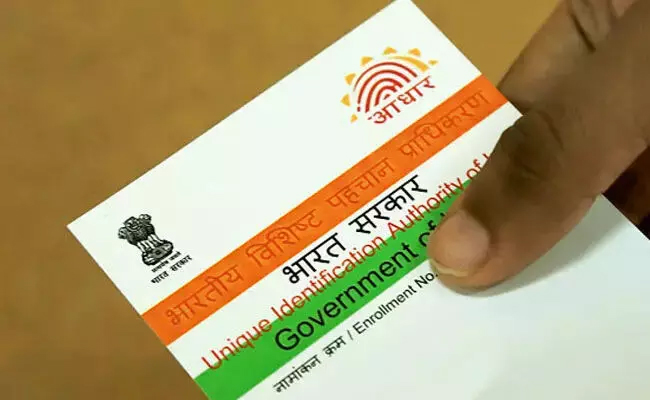
New Delhi (PTI): The Supreme Court is scheduled to hear on Monday a plea seeking a direction to the Unique Identification Authority of India to issue new Aadhaar cards only to citizens up to the age of six years, and frame stringent guidelines for its issuance to adolescents and adults to stop infiltrators from masquerading as Indian citizens.
As per the apex court's causelist of May 4, the plea would come up for hearing before a bench of Chief Justice Surya Kant and Justice Joymalya Bagchi.
The Public Interest Litigation (PIL) filed by lawyer Ashwini Upadhyay has also sought a direction to the authorities to install display boards at common service centres stating that the 12-digit unique identification number is only a "proof of identity" and not a proof of citizenship, address or date of birth.
Besides all the states and Union Territories, the plea has made the UIDAI -- which is the authority that issues Aadhaar -- and the Union ministries of home, law and justice, and electronics and information technology as parties.
The plea, filed through advocate Ashwani Dubey, said Aadhaar, originally intended as a proof of identity, has increasingly become a "foundational document" enabling individuals to obtain other identification documents, such as ration cards, domicile certificates and voter identity cards.
"The UIDAI has issued 144 crore Aadhaar and 99 percent Indians have been enrolled. Therefore, the petitioner is filing this writ petition as a PIL under Article 32, seeking a direction to UIDAI to issue new Aadhaar to children only and frame new stringent guidelines for adolescents and adults, so as to stop infiltrators from getting it and masquerading as Indian citizens," the plea said.
It said the need to file the plea arose when the petitioner came to know the manner in which infiltrators are able to procure Aadhaar through a verification process that is weak and can be easily manipulated.
"Foreigners apply for Aadhaar under the 'foreign' category. But infiltrators apply for Aadhaar under the 'Indian citizen' category and get it easily made. Thereafter, they obtain a ration card, birth and domicile certificate, driving licence, et cetera, essentially becoming indistinguishable from Indian citizens…," it said.
Besides seeking other directions, the plea has raised legal questions, including whether the Aadhaar Act 2016 has become "temporally unreasonable" for failing to keep up with the legislative intent of distinguishing foreigners from Indian citizens.
It said the alleged misuse of Aadhaar undermines targeted welfare delivery and leads to diversion of public resources.