The Constitution: India’s Soul and the Guardian of Democracy
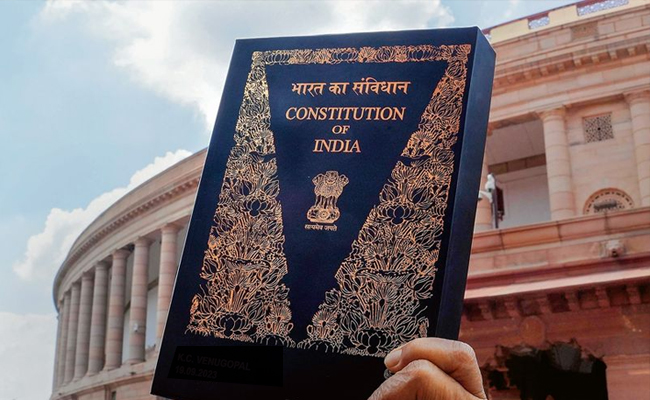
India is a symbol of democracy, diversity, and unity. This strength comes from the foundation of our nation—the Constitution. Drafted under the leadership of Dr. B.R. Ambedkar and inspired by leaders like Mahatma Gandhi and Pandit Nehru, the Constitution is more than a legal document; it is a guide to equality, justice, and liberty. In today’s turbulent times, protecting the Constitution has become more important than ever.
Constitution: A Gift for All, Especially the Deprived
Dr. Ambedkar said, “The Constitution is not a lawyer’s document; it is a vehicle of life.” It reflects the hopes of millions, especially the marginalized.
Key articles, like Article 14 (equality before the law) and Article 17 (abolition of untouchability), empower the oppressed. The Directive Principles of State Policy under Article 46 ensure the welfare of weaker sections, including Scheduled Castes and Tribes.
Karnataka’s government has set up the Justice Nagamohan Das Commission to introduce internal reservation for Scheduled Castes based on the Supreme Court’s seven-judge Constitution bench verdict.
Our government has also launched guarantee schemes to uplift the needy, fulfilling the promise of an equal society. These efforts show how the Constitution shapes policies for a better future.
Communal Harmony: A Constitutional Mandate
The Constitution promotes communal harmony. Article 25 ensures religious freedom, and Article 29 protects minority rights, strengthening India’s unity in diversity.
At the Gandhi Bharat Conference in Belagavi, the theme "Jai Bapu, Jai Bhim, Jai Samvidhan" highlighted the ideals of Gandhi and Ambedkar. As Rahul Gandhi said during the Bharat Jodo Yatra, “The Constitution is not just a book; it is the lifeline of democracy.”
However, communal harmony is under threat. Statements by leaders like Union Home Minister Amit Shah show how polarization is used for political purposes. Hate crimes and divisive politics have increased.
The Congress Party has responded by promoting interfaith dialogue, inclusive policies, and awareness campaigns to protect India’s secular values.
Constitutional Violations and the Fight for Justice
Democracy depends on fundamental rights like Article 19 (freedom of speech) and Article 21 (protection of life). But today, suppression of dissent, attacks on minorities, and gender-based violence are alarming challenges.
Priyanka Gandhi rightly said, “The Constitution is not just a legal text; it is a moral promise to every citizen.” Karnataka’s Congress government has launched initiatives like the Save the Constitution human chain and reading the preamble in schools to increase awareness about constitutional values.
The BJP’s Attempts to Undermine the Constitution
Dr. Ambedkar warned, “A good Constitution is useless if those implementing it are bad.” Today, this is true as BJP leaders undermine the Constitution’s principles.
There are concerns about efforts to replace constitutional ideals with regressive ideas like Manusmriti. BJP criticizes Congress for amending the Constitution, but every amendment by Congress has strengthened democracy, ensuring rights for backward classes and women.
A Vision Rooted in Global Excellence
Dr. Ambedkar and the Drafting Committee studied the world’s best constitutions. They took ideas from the U.S. Bill of Rights, the U.K.’s parliamentary system, and Ireland’s directive principles. Nehru said, “The Constitution reflects the dreams of the people.”
The Constitution combines global practices with solutions for India’s unique challenges. It is admired worldwide and remains a guiding light for all nations.
Constitution—Our Life, Our Future
The Constitution is more than a legal document; it is India’s lifeline. As Siddaramaiah said, “Without the Constitution, we are like fish without water.” Every Indian must protect and respect it.
As we celebrate 76 years of our Republic, we must remember the sacrifices of Gandhi, Ambedkar, and our freedom fighters who fought for equality, justice, and liberty.
The Congress Party is dedicated to safeguarding the Constitution and its values. Together, let us say: Jai Bapu, Jai Bhim, Jai Samvidha
Let the Truth be known. If you read VB and like VB, please be a VB Supporter and Help us deliver the Truth to one and all.
Karnataka power tussle: BJP leader calls Siddaramaiah 'Sultan for 15 days'
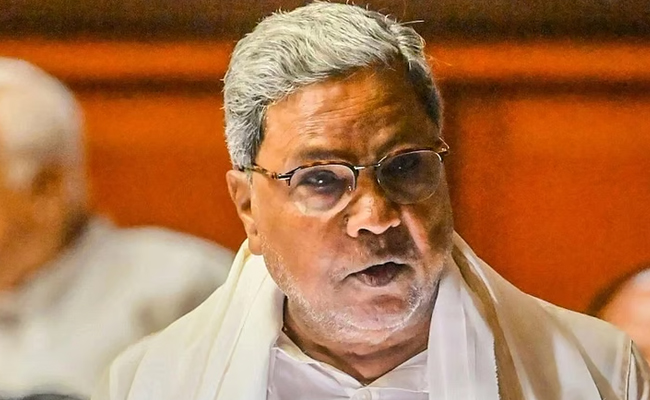
Bengaluru/Bagalkot (PTI): In the midst of the ongoing power tussle within the ruling Congress in Karnataka, senior BJP leader and MP Govind Karjol called CM Siddaramaiah "Pandrah din-ka-Sultan" (Sultan for 15 days), and said after that, he will not be the chief minister of the state.
Speculation has once again surfaced within the Congress party and political circles about a possible decision on leadership change and cabinet reshuffle after May 4, once the results for Assembly elections in four states and one union territory, along with bypolls to two Assembly constituencies in Karnataka, are announced.
"With the fight for the CM chair in the Congress, there seems to be no administration at Vidhana Soudha. The result for Siddaramaiah's CM chair fight will also be declared, along with election results for five states (four states and one union territory) and bypoll results for Bagalkot and Davanagere South Assembly seats in Karnataka," Karjol, a former Deputy CM, said.
Speaking to reporters here, he said, "As per today's information, Siddaramaiah is a Sardar for fifteen days, he is Pandrah din-ka-Sultan, after that Siddaramaiah will not be the chief minister of the state."
Stating that Shivakumar is ready to take up the top job, the MP said that this is the reason Siddaramaiah's supporters have gone to New Delhi to meet the Congress President.
"Already 40-odd legislators have lobbied in support of Siddaramaiah; about 50 are lobbying in support of Shivakumar. Amid this fight for the CM chair, the administration has completely collapsed," he said, urging the government to focus on addressing drinking water issues in various parts of the state amid summer by releasing at least Rs 50 crore per district.
PWD Minister Satish Jarkiholi on Monday met Congress President Mallikarjun Kharge and General Secretary (in charge of Karnataka) Randeep Surjewala in New Delhi and requested them to address the speculation regarding the change of leadership in Karnataka.
Subsequently, Social Welfare Minister H C Mahadevappa too met the party leadership in Delhi.
Both Jarkiholi and Mahadevappa are considered close to Siddaramaiah.
While MLAs and leaders who want Shivakumar to be elevated as CM have recently claimed they expect some "sweet news" by May 15, which is their leader's birthday.
Meanwhile, a team of 40 MLAs is preparing to visit New Delhi to press the Congress high command for a Cabinet reshuffle.
Speaking to reporters in Bengaluru, Leader of the Opposition in the Assembly R Ashoka hit out at the Congress leadership for indulging in "power tussle" instead of addressing the people's concerns. He called the government "anti-people" and "dead" to the people of the state.
With the fight for the CM chair, the ruling Congress in Karnataka seems to be shifting to Delhi. Congress MLAs are repeatedly touring Delhi, upset over the state leadership amid a power struggle between the CM and Deputy CM. This proves that there is no value for the state leadership," he said.
Pointing out that the Deputy CM Shivakumar was not present at the recent special cabinet meeting, which decided on internal reservation among SCs, the opposition leader said, "If the cabinet meeting was held purposely, despite knowing that Shivakumar was in Delhi, it proves that there are factions within the party"
"This government is dead in a way," he said, as he hit out at the Congress MLAs and Ministers, including Shivakumar, for doing "Delhi Yatras" instead of addressing drinking water issues in various parts of the state amid summer, picking up in the state.