The Indian Space Policy 2023 allows the private sector to construct satellites and rockets
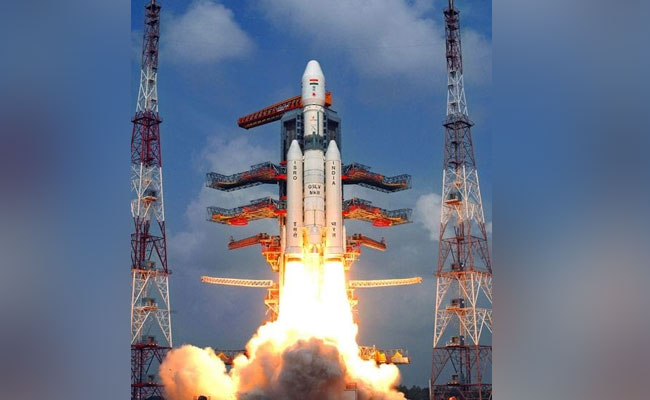
Prime Minister Narendra Modi led a Cabinet Committee that approved the Indian Space Policy 2023. The policy allocates duties to ISRO, NSIL (a space sector PSU), and IN-SPACe for the development of the space sector in India .
Synopsis
Singh has stated that private sector firms will have the capability to develop rockets, launch vehicles, satellites, and collect and distribute data. The private sector will be granted access to the entire range of space operations.
The Indian Government has recently given its approval to the Indian Space Policy. The main objective of the policy is to establish and promote the involvement of private sector in the country's space industry. It aims to make the process of private sector participation in the space sector easier for India.
According to the policy, the Indian Space Research Organisation (ISRO) will concentrate on researching and developing advanced space technologies,
The Cabinet Committee led by Indian Prime Minister Narendra Modi has given its approval to the Indian Space Policy 2023 which assigns responsibilities to ISRO, New Space India Limited (NSIL) - a public sector enterprise in the space industry, and the Indian National Space Promotion and Authorization Center (IN-SPACe).
Union Minister Jitendra Singh has stated that the Indian Space Policy will provide a clear understanding of the function of the recently established components. This policy may bring about changes in the operations of space in India.
Singh has stated that private sector organizations will now have the ability to construct rockets, satellites, launch vehicles, as well as collect and distribute data. This will provide private sector entities with access to comprehensive space operations.
NSIL : Singh stated that NSIL, a public sector company operating under the Department of Space, will be responsible for executing strategic activities related to the space sector. NSIL will operate in a demand-driven mode to accomplish its objectives.
ISRO : According to S Somanath, the Chairman of ISRO, the Space Policy will prioritize the involvement of private companies in the space industry.
INSPACe :According to Somanath, the newly established agency will serve as a connection point between the Indian Space Research Organization and non-governmental organizations.
Indian Space Policy 2023: Details
According to him, the policy outlines the guidelines for the private industry to utilize ISRO facilities by paying a nominal fee and urges them to fund the development of fresh infrastructure for the sector.
According to Somanath, ISRO will not be involved in operational or production tasks related to space sector, instead it will concentrate its efforts towards creating new technologies, systems, and carrying out research and development.
ISRO's mission operations will be transferred to NewSpace India Limited, a government-owned enterprise under the Department of Space. All the essential tasks related to ISRO's operations will be managed by this entity.
Why the inclusion of private sector for India's space economy?
Somanath said India’s share in the global space economy was less than two per cent at present and the space policy will help it increase substantially to 10 per cent in the future.
The Indian cabinet's approval of the Indian Space Policy 2023 is a significant moment according to Lt Gen A K Bhatt (retd), Director General of the Indian Space Association. He believes that the policy will provide clarity on space reforms and encourage private industry participation, ultimately boosting the country's space economy.
The future of space economy in India
As per VICE's report, the space industry has a net worth exceeding $500 billion, with the largest expenditures coming from the United States and China. India's contribution to the industry is currently limited to 2%.
As per the Economic Survey of India, more than 100 space companies have been active since 2012. These companies are competing for approval from the recently established InSpace, which acts as a mediator between ISRO and private businesses in India.
The decision to let private corporations carry out space missions has proven advantageous to countries like the US as it encourages investment from the private sector. One such example is SpaceX, founded by Elon Musk, whose Falcon 9 rockets that can be used multiple times have gained widespread popularity for space missions across the globe.

Girish Linganna
Aerospace & Defence Analyst
Let the Truth be known. If you read VB and like VB, please be a VB Supporter and Help us deliver the Truth to one and all.
KKR defeat LSG via Super Over

Lucknow (PTI): Kolkata Knight Riders edged Lucknow Super Giants via Super Overs in a battle between two bottom-placed teams in the IPL, here on Sunday.
Chasing a modest 156, LSG suffered a batting collapse and managed to tie the contest and take it to Super Over with No. 9 Mohammed Shami striking a last-ball six against a wayward Kartik Tyagi, who leaked 16 runs in the final over.
But Sunil Narine bowled a stunning Super Over conceding just one run and taking two wickets to give KKR an easy target.
Rinku Singh then finished the chase with a boundary off first ball from Prince Yadav.
Earlier the KKR were in deep trouble with 93/7 in 15 overs but Rinku smashed a sensational 83 not out from 51 balls including four sixes in a row in the final over to lift them to 155/7.
Cameron Green (34) was the only other batter to reach double-digit scores as KKR suffered a familiar batting meltdown with Mohsin taking his maiden fifer.
In reply, LSG continued their dismal show with the bat to succumb to their fifth loss in a row.
Brief Scores:
Kolkata Knight Riders 155/7; 20 overs (Rinku Singh 83 not out, Cameron Green 34; Mohsin Khan 5/23). Lucknow Super Giants 155/8; 20 overs (Rishabh Pant 42). KKR won via Super Over.