War Gamble Backfires, Trump Faces Isolation
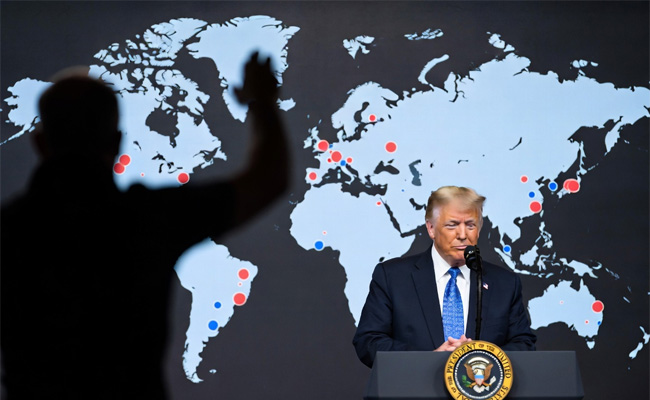
Imagine you start a fight with your neighbour, thinking it will be over in a few days. But weeks pass, your family is unhappy, your money is running out, your other neighbours are avoiding you, and the fight is only getting bigger. That is exactly the situation Donald Trump finds himself in today with the Iran war.
Let us understand what is really happening — step by step, like a story.
Trump had threatened Iran with a very aggressive deadline — reopen the Strait of Hormuz (the narrow sea route through which 20% of the world's oil passes) within 48 hours, or face attacks on Iran's power plants. Iran simply refused. Trump then quietly postponed that deadline by 10 more days, until April 6. In plain language — he blinked first.
Trump has been claiming that Iran is "begging for a deal" and that talks are happening. But Iran publicly denied this. Qatar, which was expected to be a mediator (a middleman helping both sides talk), also denied any involvement. Qatar's spokesperson clearly said, "We were not part of any mediation efforts" — and pointedly added, "if such talks are even happening." That one line says everything.
Iran did put forward its own five conditions to stop the war. These include: stopping all attacks, a guarantee that war will not happen again, payment for all war damage, a complete ceasefire across all areas, and — most importantly — full Iranian control over the Strait of Hormuz. Iran had earlier also demanded removal of all US military bases from the Gulf. These are not small demands. These are the conditions of a country that does not feel defeated at all.
The real problem is that neither side trusts the other. Iran remembers that the US attacked it twice in one year — even while peace talks were supposedly going on. So Iran believes Trump may be using "talks" only as a trick to buy time and prepare for a bigger attack. Iran's parliament speaker even warned that enemies are planning to capture one of Iran's islands. Because of this fear, Iran is focused on defending itself, not negotiating.
Now look at what the US is actually doing on the ground. Around 2,000 soldiers from the famous 82nd Airborne Division — an elite unit that has fought in almost every major US war since World War II — have already moved towards the Gulf. These are paratroopers who can be dropped anywhere in the world within 24 hours. Two large military ships — USS Tripoli and USS New Orleans — are also being positioned nearby. In total, nearly 7,000 more American troops are heading to the region.
The possible targets being discussed include Kharg Island, which is Iran's biggest oil export point; Qeshm Island, believed to be a massive underground weapons storage facility with anti-ship missiles; and Larak Island, which gives Iran control over the Strait of Hormuz. There are even reports of a dangerous mission to capture 454 kg of uranium hidden deep inside Iran. These are not small operations. These are plans for a full-scale war.
But Iran has been preparing for exactly this. For years, it has studied US wars in Vietnam, Iraq, and Afghanistan — learning from America's own mistakes. Iran has received military training and equipment support from China and Russia. It has placed landmines and traps around Kharg Island and other targets. China had reportedly agreed to supply advanced anti-ship missiles capable of destroying even large warships like aircraft carriers. If those missiles are in place, any US troop-carrying ships are in serious danger.
Back home in America, the mood is turning. A Reuters poll shows 61% of Americans now oppose the war. Only 20% of even Trump's own Republican supporters back the idea of sending ground troops into Iran. Some Republican leaders have openly said they will not support a ground invasion. Trump's approval rating has fallen to its lowest point since he returned to the White House — lower than even Joe Biden's worst ratings.
And the money problem is real. Petrol prices in the US have gone up sharply. Nearly half of all Americans are worried about fuel costs in coming months. The OECD (a global economic organisation) says US inflation — meaning the rise in prices of daily goods — may hit 4.2% this year, the highest among developed nations. Only 25% of Americans are happy with how Trump is handling the cost of living. Only 29% approve of his handling of the economy.
Meanwhile, Iran's strategy is becoming clear. By blocking oil routes and attacking Gulf countries, Iran is trying to create a crack between the US and its Gulf allies. These countries have lost billions in oil income and their infrastructure is damaged. They are quietly beginning to ask — what exactly are these US military bases protecting us from?
Trump walked into this war confidently. Now, every exit is becoming harder to find.
(Girish Linganna is an award-winning science communicator and a Defence, Aerospace & Geopolitical Analyst. He is the Managing Director of ADD Engineering Components India Pvt. Ltd., a subsidiary of ADD Engineering GmbH, Germany.)
Disclaimer: The views and opinions expressed in this article are solely those of the author. They do not necessarily reflect the views, policies, or position of the publication, its editors, or its management. The publication is not responsible for the accuracy of any information, statements, or opinions presented in this piece.
Let the Truth be known. If you read VB and like VB, please be a VB Supporter and Help us deliver the Truth to one and all.
Opposition stages walkout in RS over BJP MP's remarks on misuse of OBC reservation
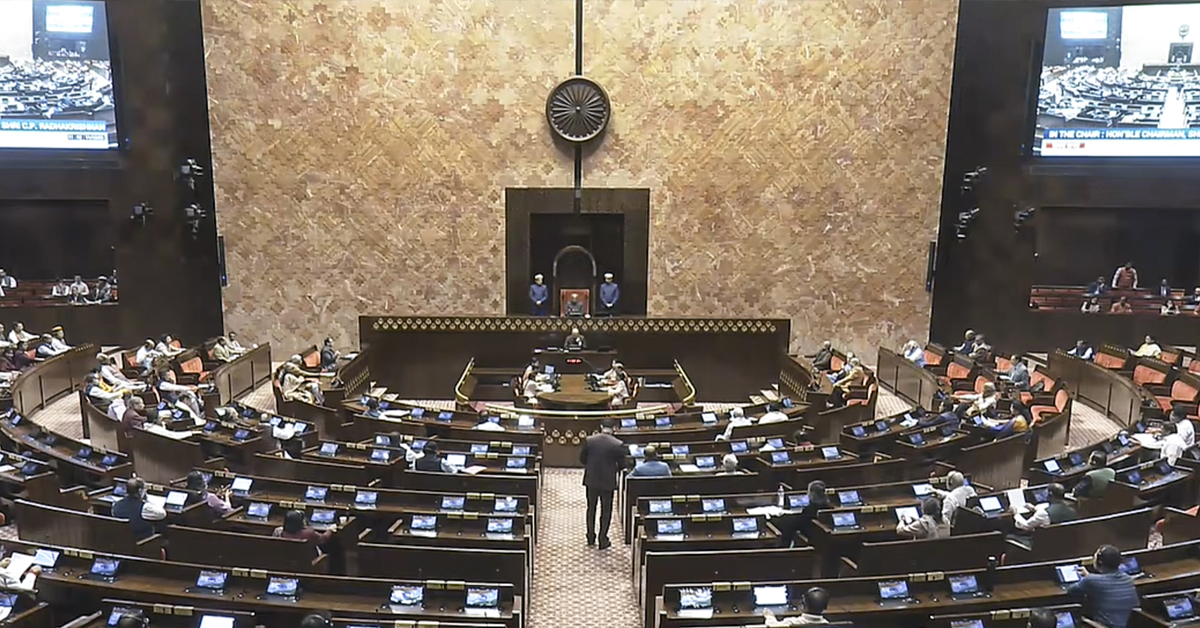
New Delhi (PTI): The Rajya Sabha on Monday witnessed a walkout by several opposition parties over BJP member K Laxman's remarks that OBC reservation is being misused in the name of religion.
Leader of the House and Union Minister J P Nadda criticised the walkout, saying the Congress leadership and the opposition's INDIA alliance are neither interested in debates nor have any respect for democratic values or the Constitution.
During Zero Hour, Laxman raised the issue of OBC reservation, and said their quota is being misused in the name of religion.
He said some states are extending reservations to Muslims and requested the government to order a comprehensive review of such religion-based reservations.
While he was speaking, certain opposition members raised objections to Laxman's remarks.
Later, almost the entire opposition staged a walkout from the House.
Nadda said the opposition parties are disrespectful to the Constitution and do not respect the parliamentary procedures.
He further said opposition parties consider Muslims as a vote bank, while accusing them of engaging in appeasement politics.