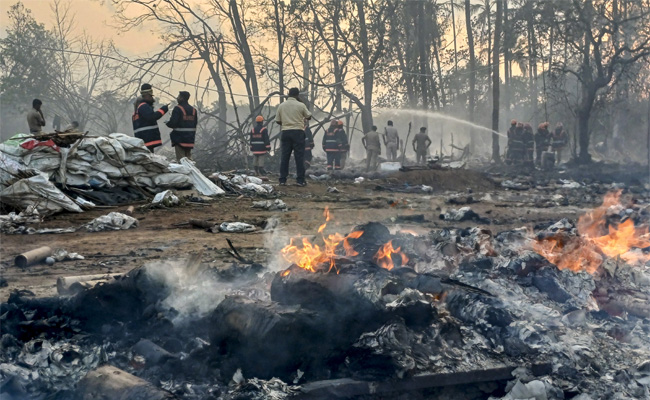
War in the Gulf: Who Really Pays When Skies Go Silent?
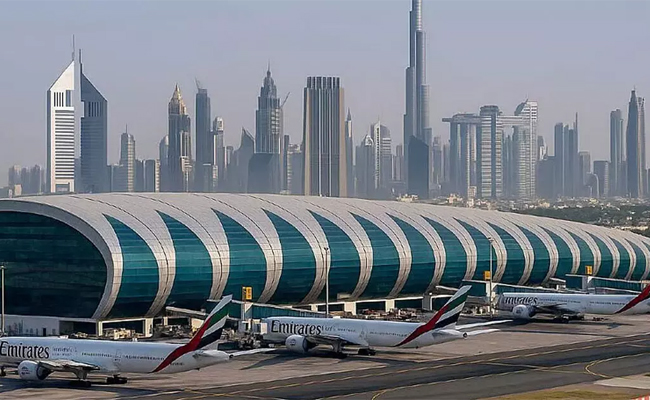
On Saturday morning, 28th February 2026, Iranian missiles hit the Gulf. Within minutes, Dubai International Airport — one of the busiest airports on Earth, handling 92 million passengers a year (that's 9.2 crore people, more than twice Bangalore's entire airport handles at 4.38 crore) — went completely dark. One takeoff or landing happens every 72 seconds at Dubai. All of it stopped.
Within hours, Dubai, Doha, and Abu Dhabi went offline together. Over 12,000 flights were cancelled in just three days — that's 40% of all planned departures. More than one million passengers (10 lakh people) were left stranded in airports with nowhere to go.
Here's why this hit so hard. The airspace over Iraq and Iran is the main highway in the sky connecting Europe to South Asia (India, Pakistan, Bangladesh, Sri Lanka, Nepal, Bhutan, Maldives, Afghanistan) and Southeast Asia (Indonesia, Thailand, Vietnam, Malaysia, Singapore, Philippines and others). Three Gulf airports — Dubai, Doha, Abu Dhabi — move 90,000 transit passengers every single day. Emirates, Qatar Airways and Etihad together earn over US$ 68 billion a year. When war started, dozens of airlines pulled out overnight. At least 145 planes already flying mid-air turned around and came back.
Now here's the part most people miss — and as Al-Jazeera reported, this is where the real damage begins. When skies close, it's not just passengers who suffer. Air cargo — goods transported by aircraft — carries 35% of global trade by value. That's over US$ 8 trillion worth of goods every year, even though it's less than 1% by weight. What moves through the air? Vaccines with strict expiry dates. Semiconductors (the tiny chips that run your phone, your car, your TV). Fresh produce that spoils within days. Aircraft parts. Life-saving medicines. Things the world simply cannot wait for.
When this airspace closed, factories slowed, medicine deliveries got delayed, and supply chains across continents got disrupted. Airlines forced to reroute around Iran face up to 90 extra minutes per flight — at US$ 6,000 per hour in operating costs, that's serious money. Add to this that Brent crude (international oil price) jumped 4.5% after the airstrikes. Airline stocks fell across Asia and Australia. Airlines pass every rupee of that cost to passengers. Ticket prices go up and stay up for months.
But the sharpest pain fell on a group nobody talks about enough.
In Dhaka, Kathmandu, and Bali, departure halls filled with migrant workers — construction workers, drivers, domestic helpers — all heading back to their Gulf jobs. No flights meant missed contracts, docked wages (money deducted from salary for missed days or late reporting), and days without income. In the UAE, more than 60% of migrants earn under US$ 1,360 a month. Every day without work is a crisis.
The numbers tell the full story. Gulf-based Indian workers send home roughly US$ 49 billion every year in remittances (money sent home). Pakistani workers send over US$ 17 billion. Bangladeshi workers in the Gulf, US$ 11 billion.
When the Gulf shuts down, the pain doesn't stay at the airport gate. It travels thousands of kilometres — all the way to a family sitting at home, waiting for a wire transfer that never comes.
(Girish Linganna is an award-winning science communicator and a Defence, Aerospace & Geopolitical Analyst. He is the Managing Director of ADD Engineering Components India Pvt. Ltd., a subsidiary of ADD Engineering GmbH, Germany.)
Disclaimer: The views and opinions expressed in this article are solely those of the author. They do not necessarily reflect the views, policies, or position of the publication, its editors, or its management. The publication is not responsible for the accuracy of any information, statements, or opinions presented in this piece.
Let the Truth be known. If you read VB and like VB, please be a VB Supporter and Help us deliver the Truth to one and all.
KKR defeat LSG via Super Over
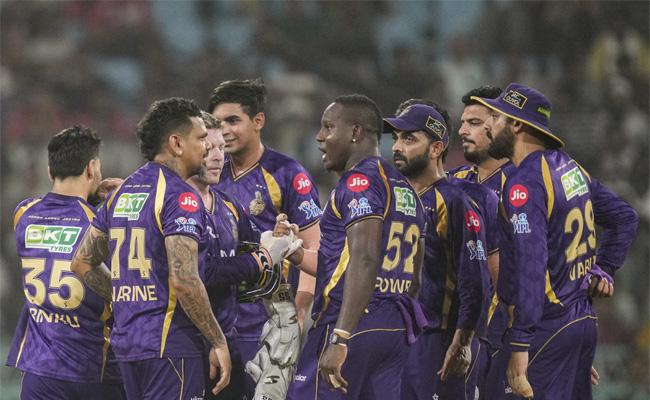
Lucknow (PTI): Kolkata Knight Riders edged Lucknow Super Giants via Super Overs in a battle between two bottom-placed teams in the IPL, here on Sunday.
Chasing a modest 156, LSG suffered a batting collapse and managed to tie the contest and take it to Super Over with No. 9 Mohammed Shami striking a last-ball six against a wayward Kartik Tyagi, who leaked 16 runs in the final over.
But Sunil Narine bowled a stunning Super Over conceding just one run and taking two wickets to give KKR an easy target.
Rinku Singh then finished the chase with a boundary off first ball from Prince Yadav.
Earlier the KKR were in deep trouble with 93/7 in 15 overs but Rinku smashed a sensational 83 not out from 51 balls including four sixes in a row in the final over to lift them to 155/7.
Cameron Green (34) was the only other batter to reach double-digit scores as KKR suffered a familiar batting meltdown with Mohsin taking his maiden fifer.
In reply, LSG continued their dismal show with the bat to succumb to their fifth loss in a row.
Brief Scores:
Kolkata Knight Riders 155/7; 20 overs (Rinku Singh 83 not out, Cameron Green 34; Mohsin Khan 5/23). Lucknow Super Giants 155/8; 20 overs (Rishabh Pant 42). KKR won via Super Over.