When Will This War Finally End?
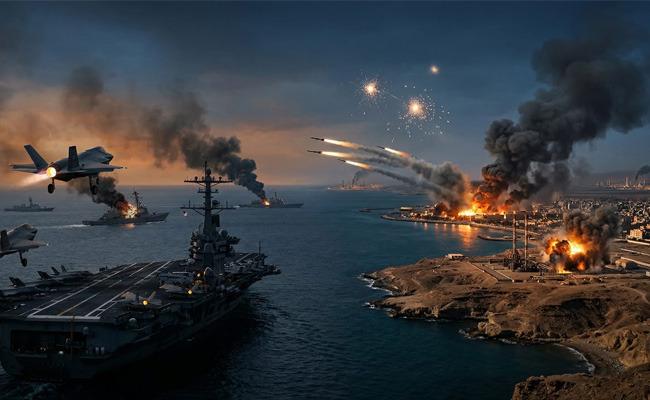
Three weeks into the US-Iran war, the world is holding its breath. Families in the Gulf are scared. Oil prices are shaking. And quietly, even Washington seems to be asking itself — how do we get out of this?
To understand when this war might stop, we first need to understand why it even started — and why it has not gone the way America planned.
America Walked In Overconfident
When the US launched its attack on Iran on February 28, it had three big beliefs. First, it thought the world was still in its favour — Russia was stuck in Ukraine, China was dealing with its own problems. Second, it believed that heavy bombing alone could shake Iran's leadership and break its will to fight. This is the old "shock and awe" idea — bomb hard, bomb fast, and the enemy will fall. Third, it counted on its many military bases and allies across West Asia to give it total control.
All three beliefs turned out to be wrong.
Iran Hit Back — And Hit Hard
Iran did not collapse. It hit back directly at American bases across the Persian Gulf. Satellite images confirmed that 25 targets were struck across seven US bases in five countries — radar systems, fuel storage, aircraft shelters, supply buildings. Even Donald Trump admitted publicly that he was surprised by Iran's sharp and effective response.
This changed everything.
Suddenly, the US bases that were supposed to be launching pads became weak points. Iran proved it could strike them. This created what experts call "mutually assured destruction" — a situation where both sides can hurt each other so badly that neither can attack freely without suffering serious damage in return. Think of two people standing very close to each other, both holding knives. Neither can strike without getting hurt themselves. That is exactly the position the US finds itself in today.
This is also why Trump quickly pulled back after Israel attacked Iran's South Pars gas field. Iran immediately targeted energy facilities in the Gulf. The risk of a much bigger explosion — economically and militarily — became too real to ignore.
Iran Was Always Misunderstood
Here is something most people do not realise. Iran does not fight like America. The US military is built to travel far, carry heavy weapons, and fight high-tech wars in other people's countries. Iran's military is built differently — simpler, smarter, and designed for one purpose: to make sure anyone who attacks Iran suffers badly in return.
This strategy is called "deterrence by punishment." In plain words — I cannot match you weapon for weapon, but if you hit me, I will hit you back so hard that you will regret it. Iran has spent years building a large stockpile of missiles and drones that are hard to destroy even from the air, and some of which can pass through American and Israeli defence systems. The 12-day war in 2025 already showed the world a glimpse of this.
Because most people judged Iran by American or NATO standards, they completely underestimated it. That was a costly mistake.
So When Does This End?
Three weeks in, America has not broken Iran's military. It has not broken Iran's political unity either. The big goals that Washington and the Pentagon announced at the start now look unrealistic. Public support for the war inside the US is falling. Global markets are nervous. Energy prices are unstable.
Reports, including from Iran's own Foreign Minister, say the US has already quietly tried to push for a ceasefire multiple times. But there is a big gap between what each side wants. The US wants to end the war but still keep its military influence in the region. Iran wants a lasting peace where its security is genuinely respected and the regional balance shifts in its favour. These two positions are almost impossible to bridge right now.
So the honest answer to "when will this war stop" is — not soon, and not easily.
As the real costs of the war become impossible to hide — for American taxpayers, for Gulf economies, for global oil supply — pressure will build on Washington to sit down for serious peace talks. That moment may come. But it will only come when the pain of continuing becomes greater than the pride of not giving in.
There is one more danger. Parts of this conflict are now deeply tied to internal American politics, with hidden groups who may actually benefit from keeping the war going — what strategists call a "fifth column." When powerful people profit from war, peace becomes even harder to achieve.
Until that changes, the world waits. And pays the price.
(Girish Linganna is an award-winning science communicator and a Defence, Aerospace & Geopolitical Analyst. He is the Managing Director of ADD Engineering Components India Pvt. Ltd., a subsidiary of ADD Engineering GmbH, Germany.)
Disclaimer: The views and opinions expressed in this article are solely those of the author. They do not necessarily reflect the views, policies, or position of the publication, its editors, or its management. The publication is not responsible for the accuracy of any information, statements, or opinions presented in this piece.
Let the Truth be known. If you read VB and like VB, please be a VB Supporter and Help us deliver the Truth to one and all.
Lebanon appoints new representative for talks with Israel, rejects linkage to Iran
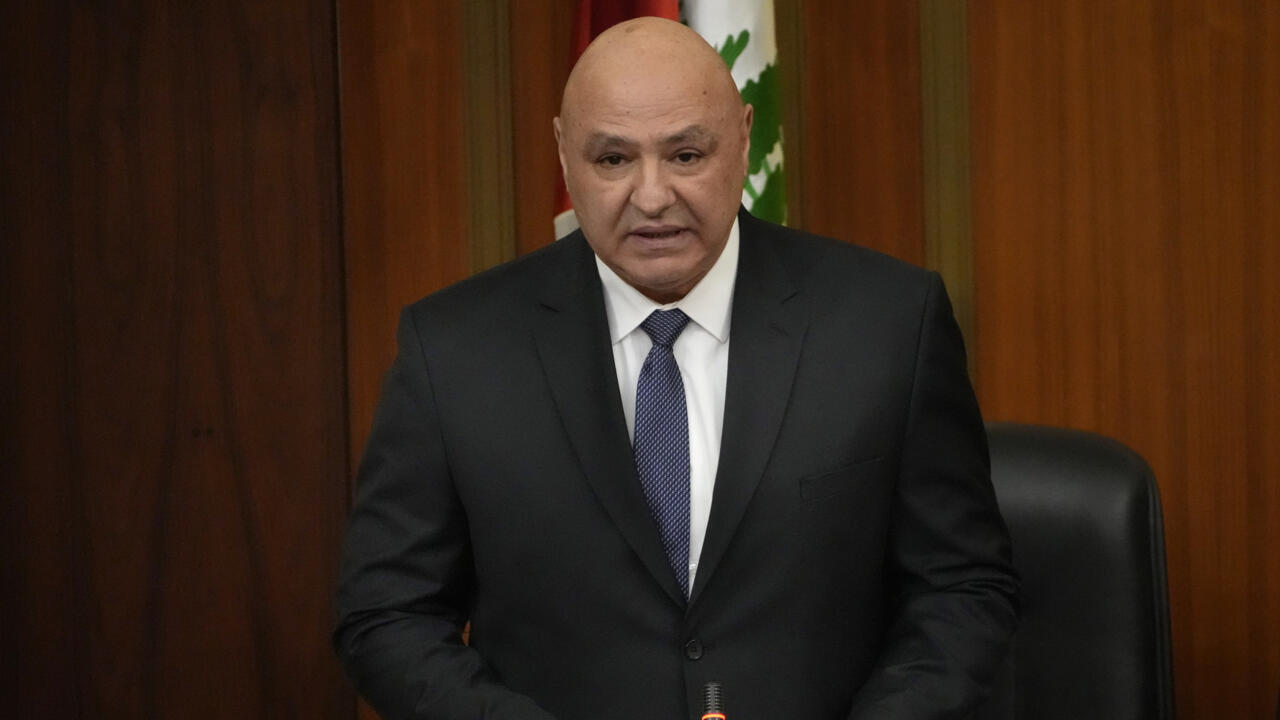
Beirut: Lebanon’s has moved to underline its independent position in ongoing regional developments, amid attempts to link the country to the broader conflict involving Iran, the United States and Israel.
President Joseph Aoun, while announcing the appointment of former US ambassador Simon Karam as Lebanon’s representative in talks with Israel, made it clear that Karam would be the sole representative for Lebanon and that there would be no substitute.
The move comes in response to what the Lebanese officials see as efforts by Iran to tie Lebanon’s situation to the wider regional conflict. Iran had indicated that there would be no ceasefire involving the US, Israel and Iran unless it also included a ceasefire in Lebanon.
Some groups, including Hezbollah and its supporters, had expressed support for linking the situations, citing concerns that the Lebanese government has limited leverage in negotiations with Israel. Lebanon is not formally a party to the conflict, and its army is considered weak.
However, others, including Prime Minister Nawaf Salam, have opposed this approach. They view Iran’s stance as an attempt to influence Lebanon’s internal affairs and see it as undermining the country’s sovereignty.
Officials backing the government’s position say the move is aimed at reaffirming Lebanon’s sovereignty and ensuring that decisions about peace and ceasefire within the country are not dictated externally.
They also see it as a safeguard, so that any breakdown in talks between the US, Israel and Iran does not automatically lead to renewed conflict in Lebanon.