After 'The Kerala Story' another propaganda movie announced on life of Mysore ruler 'Tipu Sultan'
Movie backed by Eros claims to expose 'The story of a fanatic Sultan'

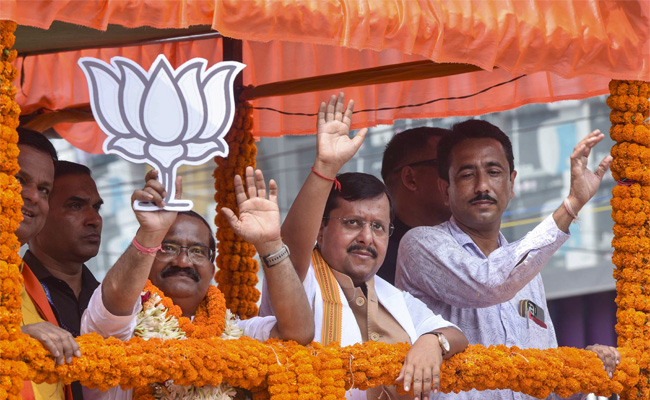
Bengaluru: After the release of "The Kashmir Files" and "The Kerala Story", another right-wing propaganda movie has been announced. The upcoming movie named "Tipu" will be based on the life of Mysore ruler Tipu Sultan.
According to a report from the Times of India, the movie is being backed by Eros International, Rashmi Sharma Films, and Sandeep Singh. It will be directed by Pawan Sharma and researched and developed by author, Rajat Sethi.
The teaser of the movie was recently released wherein Tipu has been portrayed as a ‘Jihadi’ and ‘Tyrant’ ruler who killed, imprisoned and forcefully converted to Islam, several Hindu families.
Despite being celebrated by many as a brave warrior and a freedom fighter, his legacy is still hotly debated, with some groups seeing him as a hero while others view him as a tyrant. The right-wing fringe groups in the recent years have used Tipu for polarization and to create communal divide between the communities. The announcement of the film "Tipu" is likely to stir up further controversy and ignite debates over Tipu Sultan's true legacy.
Speaking about the project, filmmaker Sandeep Singh said, "I was shocked to learn the true reality of Tipu Sultan. The story gave me goosebumps. This is the cinema I personally believe in."
Director Pawan Sharma added, "What we are taught in school about Tipu Sultan is gross misinformation. Through my film, I am daring to show a brutal reality that has been manipulated just for us to take him to be a warrior hero."
Meanwhile, Rajat Sethi stated, "Tipu is one such historical figure whose adulation and admiration is overrated, while his cruelties have been neatly concealed in our textbooks. This movie is a humble attempt to initiate a course correction on his narrative."
The movie will be released in five languages - Hindi, Kannada, Tamil, Telugu, and Malayalam.
Let the Truth be known. If you read VB and like VB, please be a VB Supporter and Help us deliver the Truth to one and all.
BWSSB to extract biogas from sewage sludge
Bengaluru (PTI): The Bangalore Water Supply and Sewerage Board (BWSSB) is set to roll out a major biogas initiative to extract compressed biogas from sewage sludge, aiming to generate over Rs 120 crore in additional revenue over the next two decades.
The project approved by the state cabinet is expected to be the largest of its kind in the country, utilising about 550 MLD of sewage across five major sewage treatment plants, according to an official release.
"This brilliantly structured PPP model allows us to generate over Rs 120 crore in fresh revenue without investing a single rupee in capital or operations," BWSSB Chairman Ram Prasath Manohar said in the statement.
Under the project, raw biogas currently used for in-house power generation or flared will be upgraded to CBG meeting national standards for injection into the city gas distribution network or use as a clean transport fuel, the release said.
The initiative will be executed on a public-private partnership model, with the private concessionaire bearing the entire Rs 85 crore capital expenditure and operational costs, while BWSSB will provide land within treatment plant premises.
Describing it as a step towards energy security and the circular economy, officials said the project could serve as a national model for similar urban initiatives.