DDLJ’@30: Love story tethered to tradition still rekindles romance, and starts them too
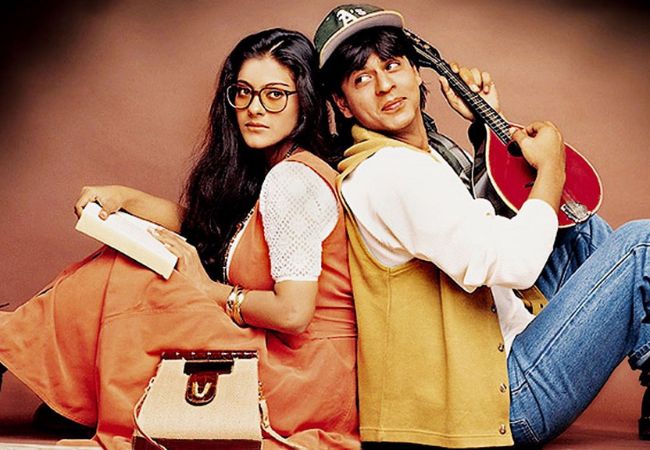
New Delhi (PTI): Can a film age like fine wine, mellow and satiny smooth, be recalled wistfully whenever you think of romance, yet sit uneasily with contemporary times? “Dilwale Dulhania Le Jayenge” is that contradiction – a much loved film cast in a conservative-patriarchal mould but one still finding takers in this age of swipe right and swipe left.
“Come fall in love" was the tagline of the Shah Rukh Khan-Kajol starrer that released 30 years ago on October 20, 1995. And people did. They still do, some rekindling an old romance and others perhaps starting one.
The love story, about two London-bred youngsters who fall in love but won’t get married until they get parental consent, marked the directorial debut of Aditya Chopra. Unfolding in lush Swiss meadows and snow-capped mountains and moving to Punjab’s mustard fields, it went on to become one of the greatest hits of Indian cinema and is still being screened in Mumbai’s Maratha Mandir.
Out of sync in the age of dating apps like Tinder, Bumble and Hinge, the story centres around Raj, a carefree, rich boy who falls in love with Simran when they meet on a European holiday.
Simran is enjoying the last bit of teen freedom before she travels to Punjab to marry a man she has never met and one her strict father Chaudhary Baldev Singh has chosen for her. Lovelorn Raj follows her there with the promise to win over her father.
Couples, young and old, come to the theatre even today to watch the romance, sepia tinted maybe but still fresh and gentle, said Manoj Desai, executive director of Maratha Mandir.
On weekdays, about 70 to 100 people come to watch the movie in the 11:30 am show. On weekends, the number goes up to 200-300, according to Desai.
The ticket prices for the movie are Rs 50 for balcony seat and Rs 30 for dress circle.
According to film historian SMM Ausaja, “DDLJ”, as the film came to be known, struck a chord at the time because there was a saturation of David Dhawan-Govinda comedies.
"It was a landmark film in terms of romance, music, brilliant dialogues, iconic scenes including the train sequence. Performances were top class, and had a crackling onscreen chemistry of Shah Rukh Khan and Kajol. No film has been able to recreate this kind of magic in the romantic space," Ausaja told PTI.
The enduring love story, set against close knit families, boisterous patriarchs and nostalgia for ‘mera desh’, is coded in the memory of cinema-lovers.
With an ensemble cast that included Farida Jalal, Amrish Puri, Anupam Kher and Parmeet Sethi, it’s the perfect mélange of songs, dialogues, costumes and scenes, quoted endlessly for three decades and counting.
Its songs "Tujhe dekha to ye jaana sanam", "Mehndi laga ke rakhna", "Ruk jaa...", "Mere khwabo mein...", "Ho gaya hai tujhko to pyaar sajna" live on. So do the dialogues – you may or may not have seen the film but you are likely to remember “Bade bade deshon mein, aisi baatein hoti rahti hain Senorita...", the "Palat" moment when Raj wills Simran to turn around and of course the "Jaa Simran ja, jee le apni zindagi", the final acceptance from the crusty father to his daughter.
Aditya Chopra wrote the film with Javed Siddiqui while Manmohan Singh served as the cinematographer and Jatin Pandit and Lalit Pandit composed the music for it. The film was edited by Keshav Naidu. The team couldn't have come together better,
“DDLJ”, like “Sholay”, came at the right time, said Ausaja.
"That film triggered the so-called NRI movies. It happens once in a lifetime. The film cemented Shah Rukh’s status as a top movie star. It was like what ‘Deewar’ was for Amitabh Bachchan. The way family values were celebrated it worked big time with people across all demographics," the historian said.
The film has legions of fans in every walk of life and directors down the years have doffed their hats to various moments from the film, including the famous train scene when Raj stretches his hand out to Simran, to pull her into a tight embrace – their ‘happily ever after’.
According to Hitesh Kewalya, director of same-sex love story "Shubh Mangal Zyada Savdhan", referencing "DDLJ" made his film more relatable to the people. "When the time came to write 'Shubh Mangal Zyada Savdhan', I was thinking about all the classic love stories that we have seen in our Hindi cinema. And it came naturally to me that if I have to tell a love story about two men who love each other, then DDLJ would be the reference point of that,” he said.
Every scene and prop in the movie -- the brown jacket in the 'palat' scene, the mandolin and the cowbell that Simran hangs outside her London home for Raj to find before she leaves for Punjab -- has a little story.
The jacket was a favourite of Aditya Chopra. The first time director wanted to use the mandolin as he was a big Raj Kapoor fan and the cowbell, though bought in Switzerland, was a way to honour Yash Chopra's Punjabi roots.
Kajol, just 21 when she played arguably most famous role of the rebellious yet traditional NRI reconciled to marrying a stranger, doesn’t believe the magic can be recreated.
"I think that if today you had to make a film, you would have to make it like 'DDLJ', but it will never be 'DDLJ'. It will have to be different. And once you change people, the atmosphere, you will have to adapt the story to the current times, society and thought processes. And that changes the entire language of the film. So you will have to create your own magic," she told PTI recently.
As people continue to file into a darkened theatre to watch “DDLJ” or watch it on their screens at home, the romance endures. Mystifying for some. But then that is the magic of the movies.
Let the Truth be known. If you read VB and like VB, please be a VB Supporter and Help us deliver the Truth to one and all.
Belagavi youth’s murder case projected as road accident, cracked in Uttara Kannada; Three arrested
Karwar: Uttara Kannada police have cracked a murder case in which a Belagavi youth was killed and his body burnt inside a car to make it appear like a road accident.
Addressing a press meet in the city, Superintendent of Police Deepan M.N. said three accused from Old Hubballi have been arrested in connection with the case. The crime was a pre-planned act driven by personal enmity, he said.
The case came to light on April 8 morning when a car (KA-04/MJ-8996) was found completely burnt in a roadside ditch near Talekumbri bus stand in Yellapur. Only charred human remains were found inside the vehicle. Initially, it was suspected to be an accident caused by overspeeding, and a case was registered at Yellapur police station based on a complaint filed by the deceased’s father, Jagannath Dhapale.
However, the father later expressed suspicion that his son’s death was not accidental, prompting a detailed investigation.
Taking the matter seriously, two special teams were formed under the leadership of Yellapur Inspector Ramesh Hanapur. On analysing technical evidence and CCTV footage, police found that it was a planned murder.
The accused have been identified as Abdul Raheem Basheer Ahmed Mujawar (32), Maulasab Bavahan Wada (36) and Dadapeer alias Aftab Mehboob Saab Balasangi (22), all chicken traders from Old Hubballi.
Police have seized the car used in the crime along with two scooters. The accused have been remanded to judicial custody.
Investigations revealed that the accused killed Nitesh Dhapale due to personal enmity and later set the car on fire along with the body to project it as an accident.
SP Deepan M.N. appreciated the efforts of Inspector Ramesh Hanapur, PSIs Rajashekhar Vandali and Siddappa Gudi, and the entire team for solving the complex case.