Deep Fake Video: Delhi Police writes to Meta for URL

New Delhi(PTI): The Delhi Police has written to Meta to provide the URL of the account from which the 'deep fake' video of actress Rashmika Mandanna was shared on social media.
The move came a day after the city police filed an FIR in connection with the incident.
According to an officer, the Delhi Police has also sought the information of the people who shared the fake video on the social media.
"We have written to Meta to access the URL ID of the account from which the video was generated," an officer privy to the investigations told PTI.
An FIR in the matter was registered under sections 465 (forgery) and 469 (forgery for purpose of harming reputation) of the Indian Penal Code and sections 66C and 66E of the Information Technology Act at the Intelligence Fusion and Strategic Operations Unit of the Delhi Police's Special Cell.
The officer said a dedicated team of officers has been constituted to crack the case. "We are expecting the case will be cracked soon."
The Delhi Commission for Women too had on Friday sent a notice to the city police in connection with the video, seeking action against the people involved in the act.
A deep fake video of Rashmika Madanna, which was suspected to be made with the help of Artificial Intelligence, went viral on social media last week.
The original video was stated to be of a British-Indian influencer, whose face had been edited with Mandanna's face.
Let the Truth be known. If you read VB and like VB, please be a VB Supporter and Help us deliver the Truth to one and all.
Body of man in Kalaburagi found hanging in his field; cause of death unknown
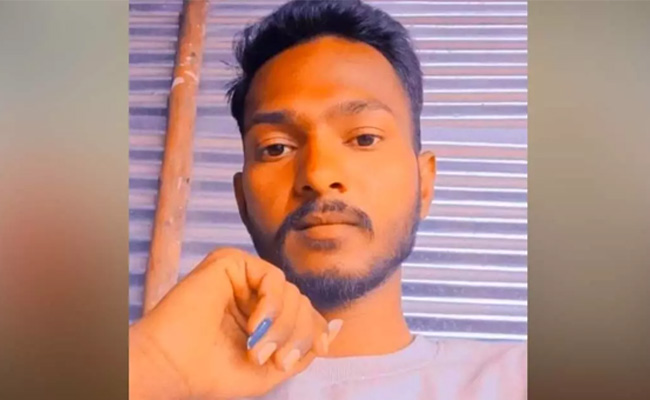
Kalaburagi: A man was found dead, with his body seen hanging, in his own field in Hulasaguda village of Kalagi taluk on Saturday morning. The cause for death is unknown as yet.
The deceased, identified as Revanasiddhappa Shettappa (26), is learned to have been a resident of Hulasaguda village.
Ratkal Police Sub-inspector Sheela Devi reportedly visited the spot where the man’s body was found and inspected it.
Police have registered a case in this regard and are probing the death of the Shettappa.