Films with vulgarity get clearance, those reflecting reality face censorship hurdles: Javed Akthar
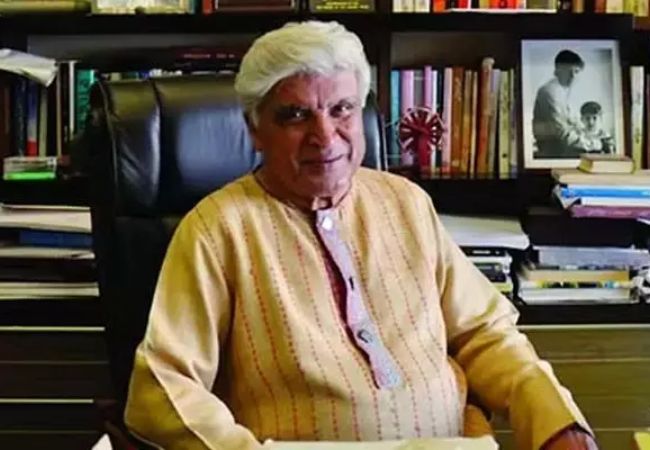
Mumbai (PTI): Veteran screenwriter-lyricist Javed Akhtar has expressed his disappointment that movies reflecting the reality of society face hurdles from regulatory bodies in India, while those rife with vulgarity seem to slip through the cracks.
Speaking at an event on Friday, Akhtar said it is a bad audience that makes a bad film successful.
"In this country, the fact is that vulgarity will still be passed by (the film regulatory bodies), they do not know that these are wrong values, a male chauvinistic view that is humiliating women and is insensitive. What will not be passed is something that shows the mirror to society," he said at the inaugural session of Anantrang mental health cultural festival.
Akhtar said films merely try to depict reality.
"A film is a window into society through which you peek, then close the window, but closing the window will not fix what is happening,” he cited.
Talking about the impact of hyper-masculinity portrayed in films on mental health, Akhtar said that the popularity of such films stems from societal approval.
"It is because of the mental health of men that such films (about hyper-masculinity) are being made. If the mental health of men becomes better, then such films won't be made, and even if they are made, they won't work (in theatres)," he said.
"For instance, people who are religious and whenever they face hurdles, they never blame god for it. Likewise, in show business, the audience is the god. It is a bad audience that makes a bad film successful," he said.
Films are a manifestation of what is happening in society, and their producers often run behind trends, and they make such movies only, he added.
Akhtar voiced his discontent about the proliferation of "vulgar" songs in cinema, and added that he has consistently rejected such offers as they don't align with his values.
"There was a time, especially in the 80s, when songs either had double or no meanings, but I would not do such films. I am not sad about the fact that people recorded such songs and put them in films, but I am sad that the songs became super hits. So, it is the audience that influences the film," he said.
"Like, the song, ‘Choli Ke Piche Kya Hai’, is something I have heard many parents say with a lot of pride that their eight-year-old daughter dances perfectly on this track. If these are the values of the society, what do you expect from the songs and films that will be made? So, the society is responsible, cinema is only a manifestation," Akhtar claimed.
Amid the rise of such content, Akhtar praised the recent film, "Saiyaara", for its soothing melodies and nostalgic charm. The romantic drama, directed by Mohit Suri, featured two newcomers, Ahaan Panday and Aneet Padda.
"A movie like this (Saiyaara) comes, and its music, there is a stillness in it and an old charm to it like earlier times. Today, music has become so frantic that the percussion overpowers the voice, and you can barely hear the words. So, if a movie comes out in that, which may not be perfect but provides you with a little shade because you are so tired of this ruthless sunlight, that you feel nice," he said.
To a query if listening to sad poetry or songs can make one more depressed, Akhtar replied, "Yes and no".
"It isn't good to disown sadness; otherwise, it will hit you somewhere else. Earlier, films had one or two sad songs, but now, such songs are not seen in our films because ‘Humare ache din aa gaye hai’. This kind of denial is very unhealthy. If you are sad, then you cry, and accept that sadness, denying it will distort your mind," he said on a lighter note.
Let the Truth be known. If you read VB and like VB, please be a VB Supporter and Help us deliver the Truth to one and all.
Belagavi youth’s murder case projected as road accident, cracked in Uttara Kannada; Three arrested

Karwar: Uttara Kannada police have cracked a murder case in which a Belagavi youth was killed and his body burnt inside a car to make it appear like a road accident.
Addressing a press meet in the city, Superintendent of Police Deepan M.N. said three accused from Old Hubballi have been arrested in connection with the case. The crime was a pre-planned act driven by personal enmity, he said.
The case came to light on April 8 morning when a car (KA-04/MJ-8996) was found completely burnt in a roadside ditch near Talekumbri bus stand in Yellapur. Only charred human remains were found inside the vehicle. Initially, it was suspected to be an accident caused by overspeeding, and a case was registered at Yellapur police station based on a complaint filed by the deceased’s father, Jagannath Dhapale.
However, the father later expressed suspicion that his son’s death was not accidental, prompting a detailed investigation.
Taking the matter seriously, two special teams were formed under the leadership of Yellapur Inspector Ramesh Hanapur. On analysing technical evidence and CCTV footage, police found that it was a planned murder.
The accused have been identified as Abdul Raheem Basheer Ahmed Mujawar (32), Maulasab Bavahan Wada (36) and Dadapeer alias Aftab Mehboob Saab Balasangi (22), all chicken traders from Old Hubballi.
Police have seized the car used in the crime along with two scooters. The accused have been remanded to judicial custody.
Investigations revealed that the accused killed Nitesh Dhapale due to personal enmity and later set the car on fire along with the body to project it as an accident.
SP Deepan M.N. appreciated the efforts of Inspector Ramesh Hanapur, PSIs Rajashekhar Vandali and Siddappa Gudi, and the entire team for solving the complex case.