Hrithik Roshan voted sexiest Asian male of the decade in UK poll

London, Dec 4: Bollywood star Hrithik Roshan has been voted the Sexiest Asian Male of 2019 as well as the last decade in an online poll released in London on Wednesday.
The 45-year-old actor who has box-office hits such as 'War' and 'Super 30' topped the annual 'Sexiest Asian Male' ranking compiled by British news weekly 'Eastern Eye', based on votes from film fans around the world, heat generated on social networking sites as well as wider impact over the year. Roshan scored a double win as he topped the overall ranking for the last 10 years as well.
"I would like to thank everyone who feels so and has voted for me; I am flattered," said Roshan, as he stressed that he did not view it as an "achievement".
He said: "Just a person's looks are not relevant in the larger scheme of things. I don't judge people by the way they look. Similarly, I don't judge myself either by the way I look.
"What is attractive in a person is his/her story, journey and the way that person has dealt with situations in his/her own life. Looking a certain way for my characters is just a part of my job, which takes a lot of effort and hard work."
'Eastern Eye' Entertainment Editor and author of the annual ranking Asjad Nazir attributed Roshan's success to a well-rounded career trajectory.
Hrithik is the most voted for star since the list was founded 16 years ago and consistently shown there is more to him than the Greek God looks, and physique, said Nazir.
Bollywood actor and 2017 winner Shahid Kapoor came in at second place, with television actor Vivian Dsena ranking third, screen action hero Tiger Shroff making his debut in the top 10 at No. 4 and British Asian popstar Zayn Malik completing the top 5 for 2019.
The men featured in 2019 were connected by the fact they all went beyond their stardom and looks to make a positive impact. That is what really sexiness is about and why this list connects with millions around the world, said Nazir.
Besides Roshan, the top 10 for the decade is dominated by actors and singers except Indian cricket captain Virat Kohli, who is ranked seventh. The list, which created a buzz on social media as it trended on Twitter in recent weeks, will be published in Eastern Eye' on Friday.
Let the Truth be known. If you read VB and like VB, please be a VB Supporter and Help us deliver the Truth to one and all.
Telangana survey flags 89,000 child labourers, highlights caste disparities in employment
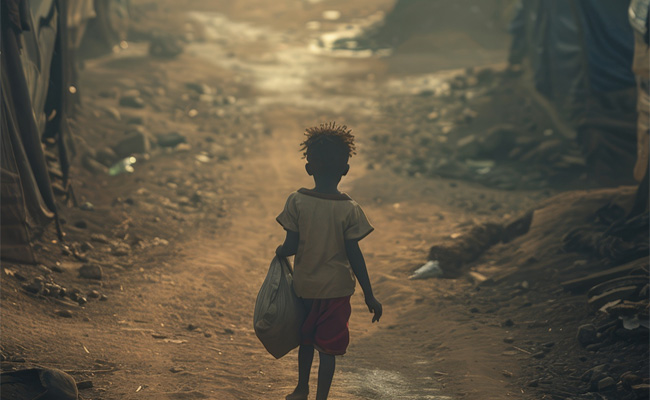
Hyderabad: A caste-based survey conducted by the Telangana government for 2024–25 has identified around 89,000 children engaged in labour across the state, with a large share belonging to Scheduled Caste (SC) and Scheduled Tribe (ST) communities.
The findings are part of the Socio, Economic, Educational, Employment, Political and Caste (SEEEPC) Survey, which covered about 3.5 crore people across 242 caste groups. According to the report, nearly one per cent of individuals below 18 years are involved in daily wage work. While the percentage appears small, officials noted that the absolute number reflects a serious concern.
The survey found that 11 per cent of identified child labourers belong to the ST Lambadi community, while 14 per cent are from the SC Madiga community. The highest incidence was reported among the ST Kolam group, where 7.2 per cent of minors are engaged in daily wage labour.
The data also revealed wider socio-economic disparities. Nearly half of the Scheduled Caste population is dependent on daily wage work, while only around 5 per cent are employed in the private sector, compared to about 30 per cent among General Castes.
State Welfare Minister Ponnam Prabhakar said the findings show that SC and ST communities remain three times more backward than General Castes, while Backward Classes are about 2.7 times more disadvantaged.
The report further noted that, on average, 31.3 per cent of people in the 25–65 age group depend on daily wage work. Among communities, the BC-A Odde group recorded the highest share at 55 per cent. In contrast, only 2.6 per cent of OC Brahmins rely on such work.
Several SC and ST communities, including Kolam, Beda, Madiga, Koya, Gond, Yerukulas and Mala Sale, were found to have among the highest proportions of daily wage earners. On the other hand, most General Caste communities and some Backward Class groups such as Goldsmiths and BC-C Christians showed lower dependence on daily wage employment.
The survey also pointed to inequalities in access to formal employment. Communities such as OC Rajus, OC Brahmins and Kapus were found to have a higher presence in private sector jobs, with up to 27 per cent of their population employed in such roles.