'I called you,' Vikram on Anurag Kashyap's remark that he 'never responded' to 'Kennedy' casting
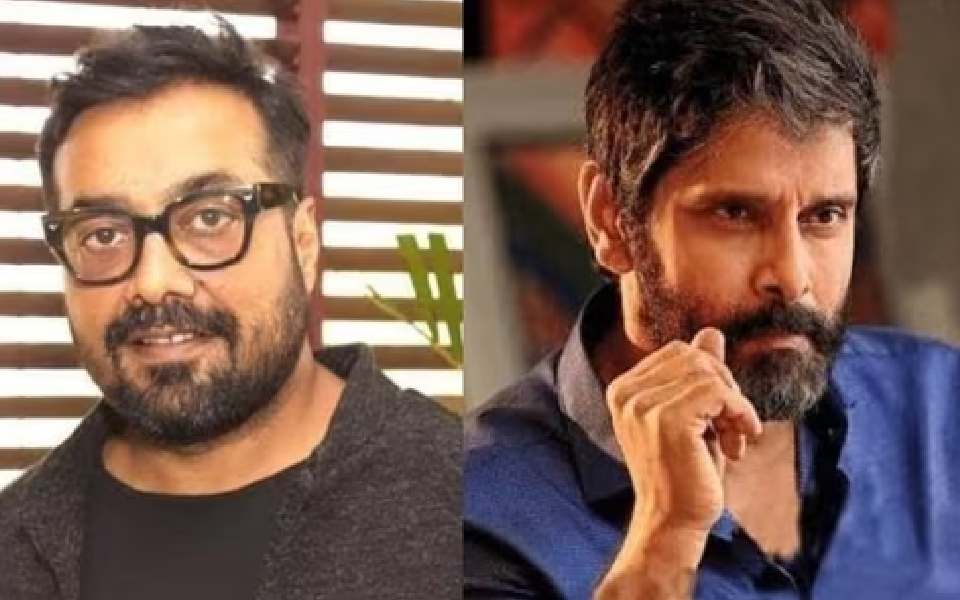
Chennai/Cannes, May 22: South star Vikram on Monday said he called Anurag Kashyap "immediately" after he came to know the filmmaker had tried to contact him him for "Kennedy".
In a recent interview with news outlet Film Companion, Kashyap said that Vikram, whose real name is Kennedy John Victor, was his first choice to play the titular assassin in his latest film, but the actor "never responded".
In a lengthy Twitter note to the filmmaker, Vikram said he called Kashyap immediately after he got to know that the director was trying to get in touch with him for a project.
"Dear @anuragkashyap72... Just revisiting our conversation from over a year ago for the sake of our friends and well wishers on social media.
"When I heard from another actor that you had tried to reach me for this film & that you felt I hadn't responded to you, I called you myself immediately and explained that I hadn't gotten any mail or msg from you as the mail id that you had contacted me on was no longer active and my number had changed almost 2 years before that," the "Ponniyin Selvan" star wrote.
Vikram then wished the filmmaker "great times ahead" and said he is excited about the movie as it has his name.
"As I said during that phone call, I'm very excited for your film Kennedy and even more so because it has my name. I wish you great times ahead. Lots of love. Chiyaan Vikram aka Kennedy," he added.
Kashyap, currently attending the Cannes Film Festival where "Kennedy" is set to premiere under the Midnight Screenings section, went on to cast Rahul Bhat as the lead.
"I actually had a specific actor in mind when I wrote this film... The film was called Kennedy Project. It is Chiyaan Vikram. Chiyaan Vikram's real name is Kennedy. I reached out to him. He never responded. So then, I reached out to Rahul," the filmmaker told the news website.
"Kennedy" is a noirish thriller which follows the titular character working for a corrupt police force with scores to settle. The film also features Sunny Leone.
Dear @anuragkashyap72 ,
— Vikram (@chiyaan) May 22, 2023
Just revisiting our conversation from over a year ago for the sake of our friends and well wishers on social media. When I heard from another actor that you had tried to reach me for this film & that you felt I hadn’t responded to you, I called you myself…
Let the Truth be known. If you read VB and like VB, please be a VB Supporter and Help us deliver the Truth to one and all.
BWSSB to extract biogas from sewage sludge
Bengaluru (PTI): The Bangalore Water Supply and Sewerage Board (BWSSB) is set to roll out a major biogas initiative to extract compressed biogas from sewage sludge, aiming to generate over Rs 120 crore in additional revenue over the next two decades.
The project approved by the state cabinet is expected to be the largest of its kind in the country, utilising about 550 MLD of sewage across five major sewage treatment plants, according to an official release.
"This brilliantly structured PPP model allows us to generate over Rs 120 crore in fresh revenue without investing a single rupee in capital or operations," BWSSB Chairman Ram Prasath Manohar said in the statement.
Under the project, raw biogas currently used for in-house power generation or flared will be upgraded to CBG meeting national standards for injection into the city gas distribution network or use as a clean transport fuel, the release said.
The initiative will be executed on a public-private partnership model, with the private concessionaire bearing the entire Rs 85 crore capital expenditure and operational costs, while BWSSB will provide land within treatment plant premises.
Describing it as a step towards energy security and the circular economy, officials said the project could serve as a national model for similar urban initiatives.