'Mahabharat', 'Chandrakanta' star Pankaj Dheer dies at 68
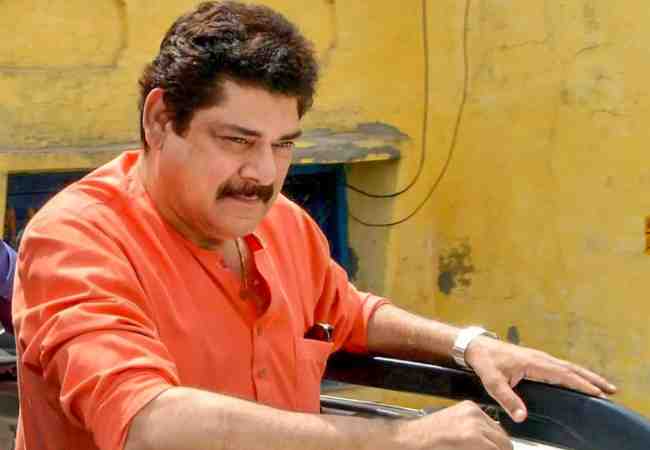
Mumbai (PTI):Television star Pankaj Dheer, known for playing Karna in B R Chopra's "Mahabharat" and king Shivdutt in fantasy drama "Chandrakanta", has died at the age of 68 following a battle with cancer.
"He passed away due to cancer this morning. He had been in and out of hospital in the past months," producer and friend Ashoke Pandit told PTI.
The cremation will be held later in the day.
Dheer, who hailed from Punjab, started out as an actor in the 1980s, featuring in minor roles in many movies.
His big break came in 1988 when he was cast as Karna in the small screen adaptation of Hindu epic "Mahabharata". After that, his popularity peaked and he starred in many movies such as "Sadak", "Sanam Bewafa" and "Aashik Awara".
From 1994 to 1996, Dheer starred in TV series "Chandrakanta", loosely based on author Devaki Nandan Khatri's 1888 novel of the same name. He essayed the popular role of Shivdutt, the king of fictional kingdom of Chunargarh.
Some of his notable movies also include Bobby Deol's "Soldier", Shah Rukh Khan's "Baadshah", Akshay Kumar's "Andaz", and Ajay Devgn's "Zameen" and "Tarzan'.
In the late 2000s, Dheer appeared in many daily soaps "Teen Bahuraaniyaan", "Raja Ki Aayegi Baraat" and "Sasural Simar Ka".
Dheer is survived by wife Anita Dheer and son Nikitin Dheer, who is also an actor.
Let the Truth be known. If you read VB and like VB, please be a VB Supporter and Help us deliver the Truth to one and all.
Belagavi youth’s murder case projected as road accident, cracked in Uttara Kannada; Three arrested

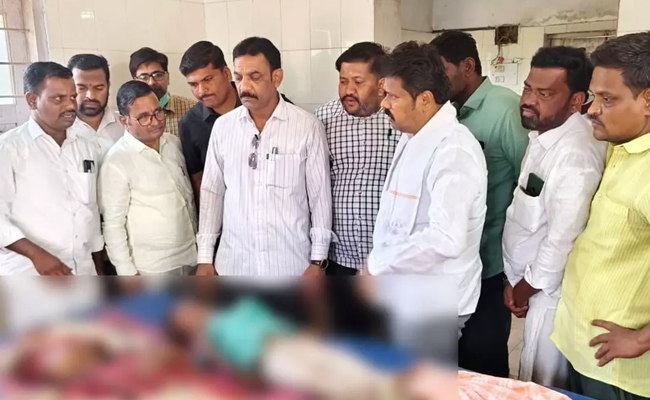
Karwar: Uttara Kannada police have cracked a murder case in which a Belagavi youth was killed and his body burnt inside a car to make it appear like a road accident.
Addressing a press meet in the city, Superintendent of Police Deepan M.N. said three accused from Old Hubballi have been arrested in connection with the case. The crime was a pre-planned act driven by personal enmity, he said.
The case came to light on April 8 morning when a car (KA-04/MJ-8996) was found completely burnt in a roadside ditch near Talekumbri bus stand in Yellapur. Only charred human remains were found inside the vehicle. Initially, it was suspected to be an accident caused by overspeeding, and a case was registered at Yellapur police station based on a complaint filed by the deceased’s father, Jagannath Dhapale.
However, the father later expressed suspicion that his son’s death was not accidental, prompting a detailed investigation.
Taking the matter seriously, two special teams were formed under the leadership of Yellapur Inspector Ramesh Hanapur. On analysing technical evidence and CCTV footage, police found that it was a planned murder.
The accused have been identified as Abdul Raheem Basheer Ahmed Mujawar (32), Maulasab Bavahan Wada (36) and Dadapeer alias Aftab Mehboob Saab Balasangi (22), all chicken traders from Old Hubballi.
Police have seized the car used in the crime along with two scooters. The accused have been remanded to judicial custody.
Investigations revealed that the accused killed Nitesh Dhapale due to personal enmity and later set the car on fire along with the body to project it as an accident.
SP Deepan M.N. appreciated the efforts of Inspector Ramesh Hanapur, PSIs Rajashekhar Vandali and Siddappa Gudi, and the entire team for solving the complex case.