'Neecha Nagar' to 'Laal Singh Chaddha': Yesteryear star Kamini Kaushal dies at 98
_vb_77.jpeg)
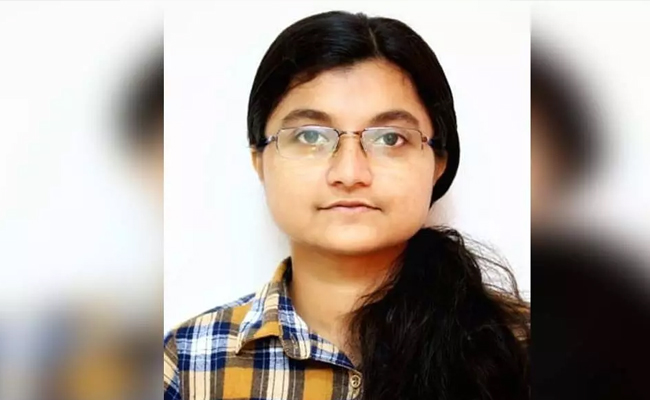
Mumbai (PTI): Actor Kamini Kaushal, one of Hindi cinema's earliest female stars who began her career with the classic "Neecha Nagar" in 1946 and went on to act in a host of films right till 2022, has died in her Mumbai home. She was 98.
Amongst the industry's highest paid actresses in the late 1940s and early 1950s, Kaushal starred opposite the triumvirate of Dilip Kumar, Dev Anand and Raj Kapoor before moving on to character roles in the 1960s. Her last screen appearance was in Aamir Khan's 2022 film "Laal Singh Chaddha" at the age of 95, making for a remarkable 76 years in the movies.
"She died at her Mumbai home late on Thursday night. She would have turned 99 in February," Sajan Narain, a close friend of the family, told PTI.
Kaushal, who also crafted puppets and worked actively in storytelling for children, was born Uma Kashyap on February 24, 1927 in Lahore.
The youngest of two brothers and three sisters, Kaushal graduated with a degree in English literature from Government College in Lahore.
Her father, Shiv Ram Kashyap, was widely regarded as the father of Indian botany and taught as a professor at the University of Punjab in pre-partition Lahore.
Proficient in horse riding and swimming, Kaushal's movie career happened when family friend and filmmaker Chetan Anand approached her for his film "Neecha Nagar". The film, where she acted opposite actor Rafiq Anwar and Anand's wife Uma, won the Grand Prix du Festival International du Film at the inaugural Cannes Film Festival in 1946.
"Neecha Nagar" is considered a classic for its portrayal of the gulf between rich and poor. It also marked the debut of the late star Zohra Sehgal and music by renowned sitarist Ravi Shankar.
It was Chetan Anand who rechristened her Kamini Kaushal to avoid confusion between two Umas.
"My name also being Uma, he wanted a different name for me. I asked him to give me a name beginning with ‘K’ to match with the names of my daughters Kumkum and Kavita,” Kaushal told Filmfare in an interview in 2014.
After the success of "Neecha Nagar", Kaushal worked extensively with Dilip Kumar, Dev Anand and Raj Kapoor in films such as "Jail Yatra", "Do Bhai", "Aag", "Shaheed", "Nadiya Ke Par", "Ziddi", "Shabnam" and "Arzoo".
“Each of my heroes were different from each other. Raj was very extrovert and always used to bluff a lot on the set. He was a fun-loving guy. Dev was sincere and passionate about his craft. Dilip, like me, was quiet and I was most comfortable to work with him. We did many films together," she told PTI in 2013.
She holds the distinction of being the first actor for whom Lata Mangeshkar lent her voice. The film was the 1948 "Ziddi", which featured tracks such as "Chanda Re Ja Re Ja, Piya Se Sandesa Mora Kahiyo Ja" and "Yeh Kaun Aaya Re, Karke Yeh Sola Singa". Kaushal played the lead role in filmmaker Bimal Roy's acclaimed 1954 movie "Biraj Bahu", adapted from renowned author Saratchandra Chattopadhyay’s Bengali novel. Her portrayal of devoted wife won a National Film Award and earned her a Filmfare award for best actress.
The actor took a break from movies but Manoj Kumar convinced her to come back. She transitioned to mother roles with Manoj Kumar's "Upkar" in 1967. Kaushal was just 40 at the time.
She went on to star in Kumar's other hit films such as "Purab Aur Paschim", "Sanyasi", "Shor", "Roti Kapda Aur Makaan", "Dus Numbari" and "Santosh", playing his mother in each of them.
Though selective in her film choices throughout her career, Kaushal worked right till the end. In the twilight of her life, she appeared in Shah Rukh Khan starrer "Chennai Express" and Shahid Kapoor's "Kabir Singh", which earned her a Screen Award for Best Supporting Actress and a Filmfare nomination.
She was 95 when she made a cameo as an elderly woman travelling in a train in "Laal Singh Chaddha".
Besides movies, Kaushal also featured in several television shows, including "Chand Sitare" on Doordarshan and "Shanno Ki Shaadi" on StarPlus.
She appeared as Aunt Shalini in the British serial "The Jewel in the Crown" in 1984.
Beyond the world of showbiz, the actor was known for her work with children. In her spare time, Kaushal wrote stories for the children’s magazine Paraag, and in the late 1970s chaired the Children’s Film Society of India. She also worked extensively in children’s television on Doordarshan, appearing in serials such as "Khel Khilone".
Under her banner Gudia Ghar Productions (1989–1991), she hosted puppet-based programmes like "Chand Sitare", "Chaat Pani" and "Chandamama". She crafted the puppets herself and would modulate her voice to fit each character.
Kaushal married brother-in-law B S Sood, the chief engineer at the Bombay Port Trust, in 1948 after her sister's death in a car accident and became an adoptive mother to two daughters. The couple had three sons -- Rahul, Vidur and Shravan.
"I loved my sister deeply. I feared my nieces, who were just around two and three, would flounder without a mother... It seemed an ideal solution. It was not a sacrifice. I feared whether I’d be able to live up to the responsibility. More so, my husband was a genteel and decent human being," she told Filmfare.
She defied convention by balancing the demands of a leading lady career with the responsibilities of a home -- a choice that in her era often worked against women in the film industry.
Kaushal and Dilip Kumar were in love but the affair did not last long.
“We were both shattered. We were very happy with each other. We shared a great rapport. But what to do? That’s life. I can’t dump people and say ‘Enough now, I’m going!’ I had taken on the girls. I wouldn’t be able to show my face to my sister. My husband, a fine human being, understood why it happened. Everyone falls in love," she said in the Filmfare interview.
Let the Truth be known. If you read VB and like VB, please be a VB Supporter and Help us deliver the Truth to one and all.
345 Indian fishermen stranded in Iran return home via Armenia
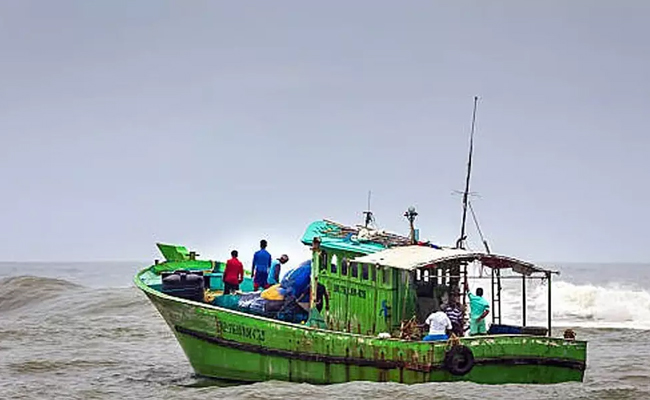
New Delhi (PTI): A group of 345 Indian fishermen, who were stranded in Iran amid escalating regional tensions, returned to India via Armenia on Saturday, officials said.
External Affairs Minister S Jaishankar thanked his Armenian counterpart Ararat Mirzoyan for assistance in return of the Indian nationals.
The Indian nationals arrived in Chennai this evening, the officials cited above said.
The circumstances that led to them being stranded in Iran were not immediately known.
"Thank FM @AraratMirzoyan and the Government of Armenia for facilitating the evacuation of Indian fishermen today from Iran, through Armenia to India," Jaishankar said on social media.
Over 1,500 Indian nationals have left Iran through land border crossings in Armenia and Azerbaijan since the start of the West Asia conflict over a month ago.
"A group of Indian fishermen, stranded in Iran, are returning home via Armenia today; their flight is expected to reach India this evening," a government statement said.
It said the Ministry of External Affairs continues to closely monitor the evolving situation in the West Asian region, with the safety, security and welfare of the Indian community being accorded the highest priority.
It also made a mention of five Indians being injured in Abu Dhabi on Friday.
According to Abu Dhabi authorities, the Indian nationals were among the 12 people injured by debris from an intercepted missile.
"In an attack in Abu Dhabi, five Indian nationals were injured; four have been discharged, one remains under treatment," the Indian government's statement said.
It said the Indian mission in Abu Dhabi is extending "full" assistance and coordinating with local authorities, adding that their flight is expected to reach India this evening.