'One Battle After Another' triumphs at 98th Academy Awards in coronation for Paul Thomas Anderson

Los Angeles (AP): Paul Thomas Anderson's “One Battle After Another” was crowned best picture at the 98th Academy Awards, handing Hollywood's top honour to a comic, multi-generational American saga of political resistance.
The ceremony Sunday, which also saw Michael B Jordan win best actor and “Sinners” cinematographer Autumn Durald Arkapaw make Oscar history as the first female director of photography to win the award, was a long-in-coming coronation for Anderson, a San Fernando Valley native who made his first short at age 18 and has been one of America's most lionised filmmakers for decades. Before Sunday, Anderson had never won an Oscar.
But “One Battle After Another”, the favourite coming in, won six Oscars, including best director and best adapted screenplay for Anderson, the Oscars' first trophy for best casting and best supporting actor for an absent Sean Penn.
“I wrote this movie for my kids to say sorry for the housekeeping mess that we left in this world — we're handing off to them,” said Anderson while accepting the screenplay trophy. “But also with the encouragement that they will be the generation that hopefully brings us some common sense and decency.”
Ryan Coogler's Jim Crow-set, blues-soaked vampire tale “Sinners”, which came in with a record 16 nominations, also landed some big and even historic wins.
Coogler, the widely loved filmmaker, won the first Oscar in an unblemished career that started out with Jordan in 2013's “Fruitvale Station”.
Arkapaw was also the first Black person to win for best cinematography. Only the fourth female cinematographer ever nominated, her win was a long-in-coming triumph for women behind the camera.
“I really want all the women in room to stand up,” said Arkapaw. “Because I don't feel like I get here without you guys.”
And Jordan, one of Hollywood's most liked leading men, won best actor in one of the night's closest races. The Dolby Theatre rose to its feet in the most thunderous applause of the night.
“Yo, momma, what's up?” said Jordan after staggering to the stage.
The Oscar night belonged to Warner Bros, the studio of “One Battle After Another” and “Sinners”, which scored a record-tying 11 wins. It was an oddly poignant note of triumph for the fabled studio, which weeks earlier agreed to a sale to Paramount Skydance, David Ellison's rapidly assembled media monolith.
The USD 111 billion deal, which awaits regulatory approval, has Hollywood bracing for more layoffs.
But “Sinners” and “One Battle After Another” — the much-acclaimed heavyweights of the season — were each Hollywood anomalies: big-budget originals born from a personal vision. In a year where anxiety over studio contraction and the rise of artificial intelligence often consumed the industry, both films gave Hollywood fresh hope.
Jessie Buckley won best actress for her performance as Agnes Shakespeare in “Hamnet”, making her the first Irish performer to ever win in the category. At an Oscars where no other acting award seemed a sure thing, Buckley cruised into Sunday's Oscars at the Dolby Theatre as the overwhelming favourite.
“It's Mother's Day in the UK,” said Buckley on the stage. “I would like to dedicated this to the beautiful chaos of a mother's heart.”
From the start, when host Conan O'Brien sprinted through the year's nominees as Amy Madigan's character in the horror thriller “Weapons” in a pre-taped bit, Sunday's ceremony was quirky, a little clunky and preoccupied with the shifting place of movies in culture. There was, of all things, a tie for best live-action short film.
As expected, the Netflix sensation “KPop Demon Hunters”, 2025's most-watched film, won best animated feature, as well as best song for “Golden”. It was a big win for Netflix but a more qualified victory for the movie's producer, Sony Pictures. Though it developed and produced the film, Sony sold “KPop Demon Hunters” to the streaming giant instead of giving it a theatrical release.
On Netflix, “KPop Demon Hunters” became a cultural phenomenon and the streaming platform's biggest hit. It has more than 325 million views and counting.
“This is for Korea and Koreans everywhere,” said co-director Maggie Kang.
Another Netflix release, Guillermo del Toro's “Frankenstein” picked up three awards for its lavish craft, for costume design, makeup and hairstyling and for production design.
Amy Madigan won best supporting actress for her performance in the horror thriller “Weapons”, a win that came 40 years after the 75-year-old actor was first nominated, in 1986, for “Twice in a Lifetime”. Letting out a giant laugh as she hit the stage, Madigan exclaimed, “This is great!”
Hosting for the second time, O'Brien began the Dolby Theatre show alluding to “chaotic and frightening times.” But he argued that the current geopolitical climate made the Oscars all the more resonate as a globally unifying force.
“We pay tribute tonight, not just to film, but to the ideals of global artistry, collaboration, patience, resilience and that rarest of qualities today — optimism,” O'Brien said. “We're going to celebrate. Not because we think all is well, but because we work, and hope, for better.”
Throughout the show, O'Brien hit a number of targets, like Timothee Chalamet — who again missed out on winning his first Oscar, this time for “Marty Supreme” — for his diss of opera and ballet. But the ceremony seldom wasn't shadowed by politics, whether in references to changes under US President Donald Trump or the recently launched war in Iran.
Joachim Trier, whose Norwegian family drama “Sentimental Value” won best international film, quoted James Baldwin in his acceptance speech: “All adults are responsible for all children,” he said. “Let's not vote for politicians that don't take this seriously into account.”
Presenter Jimmy Kimmel, whose late-night show last year was suspended after comments he made about Charlie Kirk's killing, was among the most blunt.
“There are some countries that don't support free speech,” said Kimmel. “I'm not at liberty to say which. Let's just leave it at North Korea and CBS.”
Shortly after, “Mr. Nobody Against Putin”, a film about a Russian primary schoolteacher who documents his students' indoctrination to support Russia's war with Ukraine, won best documentary.
“'Mr. Nobody Against Putin' is about how you lose your country,” co-director said. “And what we saw when working with this footage is that you lose it through countless, small, little acts of complicity.”
“We all face a moral choice,” he added, “but, luckily, a nobody is more powerful than you think.”
Let the Truth be known. If you read VB and like VB, please be a VB Supporter and Help us deliver the Truth to one and all.
EC role, Hindu vote consolidation among factors for BJP win in Bengal polls: J-K CM Omar
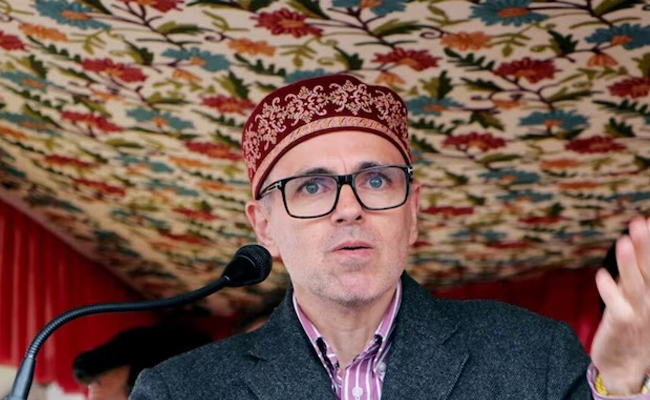
Srinagar (PTI): Jammu and Kashmir Chief Minister Omar Abdullah on Tuesday attributed the BJP's West Bengal win to a "significant role" played by the Election Commission (EC), alongside a consolidation of Hindu votes and a fractured minority mandate.
Abdullah also said the INDIA bloc needs to define its role in the political landscape of the country and make it clear whether the opposition alliance was limited to the parliamentary elections or extended to the state elections as well.
Talking to PTI Videos, Abdullah hinted that the EC has compromised its neutrality by conducting the Special Intensive Revision (SIR) in West Bengal and linked it to the BJP's gains in the state, claiming large-scale deletion of legitimate voters.
On the performance of the BJP in the just concluded assembly elections, Abdullah said the saffron party has almost nothing to show in southern states.
"So then you look at West Bengal and Assam. Yes, the BJP improved its tally in Assam. There are various reasons for that. You know as well as I do, what those are. West Bengal, I think we need to look at the results very carefully," he said.
"The easiest explanation for the West Bengal result is the serious curtailing of voter list," Abdullah said.
"Voters found their names deleted. People who served in uniform and fought for this country on the borders, who were considered Indian citizens all their lives, were suddenly held to a higher standard and not allowed to vote. Something is not right," he said.
While alleging that the EC played a "significant part" in the results, the chief minister admitted the outcome was multifaceted and noted a consolidation of over 60 per cent of the Hindu vote towards the BJP and a "significant fracture" in the minority vote, particularly in seats where Muslims constitute over 50 per cent of the population.
"There is no doubt that the role of the Election Commission played a significant part in the results but we will also have to look at the other factors," he said.
He said the results of West Bengal cannot be compared to those in other states. "The situation was unique to West Bengal. The SIR that was done, the way in which the voter lists were changed, the sort of minute scrutiny that the Election Commission subjected West Bengal to, the role of the central investigative agencies.
"All of these are situations that at least in recent electoral history of India are unique to West Bengal. So to suggest that we can learn lessons from West Bengal and implement them in other parts of the country, I think would not be correct," he said.
Abdullah had recently said that if the West Bengal results throw a surprise, the role of EC will come under scrutiny.
However, during Tuesday's interview, the chief minister said he still maintains that electronic voting machines (EVMs) do not lead to vote theft.
"What we saw in West Bengal...I know there are a lot of people who believe that the EVMs themselves are flawed. I am not a proponent of that conspiracy theory.
"But I do believe that the Election Commission has done itself no favours in the way in which it has gone about both the process of delimitation and the process of finalisation of electoral rolls," he said and cited the example of delimitation exercise in Jammu and Kashmir or Assam.
"These are clear examples of how the process was done to benefit one party or in the case of Jammu and Kashmir, one party and its allies. And the results speak for themselves. You created seven new seats in Jammu and Kashmir and out of those six seats were won by the BJP. You redrew assembly constituencies to benefit one particular party or its allies. And the same is true for West Bengal as well," he said.
Referring to the INIDA bloc, he said the election results were no new message for the alliance.
"We need to decide what the INDIA bloc is for. Is it only for Parliament or for state elections as well?" he asked.
"What happened in West Bengal is unfortunate. The Congress and TMC fought against each other. Now the Congress agrees with Mamata Banerjee that 100 seats were stolen, but the fact is they fought each other," he said.
Despite the friction, Abdullah reaffirmed the "pre-eminent position" of the Congress within the opposition alliance, dismissing the idea of any other party assuming the mantle.
"The Congress is the only party other than the BJP with a pan-India presence. All of us acknowledge this," he stated.
"To suggest someone else can assume a leadership role would be incorrect. Kharge Sahib is the president of the Congress, and by virtue of that, he assumes leadership of the INDIA bloc meetings. That is the way it should be," the chief minister said.
Abdullah said any 'Common Minimum Programme' would depend on whether the opposition alliance decides to fight state assembly elections collectively, noting that he would share his specific views with the bloc internally rather than through the media.