Salman Ali wins Indian Idol Season 10

At the end of season 10 of Indian Idol, Salman Ali walked away with the winner’s trophy on Sunday as social media burst with messages of congratulations. Salman beat Ankush Bhardwaj and Neelanjana Ray to emerge winner. Ankush and Neelanjana were adjudged first and second runners up respectively.
After many weeks of exciting but demanding and keenly contested show, Salman was voted the best. The show also saw actors Shah Rukh Khan, Anushka Sharma and Katrina Kaif make an appearance as guests. They were there to promote their film, Zero. Salman was, of course, overwhelmed on winning the contest.
He was quoted by Indian Express as saying: “I am overwhelmed and speechless right now. The feeling of winning the 10th season of Indian Idol is yet to sink in. Indian Idol and Sony Entertainment Television have given me a platform to realize my dreams and I will always be thankful. I haven’t just learned a lot but I have had the opportunity to perform with and in front of legends from this industry. And more than anything else, I would like to extend my heartfelt gratitude towards the audience who voted for all of us wholeheartedly.”
Salman’s win felt sweeter as he comes from a poor family in Mewat, Rajasthan.
It was an emotional moment for the contest’s judges — Neha Kakkar, Javed Ali and Vishal Dadlani. Infact, host Maniesh Paul and Neha got teary eyed as the season drew to a close.
The Zero team too was amazed that the plethora of talent--Shah Rukh, in fact, requested Salman to sing Sajda from his film, My Name is Khan. Zero team was in praise for all the finalists. Shah Rukh even danced to some of his hits like Chaiyyan Chaiyyan, Zaalima, Issaqbaazi and Jabra Fan.
Katrina congratulated Neelanjana saying that she had a beautiful voice and was pretty too.
Let the Truth be known. If you read VB and like VB, please be a VB Supporter and Help us deliver the Truth to one and all.
Fire damages 10 shops in Mumbai; no casualty
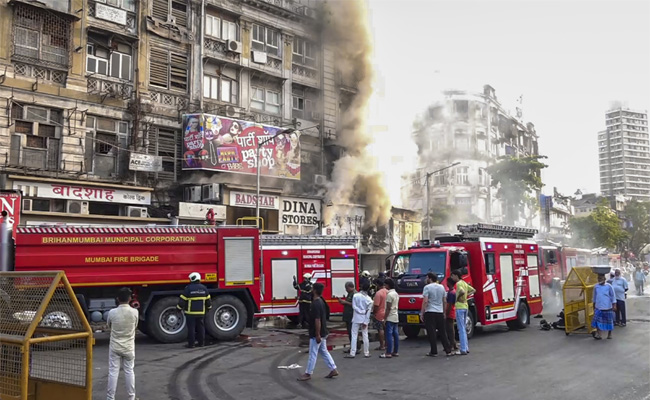
Mumbai (PTI): A fire broke out at a commercial structure in Mumbai, damaging around 10 shops, officials said on Sunday.
There were no casualties in the blaze, which was reported at 11.31 pm on Saturday on D B Marg opposite a mall in the Mumbai Central area, they said.
The fire was confined to electric wiring, installations and equipment in around five large and seven small shops spread over nearly 5,000 sq ft on the ground and first floors of the structure, a civic official said.
Firefighters doused the blaze by 3.50 am on Sunday, the official said.
The cause of the fire was not yet known.