Sameer Wankhede moves HC to seek quashing of CBI FIR against him
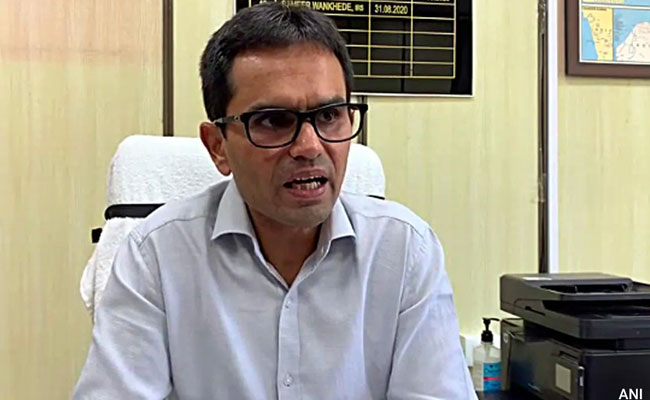
Mumbai (PTI): Former Narcotics Control Bureau (NCB) zonal director Sameer Wankhede on Friday moved a petition before the Bombay High Court seeking quashing of an FIR filed against him by the CBI for allegedly demanding Rs 25 crore bribe from superstar Shah Rukh Khan for not implicating his son Aryan Khan in the Cordelia cruise drug bust case.
In the petition moved before a vacation bench of the high court, Wankhede also sought that no coercive action related to the Central Bureau of Investigation's (CBI) first information report (FIR) be taken against him.
The bench will hear his plea later in the day.
The CBI filed the FIR against Wankhede and four others recently.
Aryan Khan was arrested by the NCB on October 3, 2021 after a raid on the Cordelia cruise ship. He was granted bail by the Bombay High Court after three weeks as the anti-drug agency failed to substantiate its charges against him.
The CBI booked Wankhede and others for alleged criminal conspiracy and threat of extortion, besides under provisions pertaining to bribery under the Prevention of Corruption Act on a complaint by the NCB.
The probe agency has alleged that the NCB, Mumbai Zone, had received information in October 2021 related to the consumption and possession of narcotics substances by various individuals on the private cruise ship and that some of its officers conspired and obtained undue advantage in the form of bribes from the alleged accused.
The Delhi High Court on Wednesday granted protection from coercive action to Wankhede for five days with the liberty to approach the appropriate forum, which would be the Bombay High Court.
The CBI summoned Wankhede for questioning in Mumbai on Thursday in connection with the case, but he did not appear before the agency's team.
Let the Truth be known. If you read VB and like VB, please be a VB Supporter and Help us deliver the Truth to one and all.
BWSSB to extract biogas from sewage sludge
Bengaluru (PTI): The Bangalore Water Supply and Sewerage Board (BWSSB) is set to roll out a major biogas initiative to extract compressed biogas from sewage sludge, aiming to generate over Rs 120 crore in additional revenue over the next two decades.
The project approved by the state cabinet is expected to be the largest of its kind in the country, utilising about 550 MLD of sewage across five major sewage treatment plants, according to an official release.
"This brilliantly structured PPP model allows us to generate over Rs 120 crore in fresh revenue without investing a single rupee in capital or operations," BWSSB Chairman Ram Prasath Manohar said in the statement.
Under the project, raw biogas currently used for in-house power generation or flared will be upgraded to CBG meeting national standards for injection into the city gas distribution network or use as a clean transport fuel, the release said.
The initiative will be executed on a public-private partnership model, with the private concessionaire bearing the entire Rs 85 crore capital expenditure and operational costs, while BWSSB will provide land within treatment plant premises.
Describing it as a step towards energy security and the circular economy, officials said the project could serve as a national model for similar urban initiatives.