SC rejects Ilaiyaraaja’s plea for transfer of copyright case from Bombay HC to Madras HC
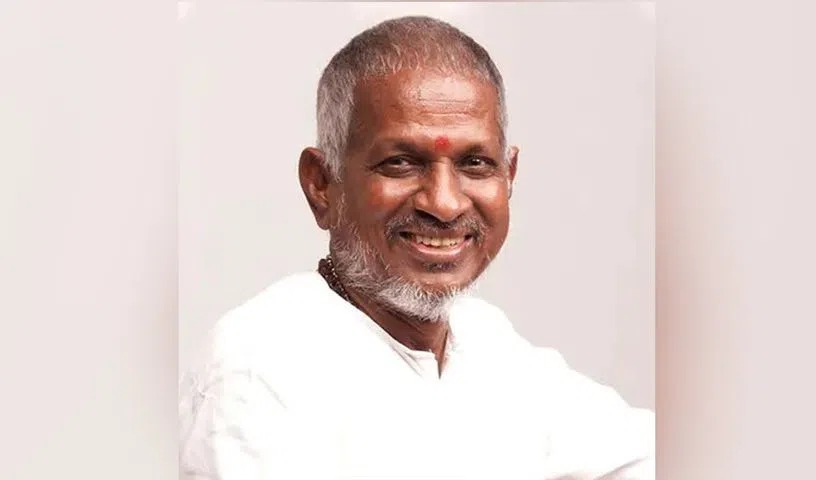
New Delhi(PTI): The Supreme Court on Monday dismissed a plea of legendary music composer Ilaiyaraaja seeking to transfer a copyright dispute involving over 500 of his musical compositions from the Bombay High Court to the Madras High Court.
A bench comprising Chief Justice B R Gavai and Justices K Vinod Chandran and NV Anjaria did not agree to the submissions of senior advocate Gopal Sankaranarayanan, appearing for the musician, that the case be transferred to the Madras High Court.
At the outset, the counsel for Sony Music Entertainment told the bench that the case by the firm was filed in the Bombay High Court when no case was pending in the Madras High Court.
The plea is dismissed, the bench said.
The legal case started from a lawsuit initiated by Sony Music Entertainment India in 2022 before the Bombay High Court. Sony has sought an injunction to restrain Ilaiyaraaja Music N Management Pvt Ltd (IMMPL) from using 536 musical works.
The company claims it acquired the rights to these works through Oriental Records and Echo Recording, the entity with which Ilaiyaraaja has long been embroiled in litigation.
The IMMPL, however, alleged that 310 of the 536 disputed works are already under judicial scrutiny in a parallel case before the Madras High Court.
That case, originally filed by Ilaiyaraaja in 2014 against Echo Recording, challenges the latter’s claim over his compositions and seeks recognition of the composer’s moral and economic rights under the Copyright Act.
The 2014 Madras suit led to a significant 2019 judgment, which upheld Ilaiyaraaja’s moral and special rights as a composer.
Ilaiyaraaja is one of India’s most prolific composers with over 7,500 songs across 1,500 films.
Let the Truth be known. If you read VB and like VB, please be a VB Supporter and Help us deliver the Truth to one and all.
Fadnavis rides motorcycle to Vidhan Bhavan, says PM Modi asked only for 'small sacrifices'
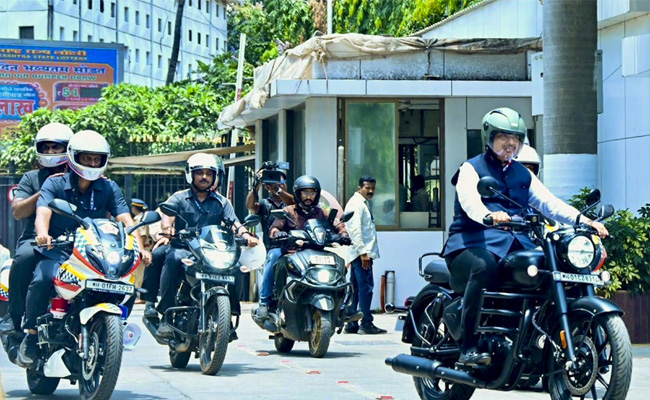
Mumbai (PTI): Maharashtra Chief Minister Devendra Fadnavis on Thursday rode a motorcycle to the Vidhan Bhavan here and later defended the Centre's austerity measures, saying Prime Minister Narendra Modi has only "asked people to make small sacrifices".
He also criticised the Opposition for creating "unnecessary controversy" over the matter, adding that questioning the PM's foreign visits - aimed at strategic alliances and economic benefits - was "sheer foolishness".
Fadnavis arrived at the Vidhan Bhavan in South Mumbai on a motorbike from his residence 'Varsha', with BJP leader and minister Ashish Shelar accompanying him, to attend the swearing-in of new members of the legislative council.
The move comes as part of the measures after PM Modi's appeal to conserve fuel and foreign exchange in view of the ongoing conflict in West Asia, which has disrupted global energy supplies. India relies heavily on West Asia for crude oil and gas imports.
On Wednesday, CM Fadnavis announced a series of austerity measures, including halving the number of vehicles in the convoys of his cabinet colleagues, and cancelling foreign tours of ministers and officials.
Addressing reporters here on Thursday, Fadnavis said the state government had curtailed convoys, cancelled avoidable foreign tours and decided against holding large government events for the next six months.
Targeting the Opposition, the CM said similar austerity measures had been adopted by previous governments, including during the tenures of former prime ministers Indira Gandhi and P V Narasimha Rao, as well as by former finance minister P Chidambaram in 2012.
"The Opposition needs to show some maturity. Countries across the world have taken even tougher decisions. The prime minister has only asked people to make small sacrifices while himself taking very tough decisions. Creating unnecessary controversy over this is not appropriate," he said.
Fadnavis said he travelled by motorcycle to send a message on fuel conservation, adding that symbolic actions by political leaders help spread awareness among people.
"When leaders act symbolically in this manner, the message reaches the people. That is why I came here on a motorcycle," he stressed.
The chief minister said all unnecessary foreign visits by officials and ministers had been stopped, and efforts were underway to reduce fuel consumption and save foreign exchange.
"We have reduced our convoys. Wherever petrol and diesel can be saved, wherever foreign exchange can be conserved, we are making every possible effort," he said.
Fadnavis said a major government event scheduled in Satara on Friday would, however, go ahead as it was planned in advance and expenditure had already been incurred.
He said around 25 lakh families would receive benefits valued at Rs 10,000 crore under the Centre's Pradhan Mantri Awas Yojana during the programme.
"After this event, however, no large government programmes will be organised over the next six months," he added.
The CM also dismissed criticism on social media over PM Modi's foreign visits, saying overseas trips aimed at strategic alliances and economic gains for the country should not be equated with avoidable travel.
"The appeal is only against unnecessary foreign travel. It does not mean businessmen should cancel important overseas deals. Criticising the prime minister's foreign visits is sheer foolishness," he said.