Screenwriter Salim Khan on ventilator support and stable, say doctors
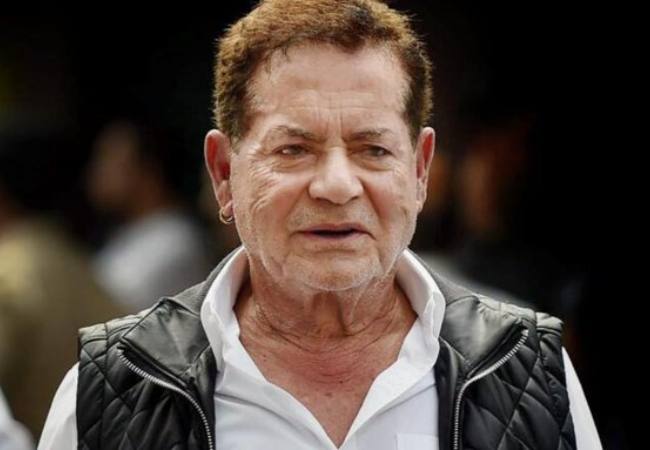
Mumbai (PTI): Veteran screenwriter Salim Khan suffered a brain haemorrhage which has been tackled, is on ventilator support as a safeguard and stable, doctors treating him said on Wednesday, a day after he was admitted to the Lilavati Hospital here.
The 90-year-old, one half of the celebrated Salim-Javed duo which scripted films such as "Sholay", "Deewar" and "Don" with Javed Akhtar, is in the ICU and recovery might take some time given his age.
"His blood pressure was high for which we treated him and we had to put him on a ventilator because we wanted to do certain investigations. Now the ventilator was put as a safeguard so that his situation doesn't get worse. So it is not that he is critical," Dr Jalil Parkar told reporters.
"We did the investigations that were required and today we have done a small procedure on him, I will not go into the details. The procedure done is called DSA (digital subtraction angiography). The procedure has been accomplished, he is fine and stable and shifted back to ICU. By tomorrow, we hope to get him off the ventilator. All in all, he is doing quite well," he added.
Asked whether he suffered a brain haemorrhage, the doctor said, "Unko thoda haemorrhage hua tha, which we’ve tackled. No surgery is required.
As concern over Khan's health mounted, his children, including superstar Salman Khan and Arbaaz Khan, daughter Alvira, and sons-in-law Atul Agnihotri and Aayush Sharma, have been seen outside the hospital along with other well-wishers. His long-time partner Akhtar was also seen coming out of the hospital.
Khan, a household name in the 70s and 80s, turned 90 on November 24 last year. It was the day Dharmendra, the star of many of his films, including "Sholay", "Seeta aur Geeta" and "Yaadon Ki Baraat", passed away.
Hailing from an affluent family in Indore, Khan arrived in Mumbai in his 20s with dreams of stardom. He was good looking and confident he would make a mark in the industry as an actor. But that did not happen. And then, after struggling for close to a decade and getting confined to small roles in films, he changed lanes.
He worked as an assistant to Abrar Alvi and soon met Akhtar to form one of Hindi cinema's most formidable writing partnerships. They worked together on two dozen movies with most of them achieving blockbuster status.
Other than "Sholay", "Deewar" and "Don", Khan and Akhtar also penned "Trishul", "Zanjeer", "Seeta Aur Geeta", "Haathi Mere Saathi", "Yaadon Ki Baarat" and "Mr India".
Let the Truth be known. If you read VB and like VB, please be a VB Supporter and Help us deliver the Truth to one and all.
LPG price hike: Minister Lakshmi Hebbalkar criticises Centre
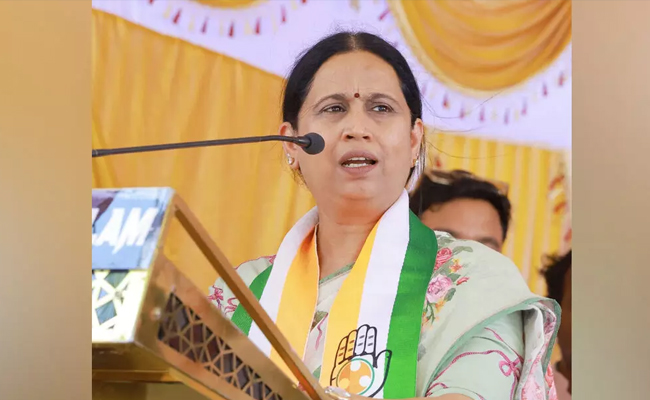
Belgaum: Women and Child Development Minister Lakshmi Hebbalkar has strongly criticised the central government’s decision to increase the price of commercial gas cylinders from Rs 2,162 to Rs 3,153, an increase of Rs 991, calling it an anti-people move.
She said such steep price hikes would affect households and businesses and alleged that decisions taken after elections reflect a disregard for public concerns.
She added that the price increase would have a direct impact on the hotel industry and further burden traders already facing inflationary pressures. This, she said, would likely lead to higher food prices, affecting common people.
Hebbalkar said the Centre was making daily life more difficult through repeated price hikes and urged the government to withdraw the increase and adopt pro-people policies.