Shah Rukh Khan honoured with Pardo Alla Carriera Award
I'm sitting in Locarno because of Yash Chopra, says Shah Rukh Khan
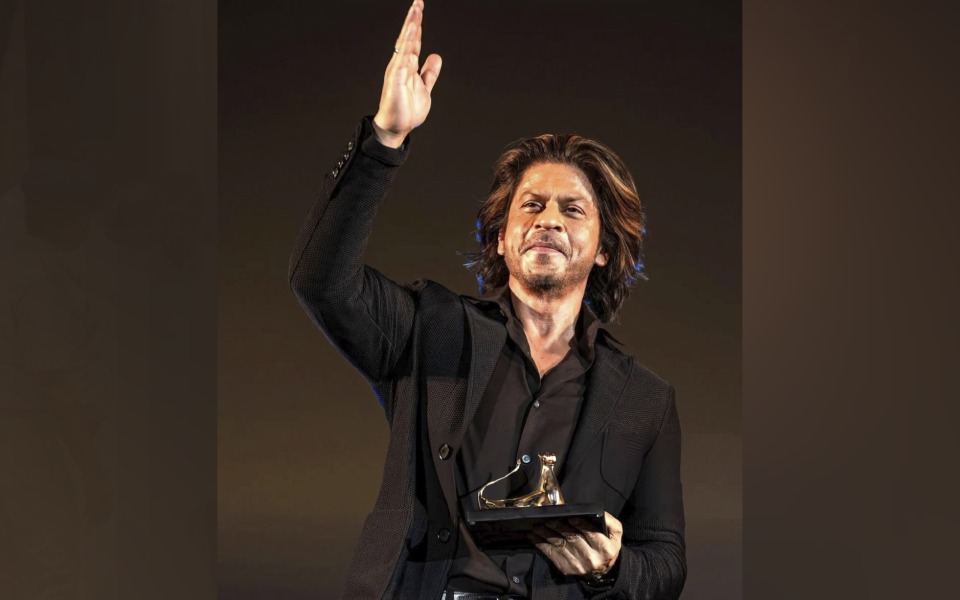
New Delhi, Aug 11: Superstar Shah Rukh Khan on Sunday credited late filmmaker and frequent collaborator Yash Chopra for bringing him to the 77th Locarno Film Festival in Switzerland, where he was honoured with the gala's prestigious Pardo alla Carriera award-Locarno Tourism award.
A day after he became the Indian film personality to receive the award for his contribution to cinema, the 58-year-old sat down for a Q&A session with Giona A Nazzaro, the artistic director of the Locarno Film Festival.
It was his late mother, Shah Rukh said, who took him to a cinema hall to watch a film for the first time.
"In school, Hindi (language) was not my strongest point. My mom said, 'I'll take you to a movie hall to watch a film if you get 10 on 10 in Hindi dictation'. I think I copied one answer from a friend, but I did get 10 on 10, and then my mother took me to watch a film in a theatre for the first time," he said.
Coincidentally, the film was Chopra's 1973 thriller "Joshila", added the actor.
"It was called 'Joshila', which was of the director with whom I did maximum number for my films later on in my life. So life is connected. Mr. Yash Chopra, it was his film. I'm sitting here in Locarno, Switzerland because of him, because of that movie I saw."
Veteran filmmaker Chopra directed Shah Rukh in "Darr", "Dil To Pagal Hai", "Veer-Zaara", and his swansong "Jab Tak Hai Jaan".
The actor, who was last seen in 2023's "Dunki", said after his parents died he wanted to leave New Delhi, his hometown, and come to Mumbai.
"I thought, I'll get some roles. Then I thought I'd work in front of television, then I came into films, so I got little bits and pieces roles. And then one thing led to the other.
"I came to Mumbai for a year in 1990 and I said, 'I'll work for a year, earn Rs 1 lakh, buy myself a house, and then go back and become a scientist or a mass communication journalist. And, I hadn't gone back yet," he added.
The Q&A session was held at the Forum @ Spazio Cinema.
SRK's sense of humour and charm to the point as always 😭🤌 pic.twitter.com/47TgjHZC1x
— sohom (@AwaaraHoon) August 10, 2024
Let the Truth be known. If you read VB and like VB, please be a VB Supporter and Help us deliver the Truth to one and all.
Ordinance issued to increase number of Supreme Court judges from 34 to 38
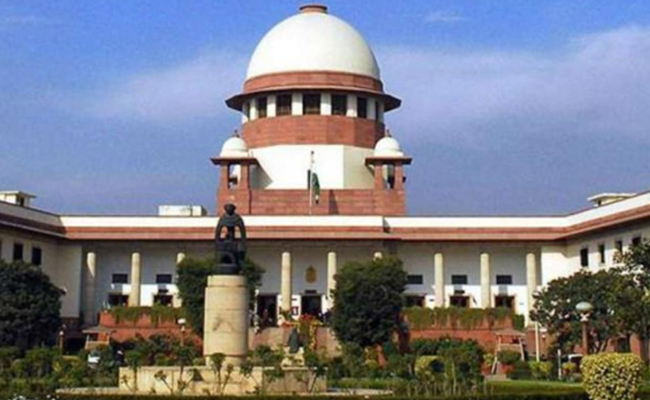
New Delhi (PTI): The government has promulgated an ordinance to increase the strength of the Supreme Court from the present 34 judges to 38, including the Chief Justice of India.
The law ministry notified the ordinance on Saturday, which amended the Supreme Court (Number of Judges) Act, 1956, to increase the sanctioned strength of the top court.
So far, the sanctioned strength of the top court was 34, including the Chief Justice of India (CJI). Now, the number of judges has been increased by four, taking the sanctioned strength to 38.
The top court will now have 37 judges, other than the CJI.
With the apex court having two vacancies at present, and the ordinance coming into force immediately, the Supreme Court Collegium will now have to recommend six names for appointment as judges in the top court.
A bill will be brought in the Monsoon Session of Parliament to convert the ordinance – an executive order – into a law passed by Parliament.
The Union Cabinet had cleared a draft bill on May 5 to increase the number of apex court judges.
The strength of the Supreme Court was last increased from 30 to 33 (excluding the CJI) in 2019.
The Supreme Court (Number of Judges) Act, as originally enacted in 1956, put the maximum number of judges (excluding the CJI) at 10.
This number was increased to 13 by the Supreme Court (Number of Judges), Amendment Act, 1960, and to 17 by another amendment to the law.
The Supreme Court (Number of Judges) Amendment Act, 1986, augmented the strength of judges from 17 to 25, excluding the CJI.
A fresh amendment in 2009 further increased the strength from 25 to 30.
Article 124(3) of the Constitution lists the qualifications required to become a Supreme Court judge.
An Indian citizen who has either served as a high court judge for at least five years, or as an advocate for 10 years, or is a distinguished jurist, can be appointed to the top court.
The strength of the Supreme Court is increased based on the recommendations of the CJI, who writes to the Union law minister. After consulting the finance ministry, the Department of Justice under the law ministry moves the Cabinet with a draft bill.