Singer Papon cancels Delhi show, says his home state Assam is 'burning' over CAB
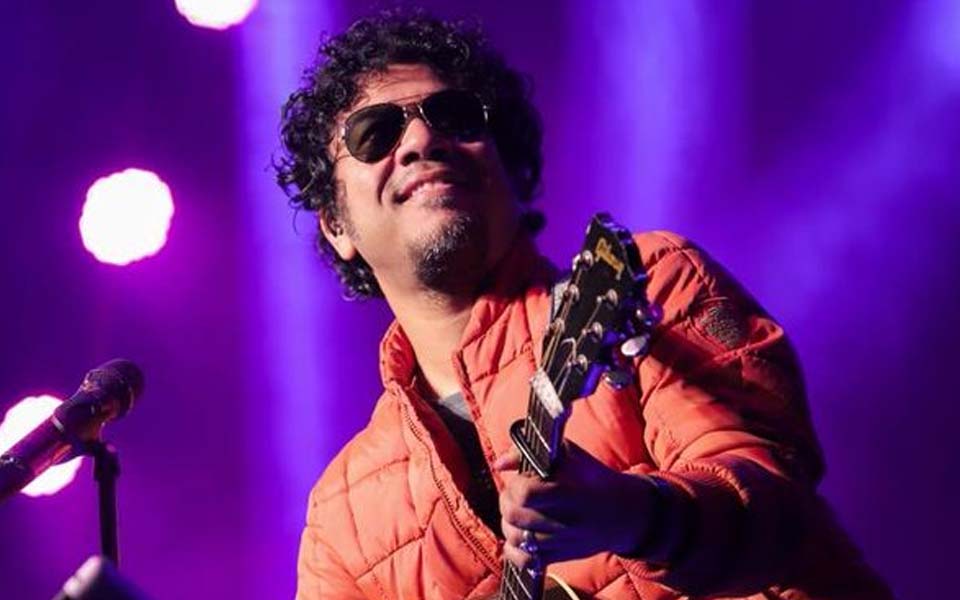
Mumbai, Dec 12: Singer Papon on Thursday pulled out of a music show in Delhi, saying he would not be able to entertain fans when his home state Assam was "burning, crying and under curfew" over the passage of Citizenship (Amendment) Bill in the Parliament.
The singer, best known for songs such as "Moh moh ke dhaage" and "Jiyein kyun", was scheduled to perform in the capital on Friday.
Papon also apologised to his fans on Twitter for the last-minute cancellation, saying he would not be able to cater to the audience in this disturbed state of mind.
"Dear Delhi, I am very sorry but I have decided not to do the concert tomorrow at 'imperfectoshor' as planned! My home state Assam is burning, crying and under curfew! I won't be able to entertain you the way I should in my present state of mind!" the singer said.
Papon, whose real name is Angaraag Mahanta, said the state has been burdened with "illegal immigration" for decades and the people of Assam need to heard properly.
"It's painful to see the way Assam is burning! Humanity is suffering! Assam has been burdened with illegal immigration for decades! We don't deserve this! The diverse, complex mix of the Assamese culture and people and their existence needs to be understood! We need to be heard properly," he said.
The singer hoped the organisers of the event will honour the sales of the sold tickets at some other point of time.
"I know this is unfair on you as you had bought tickets and planned long ahead. I am sure the organizers will take care of that in someway and as promised I'll see you all on another day in future! I hope you will understand," Papon said.
Assam has been witnessing unrest in the wake of protests against the Citizenship (Amendment) Bill, which was passed by Parliament on Wednesday.
The proposed amendments seek to grant citizenship to non-Muslim refugees from Pakistan, Bangladesh and Afghanistan facing persecution there. Guwahati, the epicentre of anti-CAB protests, was placed under indefinite curfew on Wednesday night while the Army was called in at four places.
Let the Truth be known. If you read VB and like VB, please be a VB Supporter and Help us deliver the Truth to one and all.
Telangana survey flags 89,000 child labourers, highlights caste disparities in employment
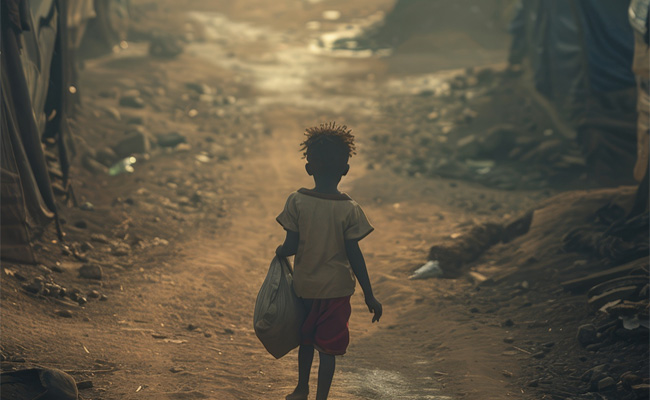
Hyderabad: A caste-based survey conducted by the Telangana government for 2024–25 has identified around 89,000 children engaged in labour across the state, with a large share belonging to Scheduled Caste (SC) and Scheduled Tribe (ST) communities.
The findings are part of the Socio, Economic, Educational, Employment, Political and Caste (SEEEPC) Survey, which covered about 3.5 crore people across 242 caste groups. According to the report, nearly one per cent of individuals below 18 years are involved in daily wage work. While the percentage appears small, officials noted that the absolute number reflects a serious concern.
The survey found that 11 per cent of identified child labourers belong to the ST Lambadi community, while 14 per cent are from the SC Madiga community. The highest incidence was reported among the ST Kolam group, where 7.2 per cent of minors are engaged in daily wage labour.
The data also revealed wider socio-economic disparities. Nearly half of the Scheduled Caste population is dependent on daily wage work, while only around 5 per cent are employed in the private sector, compared to about 30 per cent among General Castes.
State Welfare Minister Ponnam Prabhakar said the findings show that SC and ST communities remain three times more backward than General Castes, while Backward Classes are about 2.7 times more disadvantaged.
The report further noted that, on average, 31.3 per cent of people in the 25–65 age group depend on daily wage work. Among communities, the BC-A Odde group recorded the highest share at 55 per cent. In contrast, only 2.6 per cent of OC Brahmins rely on such work.
Several SC and ST communities, including Kolam, Beda, Madiga, Koya, Gond, Yerukulas and Mala Sale, were found to have among the highest proportions of daily wage earners. On the other hand, most General Caste communities and some Backward Class groups such as Goldsmiths and BC-C Christians showed lower dependence on daily wage employment.
The survey also pointed to inequalities in access to formal employment. Communities such as OC Rajus, OC Brahmins and Kapus were found to have a higher presence in private sector jobs, with up to 27 per cent of their population employed in such roles.