Three held for attack on cast, crew of ALTBalaji show
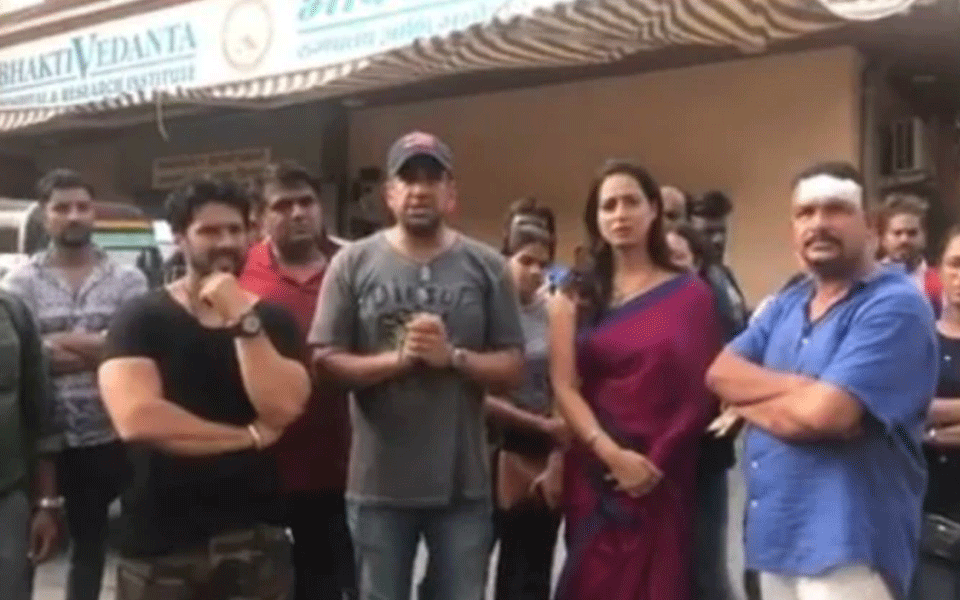
Mumbai: Three persons have been arrested in connection with the attack on the cast and crew of ALTBalaji's under-production show "Fixer" in neighbouring Thane district, a senior police official said Thursday.
Some team members of the web series on Thursday also met Maharashtra Chief Minister Devendra Fadnavis, who assured that strict action will be taken against the culprits.
According to a police official, there was a dispute over selection of a spot for the shoot, following which some men attacked the show's crew members while they were shooting at a set located on Ghodbunder Road in Thane on Tuesday.
Later, the show's assistant director lodged a complaint following which three men - Krishna Sonar, Sonu Das and Suraj Gupta - were arrested on Wednesday, Kasarwadavali police station's senior inspector K Khairnar said.
The accused have been booked under Indian Penal Code Sections 326 (Voluntarily causing grievous hurt by dangerous weapons or means) and 143 (unlawful assembly) as well as other relevant provisions, he said.
In a video shared by filmmaker-actor Tigmanshu Dhulia, who features in the series, the show's producer, Sakett Saawhney, and actor Mahie Gill alleged they were beaten up by drunk goons.
Meanwhile, the show's director, Soham Shah, Gill, and other cast and crew along with filmmaker Ashoke Pandit met Fadnavis in the state legislature here and informed him about the incident.
Speaking to reporters after their meeting, Pandit and Gill said the chief minister assured that stern action will be taken against the attackers.
Pandit said they apprised Fadnavis about members of the film industry feeling insecure while shooting in Thane, Mira Road and Naigaon areas, where, he caimed, such incidents often take place.
"The entire unit was shooting in a closed set at the Ghodbunder Road in Thane. Some eight to ten people came there and attacked the unit," he said.
"Most of the unit members", including Shah, were injured in the attack, he told reporters.
Gill said the incident took place when the team was busy shooting the climax sequence of the series.
"Suddenly some goons turned up at the set and started attacking. They didn't abuse anyone or say anything. They straight away started hitting people. They approached me also to attack, but I immediately rushed towards a vehicle (for safety)," she added.
Gill said the attackers also vandalised a vanity van.
Let the Truth be known. If you read VB and like VB, please be a VB Supporter and Help us deliver the Truth to one and all.
Women's bill: This is democracy, not Hitler rule, says Dy CM Shivakumar
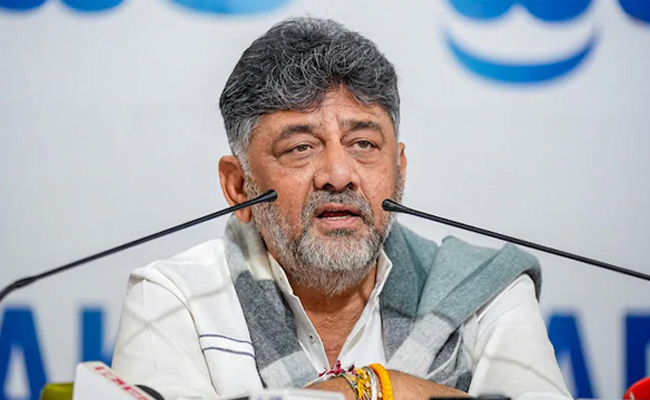
Bengaluru (PTI): Karnataka Deputy Chief Minister D K Shivakumar on Sunday criticised the BJP-led Centre over the timing and handling of the Women’s Reservation Amendment Bill, saying the opposition was not taken into confidence.
He also called for wider consultation in a democratic framework.
The deputy CM said the Congress has consistently supported women’s reservation, but objected to the manner in which the Bill was brought forward, alleging that it was introduced without adequate discussion with opposition parties.
“This is democracy; this is not a Hitler-style rule. They cannot bring it in the middle of elections and try to alter the entire constituencies,” Shivakumar told reporters here.
The Deputy Chief Minister maintained that the move should have been discussed across party lines.
ALSO READ: Four dead in highway pile-up in Karnataka
“They have to take everyone into confidence, but they have not done that. That is why the opposition parties have done a very good job. So, it is a victory of the INDIA alliance,” Shivakumar, who is Congress Karnataka unit president, said.
He was speaking about the setback to the BJP-led Central government, where a Constitution Amendment Bill to implement 33 per cent reservation for women in legislatures in 2029 and increase the number of Lok Sabha seats to 816 was defeated on Friday, with the ruling dispensation asserting that the struggle to give the rights to women will continue.
While 298 members voted in support of the bill in Lok Sabha, 230 MPs voted against it. Out of 528 members who voted, the bill required 352 votes for a two-third majority.
According to the Constitution (131st Amendment) Bill, Lok Sabha seats were to be increased to 816 from the current 543 to "operationalise" the women's reservation law before the 2029 parliamentary polls, following a delimitation exercise based on the 2011 Census.
Seats were also to be increased in state and Union territory assemblies to accommodate 33 per cent reservation for women.
Responding to BJP’s charge that the Congress is anti-women, he said, “This is not anyone’s personal property—women are the nation’s asset. We had passed this in the Rajya Sabha and Congress has already given 50 per cent reservation to women in local bodies. Even today, we support it.”
Alleging that the proposed changes could impact regional representation, Shivakumar said, “Without consulting us, they are trying to redraw constituencies, giving more weight to North India and reducing representation in South India. No one can tolerate this.”
He added that leaders including Rahul Gandhi, Congress president Mallikarjun Kharge and several South Indian Chief Ministers have opposed the move, terming the defeat of the bills a "major victory for democracy".
The Congress Karnataka chief asserted that the Congress and the INDIA bloc stand firmly in support of women’s rights.