Veteran actress Asha Parekh receives Dada Saheb Phalke award
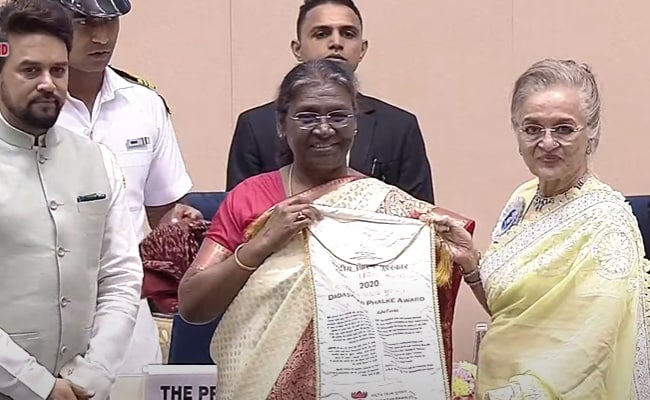
New Delhi, Sep 30: Veteran actor Asha Parekh was on Friday honoured with the Dada Saheb Phalke award, the highest recognition in the field of Indian cinema.
Parekh, 79, was presented the award by President Droupadi Murmu during the 68th National Film Awards ceremony, held at Vigyan Bhawan here.
The veteran said she is grateful to receive the prestigious award a day before her 80th birthday.
"It is a huge honour to have received the Dada Saheb Phalke award. It makes me very grateful that the recognition comes to me just one day before my 80th birthday.
"This is the best honour I could get from the Government of India. I would like to thank the jury for the recognition that they have bestowed upon me, my long journey and fulfilling the journey in the film industry," said Parekh, who is the recipient of the award for the year 2020.
Describing the Indian film industry as the "best place" to be in, the actor said she continues to be attached to the movies in her own small way even after 60 years.
"Our film industry is the best place to be in. And I would like to suggest to the youngsters who are in this industry to have perseverance, determination, discipline, and to be grounded, and I congratulate all the awardees tonight," she added.
The five-member Dada Saheb Phalke Award committee -- comprising Asha Bhosle, Hema Malini, Poonam Dhillon, Udit Narayan, and TS Nagabharana -- selected Parekh for the honour.
Parekh, whose stardom was at par with male contemporaries Rajesh Khanna, Rajendra Kumar and Manoj Kumar in the 1960s-1970s, started her acting career at the age of 10 with the 1952 film "Aasmaan".
In a career spanning over five decades, she starred in over 95 films that include titles such as "Dil Deke Dekho", "Kati Patang", "Teesri Manzil", "Baharon Ke Sapne", "Pyar Ka Mausam", and "Caravan".
She made foray into films as a child artist with 1952's "Aasmaan" and went on to star in Bimal Roy's "Baap Beti" two years later.
Parekh made her debut as a leading lady in Nasir Hussain's 1959 movie "Dil Deke Dekho", opposite Shammi Kapoor.
A director and producer as well, Parekh had helmed the acclaimed TV drama "Kora Kagaz" that aired in the late 1990s.
The screen legend was also the first female chairperson of the Central Board of Film Certification (CBFC). She served from 1998-2001.
The actor came out with her autobiography, "The Hit Girl", co-written by film critic Khalid Mohamed, in 2017.
She was also honoured with the Padma Shri, the fourth-highest civilian award of the country, in 1992.
Last year, the Dadasaheb Phalke Award for 2019 was conferred on Rajinikanth.
Let the Truth be known. If you read VB and like VB, please be a VB Supporter and Help us deliver the Truth to one and all.
Sujit Nair raises concerns over speculation of DMK-AIADMK understanding to block TVK
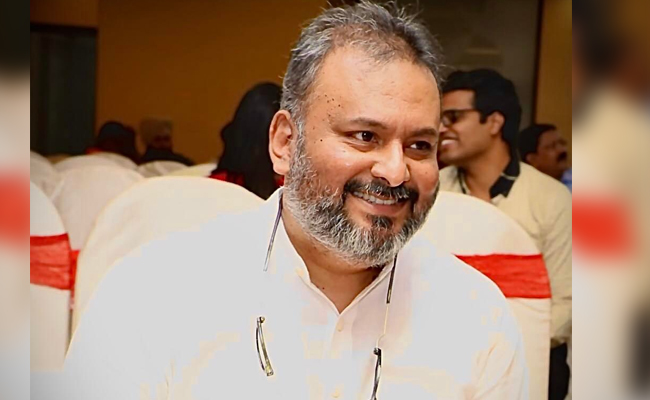
Chennai: Journalist and political commentator Sujit Nair has expressed concern over speculation that the Dravida Munnetra Kazhagam and the All India Anna Dravida Munnetra Kazhagam could explore a post-poll understanding to prevent Vijay-led Tamilaga Vettri Kazhagam from forming the government in Tamil Nadu.
In a social media post, Sujit Nair said the election verdict in Tamil Nadu reflected a clear public demand for political change and argued that the mandate should be respected irrespective of political preferences.
Referring to reports and political discussions surrounding a possible understanding between the DMK and AIADMK, he said he hoped such developments remained only speculative conversations and did not turn into reality.
Nair stated that if such an alliance were to take shape, it would raise serious questions about ideological politics in the country. He said TVK had emerged through a democratic electoral process and that the legitimacy to govern in a parliamentary democracy comes from the people’s verdict.
According to him, attempts to prevent an electoral winner from forming the government through unexpected political arrangements may be constitutionally valid, but many people could view them as politically opportunistic.
He further said that such a move could particularly affect the political image of the DMK, which has historically projected itself around ideology, social justice and opposition politics. Nair said that in ideological terms, the DMK appeared closer to TVK than to the AIADMK, and joining hands with its long-time political rival only to remain in power could weaken its broader political narrative.
He added that the same questions would apply to the AIADMK as well, as the party had spent decades positioning itself against the DMK and such an arrangement could create discomfort among its cadre and supporters.
Drawing a comparison with Maharashtra politics in 2019, Nair said he had expressed similar views when the Shiv Sena formed an alliance with the Indian National Congress and the Nationalist Congress Party after the Assembly elections.
He said post-poll alliances between long-standing political rivals often create a public perception that ideology and electoral mandates become secondary when political power equations come into play.
Nair also said such developments increase public cynicism towards politics and reinforce the belief among voters that ideology is often sidelined after elections.
He maintained that the Tamil Nadu verdict was emphatic and said respecting both the spirit and substance of the mandate was important for the credibility of democratic politics.