Virat Kohli, Akshay Kumar, Salman Khan top Forbes India's 2019 Celebrity 100 list

Mumbai: Bollywood superstars Akshay Kumar and Salman Khan are among the top paid celebrities of India, Forbes India has announced.
The magazine has published its list of Celebrity 100 for the year 2019 which has been topped by Indian cricket captain Virat Kohli with the earning of Rs 252.72 crore.
The rankings are based on estimates of earnings through professions and endorsements of celebrities and estimates of their fame for the October 1, 2018 to September 30, 2019.
Akshay is highest earning star from the country with Rs 293.25 crore, registering a rise of 58.51 percent from the previous year, but is placed at the 2nd spot, followed by Salman with the earning of Rs 229.25 crore.
Megastar Amitabh Bachchan and Indian cricketer MS Dhoni are listed at 4th and 5th spots, with earnings of Rs 239.25 crore and Rs 135.93 crore, respectively.
They are followed closely by Shah Rukh Khan, who makes a comeback to the list, and Ranveer Singh, with the respective hauls of Rs 124.38 crores and Rs. 118.2 crores.
Despite all the talk about pay parity and inclusivity, the top-10 list has only two female stars and their earnings significantly lower than their male counterparts.
Alia Bhatt features at 8th with Rs 59.21 crore and Deepika Padukone at 10th with Rs 48 crore.
Cricket legend Sachin Tendulkar is placed 9th on the list with earning of Rs 76.96 crores. Forbes India noted that in the top 100 list, there was an improved representation from the South Indian film industry.
"There are 13 celebrities from the South this year (down from 15 in 2018) but their contribution to the cumulative earnings of the top 100 has increased to 12.57 percent from 11.26 percent in the previous year," it said.
"The inevitability of such lists being dominated by men, which itself tells a tale of the lack of pay parity across genders in every local film industry and in every sport.
"In cricket, a whopping Rs 6.5 crore separates top men players from the women when it comes to the central contract. But when it comes to performance, there is no gap," Brian Carvalho, Editor, Forbes India, in a statement.
Let the Truth be known. If you read VB and like VB, please be a VB Supporter and Help us deliver the Truth to one and all.
Telangana survey flags 89,000 child labourers, highlights caste disparities in employment
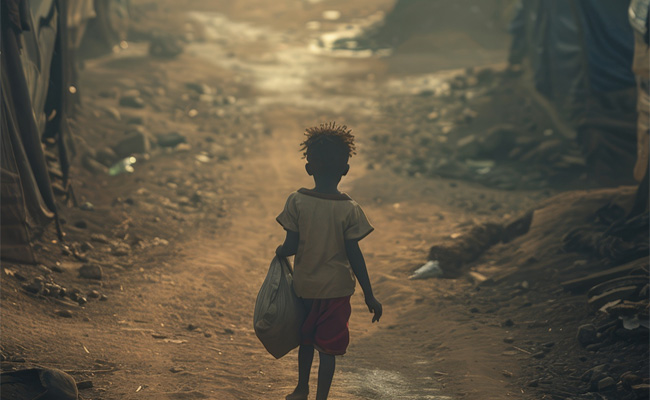
Hyderabad: A caste-based survey conducted by the Telangana government for 2024–25 has identified around 89,000 children engaged in labour across the state, with a large share belonging to Scheduled Caste (SC) and Scheduled Tribe (ST) communities.
The findings are part of the Socio, Economic, Educational, Employment, Political and Caste (SEEEPC) Survey, which covered about 3.5 crore people across 242 caste groups. According to the report, nearly one per cent of individuals below 18 years are involved in daily wage work. While the percentage appears small, officials noted that the absolute number reflects a serious concern.
The survey found that 11 per cent of identified child labourers belong to the ST Lambadi community, while 14 per cent are from the SC Madiga community. The highest incidence was reported among the ST Kolam group, where 7.2 per cent of minors are engaged in daily wage labour.
The data also revealed wider socio-economic disparities. Nearly half of the Scheduled Caste population is dependent on daily wage work, while only around 5 per cent are employed in the private sector, compared to about 30 per cent among General Castes.
State Welfare Minister Ponnam Prabhakar said the findings show that SC and ST communities remain three times more backward than General Castes, while Backward Classes are about 2.7 times more disadvantaged.
The report further noted that, on average, 31.3 per cent of people in the 25–65 age group depend on daily wage work. Among communities, the BC-A Odde group recorded the highest share at 55 per cent. In contrast, only 2.6 per cent of OC Brahmins rely on such work.
Several SC and ST communities, including Kolam, Beda, Madiga, Koya, Gond, Yerukulas and Mala Sale, were found to have among the highest proportions of daily wage earners. On the other hand, most General Caste communities and some Backward Class groups such as Goldsmiths and BC-C Christians showed lower dependence on daily wage employment.
The survey also pointed to inequalities in access to formal employment. Communities such as OC Rajus, OC Brahmins and Kapus were found to have a higher presence in private sector jobs, with up to 27 per cent of their population employed in such roles.