Google to launch ChatGPT competitor 'Bard': Sundar Pichai
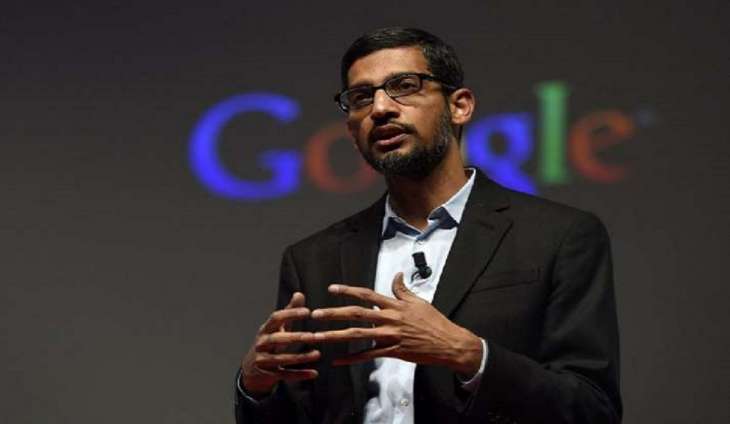
New York, Feb 7: Google CEO Sundar Pichai has announced that the tech giant will soon launch an Artificial Intelligence (AI) powered chatbot called Bard', aimed at countering the popularity of the ChatGPT tool backed by Microsoft.
According to a blog post by Pichai, the conversational AI service will be assessed by a group of "trusted testers" before being rolled out to the public in the coming weeks.
"Bard can be an outlet for creativity, and a launchpad for curiosity," Pichai, the Indian-origin CEO of Google and parent company Alphabet, said on Monday, adding that Google's chatbot will be able to explain complex subjects like new discoveries from NASA's James Webb Space Telescope to a nine-year-old.
Google's announcement follows wide speculation that Microsoft is about to bring the AI chatbot ChatGPT to its search engine Bing, following a multi-billion dollar investment in the firm behind it, OpenAI, the BBC reported.
ChatGPT (Chat Generative Pre-trained Transformer), which was launched in November 2022, is capable of generating speeches, songs, marketing copy, news articles and student essays or human-like text based on the input it is given.
Bard, built on Google's existing large language model LaMDA, "seeks to combine the breadth of the world's knowledge with the power, intelligence, and creativity of our large language models", Pichai, 50, said in the blog.
AI chatbots are designed to answer questions and find information.
"Bard seeks to combine the breadth of the world's knowledge with the power, intelligence, and creativity of our large language models," Pichai said in the blog post.
Pichai said he wanted Google's AI services to be "bold with innovation and responsible in our approach". However, he did not elaborate on how Bard would be prevented from sharing harmful or abusive content.
He said that Google will initially release Bard with a "lightweight model" version of LaMDA which will require less computing power and enable the tech giant to scale to more users, allowing for more feedback.
"We're excited for this phase of testing," Pichai said, adding that Google will combine external feedback with internal testing to make sure Bard's responses meet a high bar for quality, safety and groundedness in real-world information.
"It's critical that we bring experiences rooted in these models to the world in a bold and responsible way. That's why we're committed to developing AI responsibly," he wrote in the blog.
Pichai also said on Monday that AI-powered tools will soon begin rolling out on Google's flagship Search tool.
"Soon, you'll see AI-powered features in Search that distil complex information and multiple perspectives into easy-to-digest formats, so you can quickly understand the big picture and learn more from the web," Pichai wrote, "whether that's seeking out additional perspectives, like blogs from people who play both piano and guitar, or going deeper on a related topic, like steps to get started as a beginner."
Let the Truth be known. If you read VB and like VB, please be a VB Supporter and Help us deliver the Truth to one and all.
Real Madrid fines Valverde and Tchouaméni half a million euros each for altercation
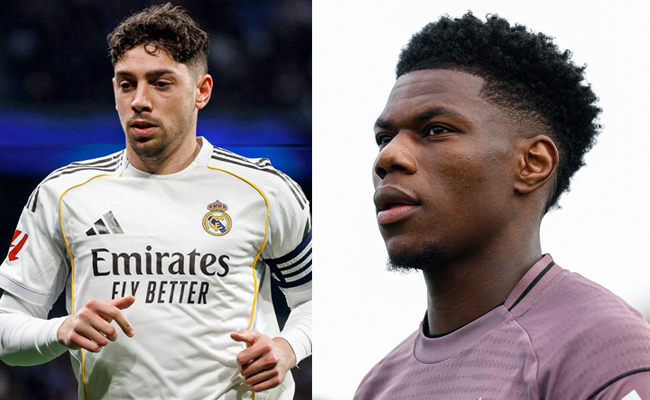
Barcelona (AP): Real Madrid slapped players Federico Valverde and Aurélien Tchouaméni with half-a-million-euro ($588,000) fines on Friday for their altercation during practice.
The massive fines came a day after the midfielders tussled when the team trained. Valverde said in a post on social media on Thursday that no punches were thrown. But Valverde knocked his head on a table and he suffered a small cut that required a brief hospital visit.
On social media, Valverde initially called it a “meaningless fight” with a teammate and said “everything has been blown out of proportion."
His employers, however, considered it a significant enough breach of team discipline to nail both Valverde and Tchouaméni with fines that bite even the bank account of a top soccer player. The half-a-million euro penalties reflect the reputational damage the club was enduring in a chaotic end to a disappointing season.
In a statement, the 15-time European champion said its disciplinary action was concluded after both players expressed to the club “their complete remorse for what happened and apologized to one another.”
Madrid added they also apologized to their teammates, the coaching staff and club supporters, as well as showing their willingness to accept whatever disciplinary action the club deemed “opportune.”
Tchouaméni was back training with Madrid on Friday, two days before they play at Barcelona in a clasico. Madrid has to win otherwise Barcelona will be crowned La Liga champion.
After being notified of the fine, he posted a public apology to the club and its fans on social media.
“What happened this week in training is unacceptable,” Tchouaméni wrote. "I say this while thinking about the example we are expected to set for young people, whether in football or at school.
“Above all, I am sorry for the image we projected of the club.”
Valverde was not at practice due to the head knock.
Both players are set to play in the World Cup next month, with Tchouaméni playing for France and Valverde for Uruguay.
Chaotic end to a poor season
===================
The run-in between the players, who for seasons have played side by side in Madrid's midfield, came after they argued this week in previous training sessions. But tempers boiled over on Thursday. Spanish media was rife with reports that the players previously disagreed over the club's decision to let coach Xabi Alonso go after just months on the job.
It was not the only altercation involving Madrid players during training this week. Álvaro Carreras confirmed he was in a “minor” incident with a teammate. Spanish media said he and fellow defender Antonio Rüdiger got into a scuffle.
Álvaro Arbeloa, the coach who was promoted from Madrid's reserve team when Alonso was fired in January, will face tough questions on what went wrong inside the changing room when he gives a press conference on Saturday ahead of the clasico at Camp Nou.
Madrid is facing a second consecutive campaign without a major trophy amid rumors in the Spanish media that club president Florentino Pérez is considering bringing back Jose Mourinho to straighten out his underperforming team.