Huawei unveils world's first commercial 7nm chipset Kirin 980
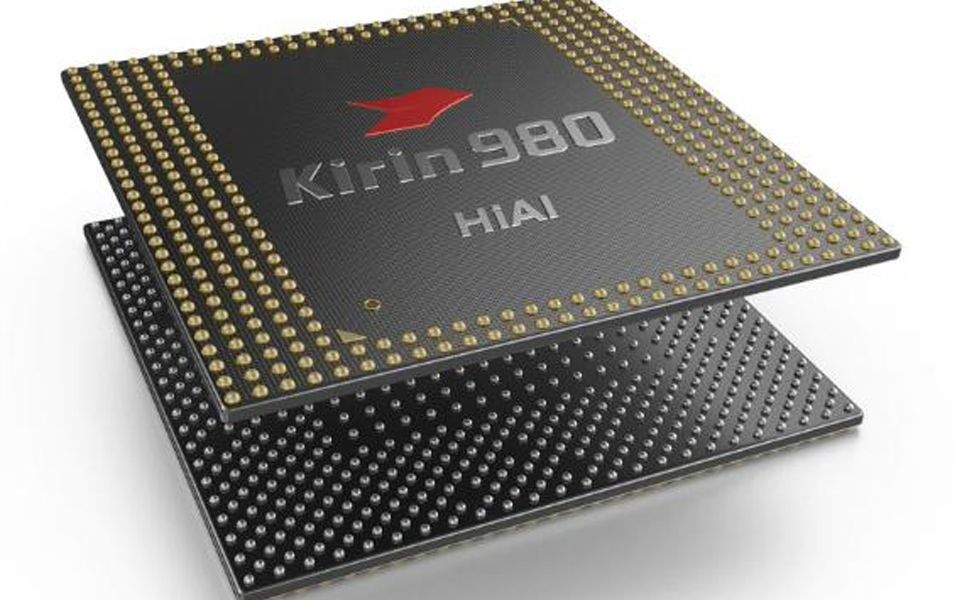
Berlin, Aug 31 : Chinese tech giant Huawei on Friday unveiled the world's first commercial 7nm (nanometre) chipset Kirin 980 which is believed to be the most powerful smartphone SoC (system-on-a-chip) equipped with Artificial Intelligence (AI) capabilities.
Huawei Consumer Business Group CEO Richard Yu announced the chipset, based on Taiwan Semiconductor Manufacturer Company's (TSMC) 7nm process, in his keynote address on the opening day of the IFA 2018 here.
Compared to the previous generation 10nm process, the 7nm process delivers 20 per cent improved SoC performance and 40 per cent more efficiency, said Huawei which surpassed Apple to become the second-largest global smartphone seller behind Samsung in the second quarter of this year.
"Last year, we showed the world the potential of on-device AI with the Kirin 970 and this year, we've designed an all-round powerhouse that not only features outstanding AI capabilities, but also brings cutting-edge raw performance to consumers," Yu told the gathering, adding that the new SoC is equipped with dual NPU (Neural Processing Unit).
"The Kirin 980 is the ultimate engine to power the next-generation productivity and entertainment applications," Yu added.
The TSMC 7nm process technology enables Kirin 980 to pack 6.9 billion transistors within a "1 square cm die size", up by 1.6 times from the previous generation.
The Kirin 980 is also the first SoC to embed Cortex-A76 cores, which are 75 per cent more powerful and 58 per cent more efficient compared to their previous generation.
In an octa-core configuration, the CPU in Kirin 980 is comprised of two high-performance Cortex-A76 cores; two high-efficiency Cortex-A76 cores; and two extreme efficiency Cortex-A55 cores, the company said.
Running at higher clock speeds compared to the prior generation, Kirin 980 enables quicker app launch times, better multi-tasking and a generally smoother user experience, it added.
As graphics in mobile games have become more and more sophisticated in recent years, Huawei has integrated the Mali-G76 GPU (graphics processing unit) into the Kirin 980 to deliver improved gaming experiences.
Debuting with the Kirin 980 chip, Mali-G76 offers 46 per cent greater graphics processing power at 178 per cent improved power efficiency over the previous generation, according to Huawei
Mali-G76 utilises AI to intelligently identify gaming workloads and adjust resource allocation for optimal gaming performance.
Kirin 980 supports common AI frameworks such as Caffee, Tensorflow and Tensorflow Lite, and provides a suite of tools that simplifies the difficulty of engineering on-device AI, allowing developers to easily tap into the leading processing power of the dual NPU.
Kirin 980 adopts a new pipeline dedicated to processing video captures, allowing the camera module to shoot videos with 33 percent shorter delay, Huawei informed.
Let the Truth be known. If you read VB and like VB, please be a VB Supporter and Help us deliver the Truth to one and all.
AIITA welcomes Karnataka’s ban on obscene songs in school events

Bhatkal: The Karnataka unit of the All India Ideal Teachers Association (AIITA) has welcomed the Karnataka government’s decision to strictly ban school children from dancing to obscene songs during educational and cultural programmes in government, aided, and private schools across the state.
AIITA Karnataka State President M. R. Manvi congratulated the government for taking what he termed an important step to preserve the sanctity of education.
“Such decisions to safeguard the dignity of school children and uphold the values of education are the need of the hour. This rule should not be limited to government schools alone but must be strictly implemented in all private educational institutions as well,” he said.
He further urged the government to address other concerns within school programmes.
“The government should not only prohibit obscene dances in the name of school anniversaries, but also ensure that plays and dialogues that incite religious hatred are avoided. Schools should be centres of harmony, not platforms for spreading hatred,” he added.
According to a recent circular issued by the Department of School Education and Literacy, obscene dances are adversely affecting the mental health and moral values of students.
In this regard, schools have been advised to use songs that promote nationalism, positive thinking, the greatness of Kannada culture, and value-based traditions instead of inappropriate content during programmes.
The circular also emphasises that students should be dressed in decent attire.
AIITA also backed the department’s warning that disciplinary action would be taken against head teachers if such guidelines are violated. The association has further demanded that district Deputy Directors of Public Instruction strictly monitor the implementation of these rules.