Samsung launches Galaxy A7 with triple rear camera

New Delhi, Sep 20 : Samsung Electronics on Thursday joined the smartphone camera war, launching the affordable Galaxy A7 that comes with a powerful rear triple camera system.
The Galaxy A7 -- to be priced below the Rs 30,000 price segment for India -- will be available in select European and Asian markets from this fall and other markets in the near future, the company said in a statement.
The triple camera system has a 24MP AF lens, an 8MP "Ultra Wide" lens (F2.4) and a 5MP "Depth" lens.
With the 24MP lens and Depth Lens, the Galaxy A7's "Live Focus" feature lets users control the depth of field by allowing them to adjust the "bokeh" effect for better photos.
"Samsung is committed to delivering meaningful innovation to all consumers across the Galaxy family, no matter who they are or where they are in the world" said DJ Koh, President and CEO of IT and Mobile Communications Division at Samsung Electronics.
The Galaxy A7's 8MP Ultra Wide Lens at the rear is placed at the same viewing angle as the human eye. The device ensures clear photos in both bright and low-light conditions.
"We're excited to introduce innovative new features to the A series with the Galaxy A7, a practical but powerful device that is built to help make your everyday both convenient and extraordinary," he added.
The device with 6.0-inch Super AMOLED display comes in three variants: 4GB RAM and 64GB internal storage with a MicroSD Slot (up to 512GB); 4GB RAM and 128GB internal memory and 6GB RAM and 128ROM.
It runs Android 8.0 OS and houses a 3,300mAh battery.
Samsung is set to launch another "Galaxy A" series smartphone with a four rear-camera system device called A9 in Malaysia on October 11 that will be a premium device (above the Rs 30,000 price segment).
The company is refreshing its mid-price segment smartphones with flagship premium features for the rest of the year.
Let the Truth be known. If you read VB and like VB, please be a VB Supporter and Help us deliver the Truth to one and all.
Allahabad HC orders probe into 'reinstatement' of teacher in UP's Barabanki
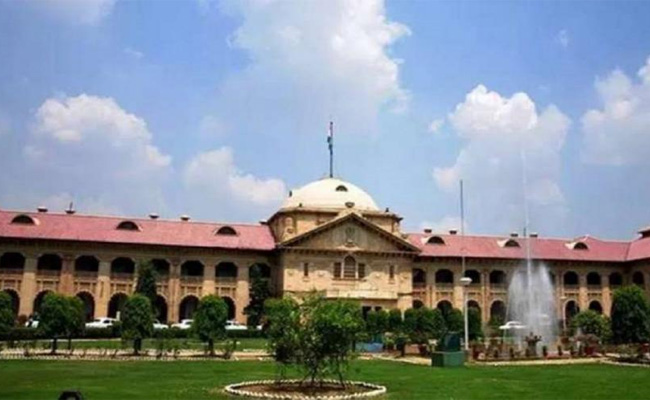
Lucknow (PTI): The Lucknow Bench of the Allahabad High Court on Friday ordered a probe by the special task force (STF) into alleged irregularities in the rejoining of a teacher at City Intermediate College in Barabanki, observing that the reinstatement appeared to be prima facie illegal.
The court also directed the recovery of the salary paid to the teacher during the disputed period.
A bench of Justice Rajeev Singh passed the order on a petition filed by the college management committee. The court expressed doubts over the roles of the District Inspector of Schools (DIOS), Barabanki, the college principal and the teacher concerned and hence, directed a detailed inquiry into the matter.
Taking note of alleged manipulation of records and misleading submissions, the court ordered the immediate transfer of the Barabanki DIOS to ensure a fair probe. It also directed the initiation of disciplinary proceedings against the then joint director of education of the Ayodhya division.
In its order, the court found that the teacher, Abhay Kumar, was initially appointed as an assistant teacher in 2018 but joined an Eklavya Model Residential School in Chhattisgarh as a lecturer in June 2024 without obtaining permission from the management. His subsequent request to retain the lien was rejected.
Despite this, he was allowed to rejoin the Barabanki College in September 2025 on the directions of the joint director of education and the DIOS, and was even paid the salary for October 2025. The court termed the rejoining "wholly illegal" and lacking any legal basis.
The bench also expressed concern over lapses in communication within the education department and directed the Uttar Pradesh chief secretary to ensure that official orders are communicated through email and WhatsApp as well, to prevent disputes.
The matter is next listed for hearing on May 28 when a compliance report is sought.