Samsung tops India smartphone premium segment in August
New Delhi, Oct 3 : Riding on a stellar performance by Note 9, Samsung registered a 60 per cent market share (by value) and 62.5 per cent market share (by volume) in the premium segment for the month of August in India, a new report said on Wednesday.
According to the German market research firm Gfk, Samsung not only led the Rs 40,000 and above segment but also registered a 55.5 per cent market share (by value) and 55 per cent (by volume) in the Rs 30,000 and above segment in August in the country.
"We are extremely happy with the way our numbers are growing. We are bullish on further consolidating our leadership position in the Indian smartphone market. Our aim is to grow at 20-25 per cent in India in the festive quarter (October-December)," Aditya Babbar, General Manager, Samsung India, told IANS.
Galaxy Note 9 was launched in India on August 24 and pre-booking for the phone started on August 10.
"When we launched Note 9, we introduced a lot of consumer-centric offers like Rs 6,000 cash back on Paytm and Rs 6,000 upgrade offer," said Babbar, adding that Note 9 is Samsung's most successful "N Series" smartphone.
In the first half of 2018, Samsung led the Rs 30,000 segment by 50 per cent (in value) and 51 per cent (in volume).
After ruling the premium segment, Samsung has set its eyes on dominating the mid-price segment in India which is currently flooded with Chinese variants.
The company last month launched Galaxy A7 with triple rear cameras for Rs 23,990 in blue, black and gold colours. On October 11, Samsung will launch their first four-rear camera system device A9 in the premium segment (above Rs 30,000).
Let the Truth be known. If you read VB and like VB, please be a VB Supporter and Help us deliver the Truth to one and all.
Allahabad HC orders probe into 'reinstatement' of teacher in UP's Barabanki
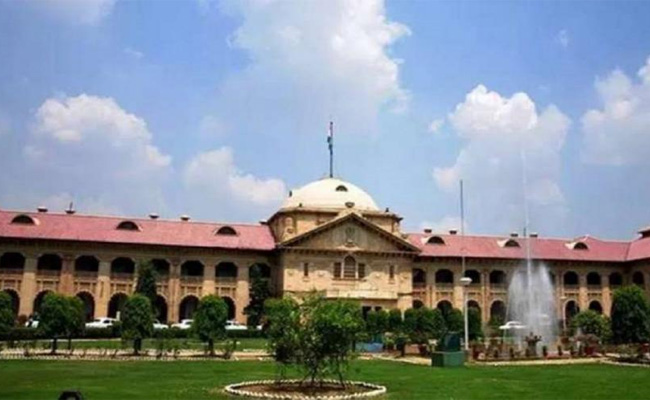
Lucknow (PTI): The Lucknow Bench of the Allahabad High Court on Friday ordered a probe by the special task force (STF) into alleged irregularities in the rejoining of a teacher at City Intermediate College in Barabanki, observing that the reinstatement appeared to be prima facie illegal.
The court also directed the recovery of the salary paid to the teacher during the disputed period.
A bench of Justice Rajeev Singh passed the order on a petition filed by the college management committee. The court expressed doubts over the roles of the District Inspector of Schools (DIOS), Barabanki, the college principal and the teacher concerned and hence, directed a detailed inquiry into the matter.
Taking note of alleged manipulation of records and misleading submissions, the court ordered the immediate transfer of the Barabanki DIOS to ensure a fair probe. It also directed the initiation of disciplinary proceedings against the then joint director of education of the Ayodhya division.
In its order, the court found that the teacher, Abhay Kumar, was initially appointed as an assistant teacher in 2018 but joined an Eklavya Model Residential School in Chhattisgarh as a lecturer in June 2024 without obtaining permission from the management. His subsequent request to retain the lien was rejected.
Despite this, he was allowed to rejoin the Barabanki College in September 2025 on the directions of the joint director of education and the DIOS, and was even paid the salary for October 2025. The court termed the rejoining "wholly illegal" and lacking any legal basis.
The bench also expressed concern over lapses in communication within the education department and directed the Uttar Pradesh chief secretary to ensure that official orders are communicated through email and WhatsApp as well, to prevent disputes.
The matter is next listed for hearing on May 28 when a compliance report is sought.