68 pilgrims from India die due to heat in Makkah, state reports
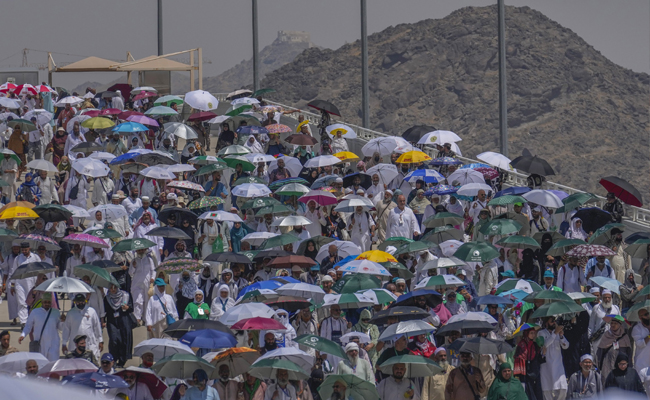
Riyadh: At least 550 people, including 68 pilgrims from India, have died due to scorching heat during the annual Hajj pilgrimage to Makkah, as reported by international media.
The news agencies, citing two Arab diplomats’ statements, reported on Tuesday that several pilgrims developed health issues and died on account of the heat. The Saudi Arabian authorities are yet to officially release the number of deaths of the pilgrims, although an official read out the names of the pilgrims who had died as well as their nationalities, including Indians, Egyptians and Algerians. Several countries too have reported cases of their pilgrims dying due to the heat in Makkah as well as Jordan and Tunisia. The media has reported that 323 Egyptians had died in the heat in Makkah.
The temperature in the shade at the Grand Mosque, Makkah, went up to 51.8 degrees Celsius on Monday, as reported by the Saudi Arabian media. Prior to the news of pilgrims’ deaths, the local authorities had reportedly not found cases of unnatural death among the Muslim pilgrims, in spite of the high temperature. Onlookers, however, are learned to have mentioned cases of the pilgrims fainting during the symbolic stoning of the devil.
The medical complex in Makkah was found to have been provided strict security and only people claiming to be relatives of the dead were permitted to enter the complex.
The Hajj pilgrimage commenced on Friday this year, with millions of Muslims visiting Makkah annually, and ended on Wednesday. More than 1.83 million Muslims visited Makkah this year, including 1.6 million pilgrims from 22 countries, as per the figures provided by the Saudi Hajj authorities.
Hussein Al-Qahtani, spokesperson for the Saudi National Meteorological Center (NMC) reportedly stated that, following the Saudi Gazette, next year's Hajj will be the last Hajj in the summer season. The Hajj season will enter a new phase of climate change during the year 2026 and summer Hajj would not be held until after 17 years, Qahtani is learned to have declared.
Let the Truth be known. If you read VB and like VB, please be a VB Supporter and Help us deliver the Truth to one and all.
Two incidents of betting over IPL cricket matches in Mysuru: Five men arrested
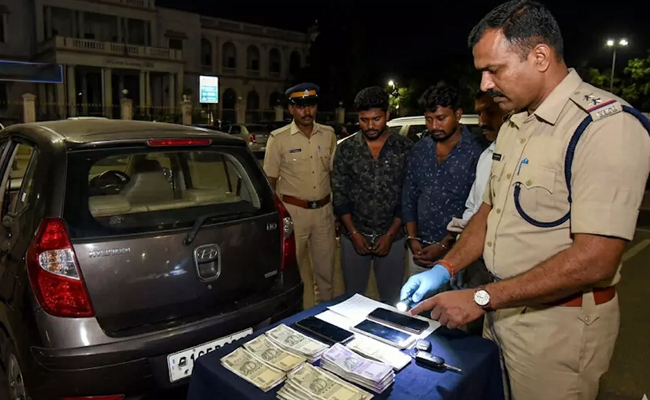
Mysuru: Police have arrested five people in two separate cases where betting for the IPL cricket matches was going on, and have confiscated various equipment used by the arrested men for the illegal activity.
In the first case, Hebbal Police arrested two men who were reportedly found betting during the IPL cricket matches, and have confiscated one laptop and three mobile phones from the arrested men.
The arrested men are identified as Pradeep (39) and Praful (21) of Naidu Nagar.
The police team is learned to have conducted the operation on the third floor of a hotel within the Hebbal Police Station limits on getting information of betting over the IPL matches going on. The gamblers allegedly were getting citizens to invest money online and betting illegally on IPL matches over mobile phones and laptops in order to illegally earning money from them.
Pradeep and Praful were taken into custody by the police who have filed a case and are investigating it.
The second incident occurred near the Town Hall on Thursday, May 7, when Devaraja Police arrested three men who were gambling.
The police have arrested Kumar (33) of Mandimohalla, PV Vinod (32) of Ilava and Likhith Kumar (27) of Paduvarahalli.
The three men were reportedly carrying out their criminal activity inside a car parked behind the Town Hall on Thursday, in order to earn money from the IPL tournament through a mobile phone. They were also found to have gotten citizens to invest money online and off-line in the cricket matches.
They were found and arrested by policemen who were on beat in the area near the Town Hall. In addition, one car, Rs 15,900 in cash and three mobile phones were seized from them.
A case has been registered by the Devaraja Police officers, who are investigating the case.