80% Indian Haj Pilgrims may miss out on Haj as Saudi cancels quota for Private Operators
New Delhi/Mumbai: In a major setback to over 52,000 Indians who had booked their Haj pilgrimage through private tour operators, the Ministry of Minority Affairs has issued a fresh circular stating that only 20% of the private quota that were booked already will be confirmed initially. This means that 80% of those who registered under Combined Haj Group Organisers (CHGOs) may not be able to perform Haj 2025.
The development comes after the Saudi Ministry of Haj and Umrah shut down access to the Nusuk portal—a mandatory online platform used to finalise contracts and services for pilgrims. Due to delays in payments and non-finalisation of service agreements, the Saudi authorities cancelled Mina Zones 1 and 2, which had been allotted to CHGOs. The remaining zones (3, 4 and 5) have also been held up, further worsening the situation.
According to the circular, the Ministry of Minority Affairs has held private tour operators responsible for the lapse. It stated that each CHGO was supposed to independently finalise service arrangements on the Nusuk portal, but most of them failed to upload contracts or process payments on time. The Saudi authorities, as a result, revoked access and froze all zones meant for private Indian pilgrims.
However, a private tour operator speaking to Vartha Bharati on condition of anonymity stated that the lapses were made from the government’s side, as starting last year, the Saudi authorities had made changes to the procedure and had asked the Private Operators to deposit their payments to through the government channel and the government had to deposit the amount to Saudi authorities. The operator who spoke to VB further added that majority of these operators had deposited their payments to the government while a few might have delayed it. He added prior to 2024, the private operators used to make payments directly from their accounts to Saudi authorities.
“The government, however, while waiting to the payment from all the operators, delayed the payment and that led to the closure of payment channels of Saudi authorities. Because of the negligence of the government, all the operators, including those who had processed their payments are now facing difficulty,” the operator alleged.
What is Mina and Why This Decision Matters?
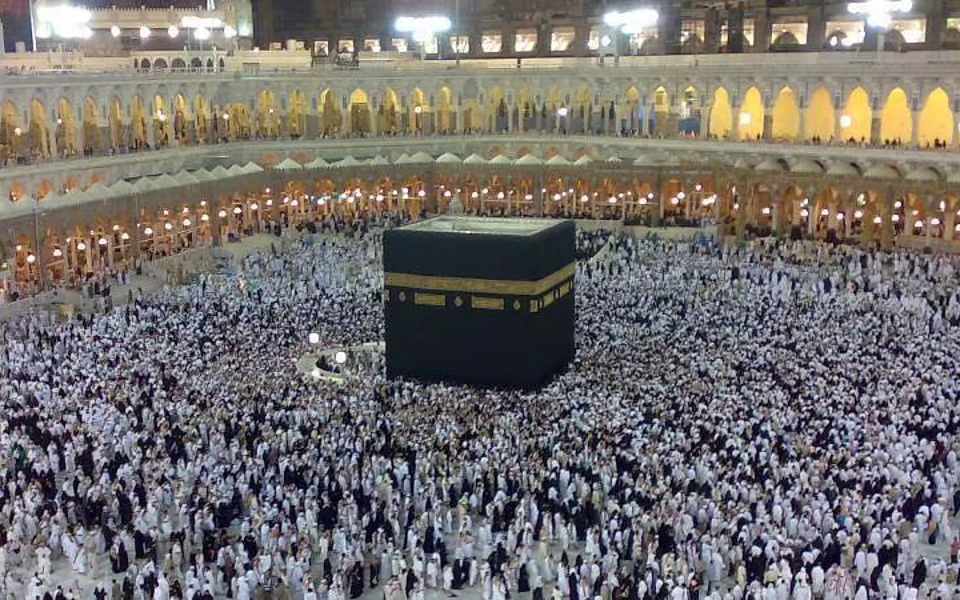
Mina, known as the "tent city", is a crucial location for the Haj pilgrimage. Pilgrims stay here for five days during the ritual. The vast tent city is divided into five zones based on distance from the Jamarat, the symbolic pillars representing the devil, where the ritual of stone-pelting is performed.
For better planning and crowd control, the Saudi authorities allocate these zones in advance. Indian CHGOs had booked tents and made arrangements based on these allocated zones. However, the sudden cancellation of Zones 1 and 2 — which were among the most sought-after zones due to their proximity to Jamarat — and the halt in payments for the remaining zones has uprooted all existing arrangements.
Saudi Side Agrees to Reopen Portal for Limited Time
Following this chaos, the Ministry of Minority Affairs has taken up the matter with the highest levels of the Saudi Ministry of Haj and Umrah. As a result, the Saudi side has agreed to temporarily reopen the Nusuk portal—but only for a short and unspecified window. This short reopening will allow CHGOs to upload service contracts and finalise accommodation, transport and logistics arrangements for their pilgrims.
However, the circular warns that since only a limited number of zones and camps are now available in Mina, the allocation will happen on a real-time and first-come-first-serve basis. There is no clarity yet on how many tents or zones will be available or which zones they will be in.
To manage this process, a help desk has been set up at the Consulate General of India (CGI) in Jeddah, Saudi Arabia. All CHGOs or their representatives have been asked to reach the help desk directly, along with details of their pilgrims and passport numbers, proof of accommodation in Mecca and Madinah, and evidence of payment.
There is no guarantee that all CHGOs will get equal or enough tents, and if camps are exhausted, many pilgrims may be left without basic accommodation in Mina—making it impossible to perform the mandatory rituals.
Allocation Policy Announced
As per the new guidelines:
• 20% of the booked quota will be initially allocated to each CHGO.
• The remaining camps will be evenly distributed among all CHGOs.
• If there are still any leftover camps, they will be given on a first-come-first-serve basis.
This process will be handled by the help desk at CGI Jeddah, and CHGOs have been asked to act urgently as the Saudi portal window may close anytime.
What Went Wrong?
According to senior officials, the Saudi side cancelled Zones 1 and 2 because of delays in payments by CHGOs. However, CHGOs have a different version. They claim that the IBAN (International Bank Account Number) linked to the Nusuk portal was not active, which blocked their ability to make payments directly.
Due to this issue, they were instructed to route payments via the Haj Committee of India, which would then send the money to the Consul General of India in Jeddah, who would finally credit it to the CHGOs' Nusuk wallets. However, several CHGOs said their payments were not reflected on the system even after following these steps.
“Many of us paid through the Haj Committee or directly to the IBAN-linked account. But the transactions didn’t show up. If the IBAN had been activated on time, this entire mess could have been avoided,” said a representative of one CHGO.
Some CHGOs also blamed the lack of coordination between the Indian Consul General in Jeddah, the Ministry of Minority Affairs, and Saudi authorities for the crisis.
Financial Loss and Fear of Cancellation
Private Haj operators are now staring at huge financial losses as well as a credibility crisis. They had already booked pilgrims, committed packages, arranged flights and even paid advance money for services. With zones cancelled and contracts not finalised, the entire operation is now under threat.
More importantly, thousands of Indian pilgrims—who had chosen to perform Haj through these private tour operators—are at risk of missing Haj 2025 altogether.
One tour operator told us, “We had promised our pilgrims premium locations near Jamarat. The government had managed to get us the best zones, but now all those plans have gone haywire. Our reputation and trust are at stake.”
Most pilgrims had chosen CHGOs due to personalised services and early access to prime zones in Mina. But now, they are staring at the possibility of missing Haj altogether—despite having made full payments.
“This is heartbreaking. We paid in full, got confirmations, and now we’re told we might not go,” said a pilgrim from Mumbai who booked through a CHGO. “We were mentally and spiritually prepared. What do we do now?”
As per the Haj calendar, pilgrims are expected to arrive in Saudi Arabia in the last week of May, with Haj rituals scheduled for the first week of June. The situation is therefore extremely time-sensitive.
High Stakes for Pilgrims and the Government
India has a total Haj quota of 1.75 lakh pilgrims for 2025. Out of this, about 52,507 pilgrims had opted to go through HGOs, while the rest are handled by the Haj Committee of India.
This issue has jeopardized the pilgrimage plans of over 30% of Indian Haj applicants this year. If the matter is not resolved immediately, it could result in the entire CHGO quota being forfeited, which would be a massive blow for the community, the private tour operators, and the Indian government's image.
This is not just about logistics — it's about the dream of a lifetime for thousands of devout Muslims who spend years saving for this religious journey.
Call for Better Coordination and Accountability
Several CHGOs have raised serious concerns over the lack of coordination between the Indian Consulate in Jeddah, the Ministry of Minority Affairs in Delhi, and the Saudi Ministry of Haj and Umrah. They say the system is too complex and unorganised, and such technical glitches should not be allowed to affect such a sensitive issue like Haj.
They are now demanding a simplified, transparent, and coordinated process for future Haj arrangements and clear communication from all authorities involved.
As the deadline approaches, thousands of Indian pilgrims and dozens of tour operators are watching anxiously, hoping for a miracle that will help them complete their journey to the holy land. The next few days will be crucial in determining whether they get to perform Haj or return home heartbroken.
The Ministry’s circular has sent shockwaves through the private Haj sector, making it clear that only a fraction of pilgrims—just one in five bookings that were confirmed earlier—will be allowed to proceed for Haj under CHGOs this year. Unless a last-minute breakthrough is achieved with Saudi authorities, thousands of Indian Muslims who had dreamed and prayed for Haj 2025 may be forced to stay back.
Let the Truth be known. If you read VB and like VB, please be a VB Supporter and Help us deliver the Truth to one and all.
Deputy CM Shivakumar announces property ownership drive in Bengaluru
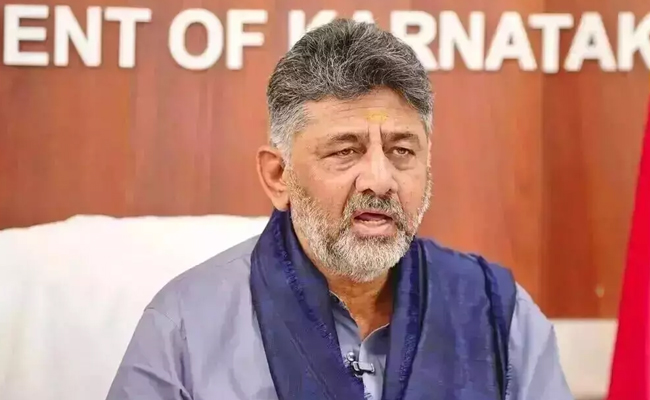
Bengaluru (PTI): Karnataka Deputy Chief Minister D K Shivakumar announced a major property ownership drive here aimed at correcting and regularising property records, saying the government had already rectified 23 lakh Khatas and enabled citizens to download their documents online.
Shivakumar, who also holds the Bengaluru Development portfolio, said the state government had begun converting B-Khatas into A-Khatas and would organise special Khata camps every Saturday across corporation limits from May 16 to help citizens secure their property documents.
A Khata is a legal document in Bengaluru certifying that a property complies with all local by-laws, regulations and has paid property taxes to the civic body.
“We have already corrected 23 lakh khatas and provided an opportunity for people to download them,” he said.
Shivakumar explained that the major campaign has been undertaken in Bengaluru to streamline property documentation.
The Deputy Chief Minister said between five and 10 centres would be set up in every corporation area as part of the “Khata Andolana” programme and urged citizens to participate in large numbers.
“I appeal to people to safeguard their property documents. We have created an opportunity for all citizens,” he said.
Calling it a "people-centric" initiative, Shivakumar said the government was working to ensure citizens received proper ownership documentation for their properties.
Shivakumar further claimed that the initiative had drawn national attention and said the Union government had recognised Karnataka with an award for the programme.
“Your Khata is your right. Obtain your Khata and protect yourself from fraud,” he said, while urging people to take advantage of the scheme.