Abu Dhabi includes Hindi as third official court language
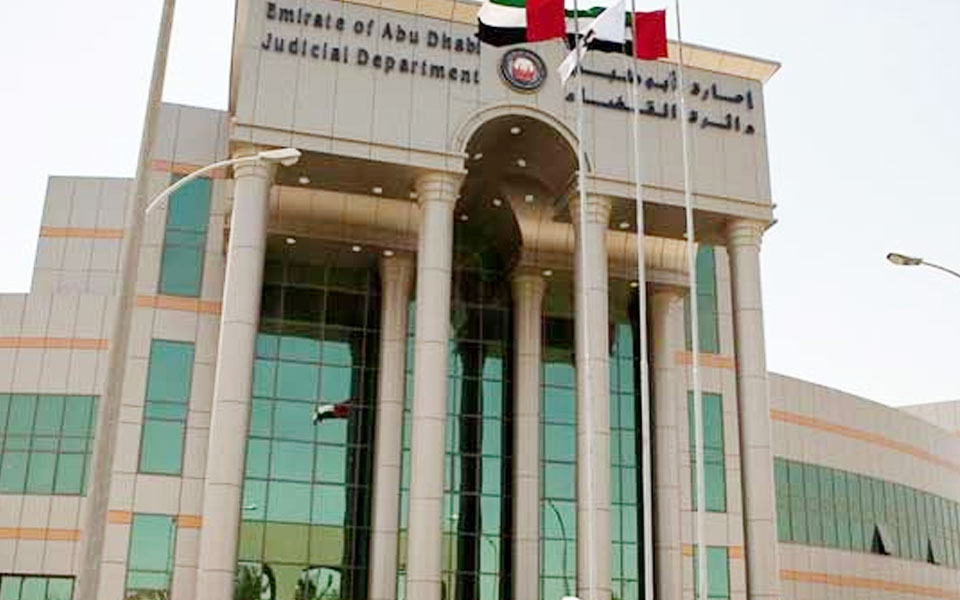
Dubai : In a landmark decision, Abu Dhabi has included Hindi as the third official language used in its courts, alongside Arabic and English, as part of a move designed to improve access to justice.
The Abu Dhabi Judicial Department on Saturday said it has extended the adoption of interactive forms of statement of claims filed before courts by including the Hindi language alongside Arabic and English in labour cases.
This is aimed at helping Hindi speakers to learn about litigation procedures, their rights and duties without a language barrier, in addition to facilitating registration procedures via unified forms available through the ADJD website, the judicial body said.
According to official figures, the UAE population is estimated to be around five million of which 2/3rd are immigrants from foreign countries.
The Indian community in the UAE, numbering 2.6 million, constitutes 30 per cent of the total population and is the largest expatriate community in the country.
Yousef Saeed Al Abri, undersecretary of the ADJD, said the adoption of multilingual interactive forms for claim sheets, grievances and requests, aims to promote judicial services in line with the plan Tomorrow 2021, and increase the transparency of litigation procedures.
"This is in addition to facilitating registration procedures to the public through simplified and easy forms and raising litigants' legal awareness via interactive forms of the statements of claims, to ensure access to the legal materials related to the subject of the dispute," Al Abri was quoted as saying by the Khaleej Times.
He indicated that the extension of the adoption of interactive forms in several languages comes under the directives of Sheikh Mansour bin Zayed Al Nahyan, Deputy Prime Minister and Minister of Presidential Affairs and ADJD Chairman.
Al Abri explained that the adoption of new languages comes as part of the bilingual litigation system, the first phase of which was launched in November 2018, through the adoption of procedures requiring the plaintiffs to translate the case documents in civil and commercial lawsuits into English, if the defendant is a foreigner.
"The foreign investor receives the case files translated, thus contributing to the provision of a global judicial service that meets the requirements of residents in the Emirate of Abu Dhabi," he added.
Let the Truth be known. If you read VB and like VB, please be a VB Supporter and Help us deliver the Truth to one and all.
Deputy CM Shivakumar announces property ownership drive in Bengaluru
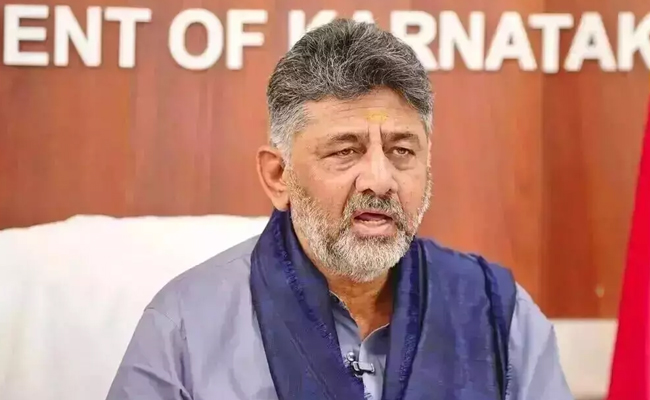
Bengaluru (PTI): Karnataka Deputy Chief Minister D K Shivakumar announced a major property ownership drive here aimed at correcting and regularising property records, saying the government had already rectified 23 lakh Khatas and enabled citizens to download their documents online.
Shivakumar, who also holds the Bengaluru Development portfolio, said the state government had begun converting B-Khatas into A-Khatas and would organise special Khata camps every Saturday across corporation limits from May 16 to help citizens secure their property documents.
A Khata is a legal document in Bengaluru certifying that a property complies with all local by-laws, regulations and has paid property taxes to the civic body.
“We have already corrected 23 lakh khatas and provided an opportunity for people to download them,” he said.
Shivakumar explained that the major campaign has been undertaken in Bengaluru to streamline property documentation.
The Deputy Chief Minister said between five and 10 centres would be set up in every corporation area as part of the “Khata Andolana” programme and urged citizens to participate in large numbers.
“I appeal to people to safeguard their property documents. We have created an opportunity for all citizens,” he said.
Calling it a "people-centric" initiative, Shivakumar said the government was working to ensure citizens received proper ownership documentation for their properties.
Shivakumar further claimed that the initiative had drawn national attention and said the Union government had recognised Karnataka with an award for the programme.
“Your Khata is your right. Obtain your Khata and protect yourself from fraud,” he said, while urging people to take advantage of the scheme.