Ajman: Gulf Medical University 'Global Alumni Summit 2020' recognizes global achievers

“Alumni are the reflection of our past, representation of our present and link to our future,” says Chancellor
17 cohorts, 16 convocations and 1800 alumni all over the world in various top positions
Ajman: Gulf Medical University (GMU), Ajman recognized the most outstanding accomplishments of its alumni at the ‘GMU Global Alumni Summit 2020’ organized by the GMU Students Affairs Department, held at Thumbay Medicity on 29th February 2020.
The event brought together GMU alumni from around the world, joined by the academic leadership of GMU, faculty, staff and students, in a celebration of the significant contributions of the alumni community to their communities and professions. The event recognized their most outstanding achievements. The awards in honor of the GMU Achievers were presented by Dr. Thumbay Moideen, Founder, President Board of Trustees, GMU who also officially released the Alumni E-newsletter and the Alumni Portal.
In his welcome address, Prof. Manda Venkatramana, Vice Chancellor – Academics mentioned that GMU’s alumni now has 1803 graduates, with 70% females and 30% male graduates, spread across the world, with UAE nationals constituting 10% of the alumni, GCC nationals 7%, other Arabs 14%, Asians 44%, Africans 16% and other nationals 10%.
Addressing the alumni, Prof. Hossam Hamdy, the Chancellor of GMU outlined the significant achievements of the University in recent times. The Chancellor also announced several benefits for the alumni, including scholarships for post-graduate programs, adjunct faculty positions at GMU, employment opportunities and full access to GMU’s e-library learning resources. “You are our best ambassadors offering invaluable advocacies across your personal and professional networks. You are the reflection of GMU’s past, representation of its present and the link to its future,” he said to the alumni.
Awards were presented to the following alumni achievers:
Healthcare: Government Service UAE - Dr. Noha Yaseen, Consultant Cardiologist, Al Qasimi Hospital, Sharjah; Dr. Asma Abdillahi Ali, CCAD, Semi-Government by Mubdhala, Abu Dhabi government; Ms. Ayesha Mohammed Abdulla Kajoor Al Nuaimi.
Healthcare: Research - Dr. Ahmad Ashraf Fakhri Ghazal.
Healthcare Delivery System: Entrepreneurship – Dr. Ismail Sayeed, Founder & CEO, ViOS; Ms. Jameela Arif Hussain; Dr. Sheetal Bambhani.
Healthcare Delivery System: Private Sector / Leadership - Dr. Shihad Khader, Chief Operating Officer, Thumbay Hospital Fujairah; Dr. Meera Obaid AlSalami.
Healthcare Delivery System: NGO / Humanitarian Service - Dr. Faraj Khalid Faraj Mohamed Almehairbi.
Arts: Dr. Marwa Abdulwahid Alalwani, Dentist, Munich Dental Clinic.
The awardees recounted their experiences as GMU students, and explained how those experiences continue to enrich their professional lives even today. They thanked Dr. Thumbay Moideen for creating such a wonderful university which shaped their lives and career achievements. Current GMU students entertained their alumni with various talent performances.

Let the Truth be known. If you read VB and like VB, please be a VB Supporter and Help us deliver the Truth to one and all.
CJI calls for 'unified judicial policy', use of technology to converge practices across courts
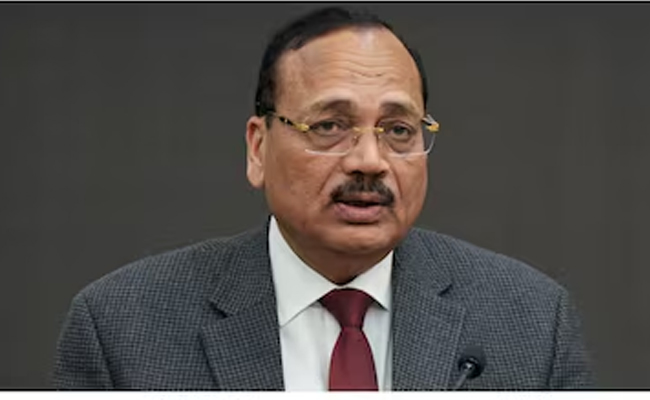
Jaisalmer (PTI): Pushing for a "unified judicial policy", Chief Justice of India Surya Kant on Saturday said technology can help align standards and practices across courts, creating a "seamless experience" for citizens, regardless of their location.
He said high courts -- due to the federal structure -- have had their own practices and technological capacities, and "regional barriers" can be broken down with technology to create a more unified judicial ecosystem.
Delivering the keynote address at the West Zone Regional Conference in Jaisalmer, Kant proposed the idea of a "national judicial ecosystem" and called for an overhaul of India's judicial system with the integration of technology.
"Today, as technology reduces geographical barriers and enables convergence, it invites us to think of justice not as regional systems operating in parallel, but as one national ecosystem with shared standards, seamless interfaces, and coordinated goals," he said.
He emphasised how the role of technology in the judiciary has evolved over time.
"Technology is no longer merely an administrative convenience. It has evolved into a constitutional instrument that strengthens equality before the law, expands access to justice, and enhances institutional efficiency," he said, highlighting how digital tools can bridge gaps in the judicial system.
Kant pointed out that technology enables the judiciary to overcome the limitations of physical distance and bureaucratic hurdles.
"It allows the judiciary to transcend physical barriers and bureaucratic rigidities to deliver outcomes that are timely, transparent and principled," he said, adding that the effective use of technology can modernise the delivery of justice and make it more accessible to citizens across the country.
The CJI called for implementing a "unified judicial policy".
He said India's judicial system has long been shaped by its federal structure, and different high courts have their own practices and technological capacities.
"India's vast diversity has led to different high courts evolving their own practices, administrative priorities and technological capacities. This variation, though natural in a federal democracy, has resulted in uneven experiences for litigants across the country," he said.
Kant underscored that predictability is crucial for building trust in the judicial system.
"A core expectation citizens place upon the courts is predictability," he said, adding that citizens should not only expect fair treatment but also consistency in how cases are handled across the country.
He pointed to the potential of technology in improving predictability.
"Technology enables us to track systemic delays and make problems visible rather than concealed," he said.
By identifying areas where delays occur, such as in bail matters or cases involving certain types of disputes, courts can take targeted action to address these issues and improve efficiency, Kant said.
The CJI explained that data-driven tools could identify the reasons behind delays or bottlenecks, allowing for faster, more focused solutions.
"Technology enables prioritisation by flagging sensitive case categories, monitoring pendency in real time and ensuring transparent listing protocols," he said.
Justice Surya Kant also discussed the importance of prioritising urgent cases where delays could result in significant harm. He highlighted his recent administrative order that ensures urgent cases, such as bail petitions or habeas corpus cases, are listed within two days of curing defects.
"Where delay causes deep harm, the system must respond with urgency," he stated, explaining that technology can help courts identify and expedite such cases.
Kant also raised the issue of the clarity of judicial decisions.
He noted that many litigants, despite winning cases, often struggle to understand the terms of their judgment due to complex legal language.
"Although the orders had gone in their favour, they remained unsure of what relief they had actually secured because the language was too technical, vague or evasive to understand," he said.
He advocated for more uniformity in how judgments are written.
"A unified judicial approach must therefore extend to how we communicate outcomes," he said.
The CJI also discussed the role of AI and digital tools in improving case management. He pointed to the potential of AI-based research assistants and digital case management systems to streamline judicial processes.
"Emerging technological tools are now capable of performing once-unthinkable functions. They can highlight missing precedent references, cluster similar legal questions, and simplify factual narration," he said, explaining how these technologies can help judges make more consistent decisions.
He also highlighted tools like the National Judicial Data Grid and e-courts, which are already helping to standardise processes like case filings and tracking.
Kant reiterated that the integration of technology into the judicial process is not just about improving efficiency but about upholding the integrity of the system and strengthening public trust.
"The measure of innovation is not the complexity of the software we deploy, but the simplicity with which a citizen understands the outcome of their case and believes that justice has been served," he said.