All party delegations brief UAE, Japan about Operation Sindoor, Pak-backed terror
Abu Dhabi/Tokyo (PTI): India on Thursday launched its global outreach against terrorism emanating from Pakistan as multi-party delegations reached Japan and United Arab Emirates to assert the right to self-defence following Operation Sindoor.
The delegation to Japan is led by JD(U) MP Sanjay Jha while Shiv Sena MP Shrikant Shinde is leading the delegation to the United Arab Emirates (UAE).
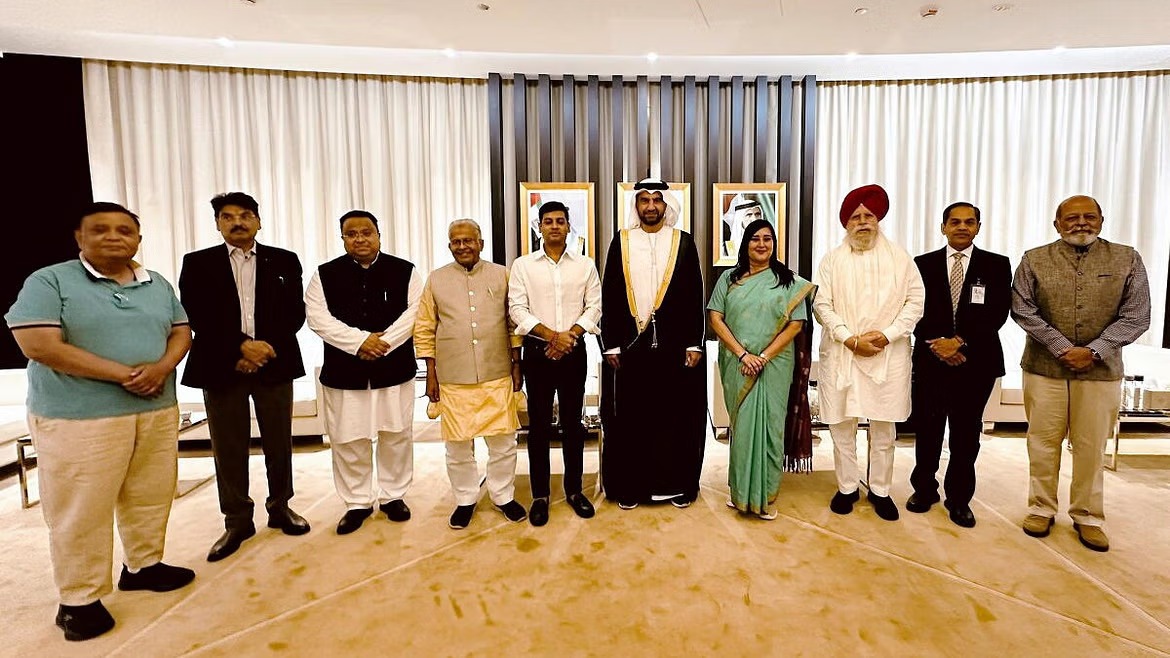
The delegation led by Shinde met Ahmed Mir Khoori, member of the UAE Federal National Council at Abu Dhabi and conveyed India’s strong resolve to counter state-sponsored terrorism originating from Pakistan soil.
“We proudly shared India's decisive success with 'Operation Sindoor' and highlighted the ongoing terrorism threats emanating from Pakistan,” Shinde said in a post in X.
Besides Shinde, the delegation comprises Manan Kumar Mishra (BJP), Sasmit Patra (BJD), E T Mohammed Basheer (IUML), S S Ahluwalia (BJP), Atul Garg (BJP), Bansuri Swaraj (BJP), former diplomat Sujan R Chinoy, and India’s ambassador to the UAE Sunjay Sudhir.
“We are taking a firm stand for global security and respect for international peace,” Shinde said.
The Indian embassy in the UAE said that the UAE was the first country to receive the multi-party delegation in the context of Operation Sindoor, this underlining the deep bonds of friendship between the two nations.
The delegation led by Jha to Japan includes BJP MPs Aparajita Sarangi, Brijlal, Pradhan Barua and Hemang Joshi, Congress leader and former external affairs minister Salman Khurshid, TMC MP Abhishek Banerjee, CPI(M)'s John Brittas, and former ambassador Mohan Kumar.
“All-Party Parliamentary Delegation led by Hon’ble MP Shri Sanjay Kumar Jha arrives in Tokyo, welcomed by Ambassador @AmbSibiGeorge. India's unwavering stand against cross-border terrorism, as seen in Op. Sindoor, will be highlighted in all engagements,” said a post on X by India's Embassy in Japan.
India is sending seven multi-party delegations to 33 global capitals to reach out to the international community on Pakistan's designs and India's response to terror.
Tensions between India and Pakistan escalated after the Pahalgam attack, which claimed 26 lives.
India carried out precision strikes on terror infrastructure in Pakistan and Pakistan-occupied Kashmir in the early hours of May 7, following which Pakistan attempted to attack Indian military bases on May 8, 9 and 10. The Indian side responded strongly to the Pakistani actions.
The on ground hostilities ended with an understanding on stopping the military actions following talks between the directors general of military operations of both sides on May 10.
Let the Truth be known. If you read VB and like VB, please be a VB Supporter and Help us deliver the Truth to one and all.
Deputy CM Shivakumar announces property ownership drive in Bengaluru
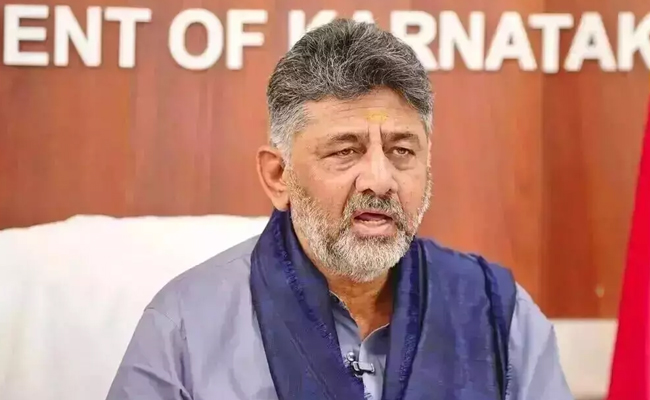
Bengaluru (PTI): Karnataka Deputy Chief Minister D K Shivakumar announced a major property ownership drive here aimed at correcting and regularising property records, saying the government had already rectified 23 lakh Khatas and enabled citizens to download their documents online.
Shivakumar, who also holds the Bengaluru Development portfolio, said the state government had begun converting B-Khatas into A-Khatas and would organise special Khata camps every Saturday across corporation limits from May 16 to help citizens secure their property documents.
A Khata is a legal document in Bengaluru certifying that a property complies with all local by-laws, regulations and has paid property taxes to the civic body.
“We have already corrected 23 lakh khatas and provided an opportunity for people to download them,” he said.
Shivakumar explained that the major campaign has been undertaken in Bengaluru to streamline property documentation.
The Deputy Chief Minister said between five and 10 centres would be set up in every corporation area as part of the “Khata Andolana” programme and urged citizens to participate in large numbers.
“I appeal to people to safeguard their property documents. We have created an opportunity for all citizens,” he said.
Calling it a "people-centric" initiative, Shivakumar said the government was working to ensure citizens received proper ownership documentation for their properties.
Shivakumar further claimed that the initiative had drawn national attention and said the Union government had recognised Karnataka with an award for the programme.
“Your Khata is your right. Obtain your Khata and protect yourself from fraud,” he said, while urging people to take advantage of the scheme.