Bahrain embassy sets up Saudi transit visa to repatriate Indians; Here’s what you need to know
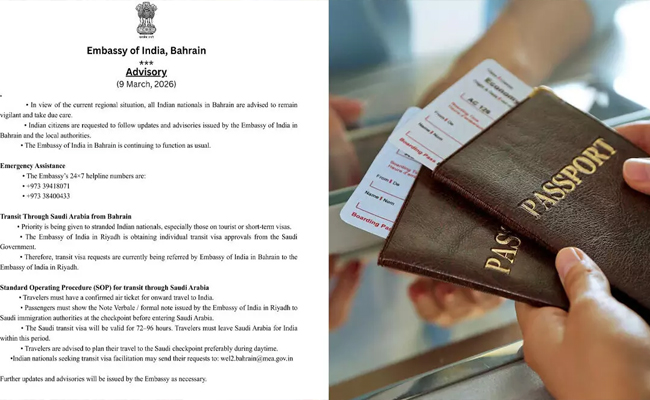
Manama: The Indian Embassy in Bahrain has announced that transit visa arrangements have been made through Saudi Arabia to repatriate Indian nationals stranded in Bahrain due to the ongoing tensions in the Middle East.
According to a statement issued by the embassy, priority will be given to individuals on tourist or short-term visas.
Vinod K Jacob, Indian Ambassador to Bahrain, stated that the Indian Embassy in Riyadh will obtain individual transit visas from the Saudi government upon request. The Indian Embassy in Bahrain will submit the necessary transit visa requests to the Indian Embassy in Riyadh.
The Standard Operating Procedure (SOP) for transit visas via Saudi Arabia has been issued, which are as follows
Passengers intending to travel to India must hold a confirmed air ticket.
It has been advised that a formal note issued by the Indian Embassy in Riyadh should be presented to Saudi immigration officials at the checkpoint before entering Saudi Arabia.
The Saudi transit visa is valid for 72 to 96 hours. Passengers are required to leave Saudi Arabia for India within this period. It has also been advised that travelers should reach the Saudi checkpoint during daylight hours.
The Embassy has urged all Indian nationals in Bahrain to remain vigilant and take necessary precautions in view of the current regional situation. They are requested to follow the instructions issued by local authorities and the Embassy.
The Indian Embassy in Bahrain continues to operate as usual, with a 24×7 helpline available for urgent assistance. For immediate support, citizens can contact +973 39418071 or +973 38400433.
Indians wishing to avail of the transit visa facility can submit their requests along with personal details, including visa and passport information, to the email address wel2.bahrain@mea.gov.in, the Embassy said.
Advisory 👇@MEAIndia @IndianDiplomacy @diaspora_india pic.twitter.com/JyjHYxmluP
— India in Bahrain (@IndiaInBahrain) March 9, 2026
Let the Truth be known. If you read VB and like VB, please be a VB Supporter and Help us deliver the Truth to one and all.
KKR defeat LSG via Super Over
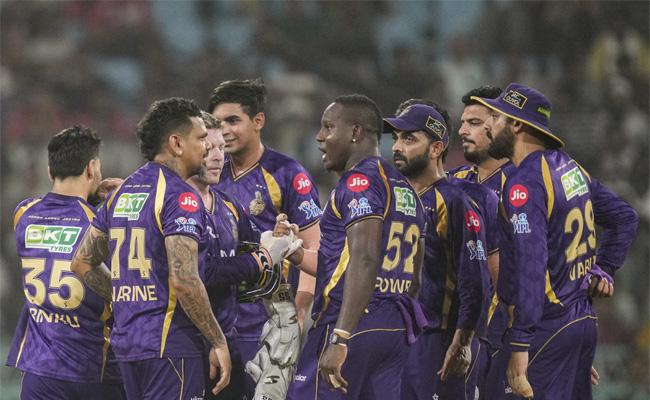
Lucknow (PTI): Kolkata Knight Riders edged Lucknow Super Giants via Super Overs in a battle between two bottom-placed teams in the IPL, here on Sunday.
Chasing a modest 156, LSG suffered a batting collapse and managed to tie the contest and take it to Super Over with No. 9 Mohammed Shami striking a last-ball six against a wayward Kartik Tyagi, who leaked 16 runs in the final over.
But Sunil Narine bowled a stunning Super Over conceding just one run and taking two wickets to give KKR an easy target.
Rinku Singh then finished the chase with a boundary off first ball from Prince Yadav.
Earlier the KKR were in deep trouble with 93/7 in 15 overs but Rinku smashed a sensational 83 not out from 51 balls including four sixes in a row in the final over to lift them to 155/7.
Cameron Green (34) was the only other batter to reach double-digit scores as KKR suffered a familiar batting meltdown with Mohsin taking his maiden fifer.
In reply, LSG continued their dismal show with the bat to succumb to their fifth loss in a row.
Brief Scores:
Kolkata Knight Riders 155/7; 20 overs (Rinku Singh 83 not out, Cameron Green 34; Mohsin Khan 5/23). Lucknow Super Giants 155/8; 20 overs (Rishabh Pant 42). KKR won via Super Over.