Bahrain's long-serving prime minister dies at age 84
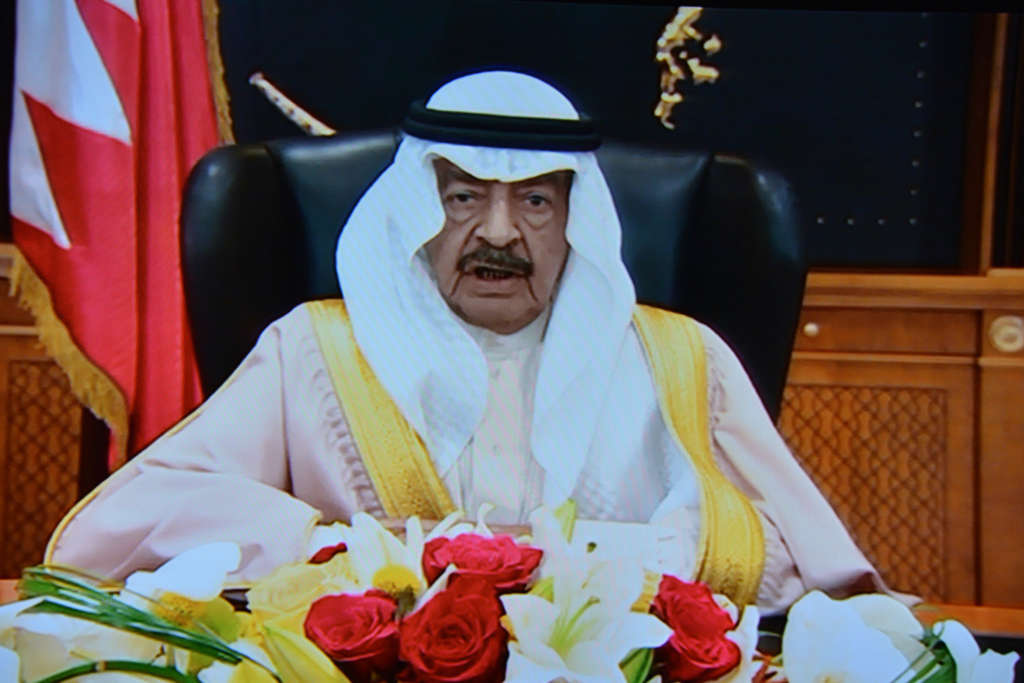
Dubai: Bahrain's Prince Khalifa bin Salman Al Khalifa, one of the world's longest-serving prime minister who led his island nation's government for decades and survived the 2011 Arab Spring protests that demanded his ouster over corruption allegations, died on Wednesday. He was 84.
Bahrain's state-run news agency announced his death, saying he had been receiving treatment at the Mayo Clinic, without elaborating.
Prince Khalifa's power and wealth could be seen everywhere in this small nation off the coast of Saudi Arabia home to the US Navy's 5th Fleet. His official portrait hung for decades on walls alongside the country's ruler. He had his own private island where he met foreign dignitaries, complete with a marina and a park that had peacocks and gazelle roam its grounds.
The prince represented an older style of Gulf leadership, one that granted patronage and favors for support of the Sunni Al Khalifa family. That style would be challenged in the 2011 protests by the island's Shiite majority and others, who demonstrated against him over long-running corruption allegations surrounding his rule.
Though less powerful and frailer in recent years, his machinations still drew attention in the kingdom as a new generation now jostles for power.
Khalifa bin Salman represented the old guard in more ways than just age and seniority, said Kristin Smith Diwan, a senior resident scholar at the Washington-based Arab Gulf States Institute. He represented an old social understanding rooted in royal privilege and expressed through personal patronage.
Let the Truth be known. If you read VB and like VB, please be a VB Supporter and Help us deliver the Truth to one and all.
Gujarat builds 870 MW battery power backup network to stabilise renewable energy grid
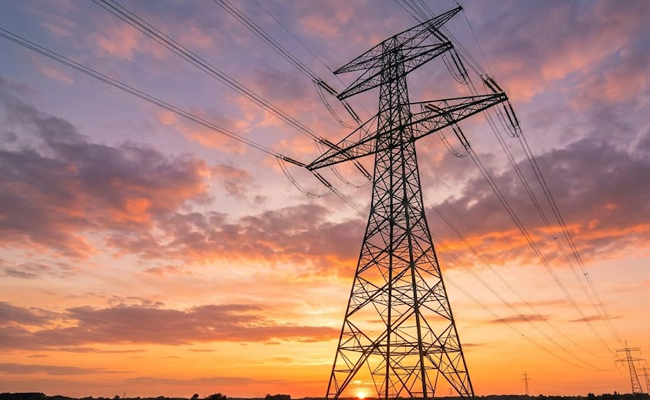
Gandhinagar (PTI): Gujarat has initiated battery storage systems at five locations in the state, with a total capacity of 870 MW, to maintain the stability of the renewable power grid, officials said on Saturday.
Battery Energy Storage Systems (BESS) are essential for storing electricity generated from solar and other renewable sources. They help manage additional load and maintain grid stability.
“Gujarat has initiated battery storage systems at five locations with a total capacity of 870 MW,” an official release stated.
The state has also registered 13 projects across Ahmedabad, Gandhinagar, Banaskantha, Patan and Kutch districts to set up additional battery storage systems, it said.
Modhera in Gujarat, India’s first solar village, has launched the country’s first BESS integrated with a solar power plant, it said.
"Under the leadership of Chief Minister Bhupendra Patel, the state has continued to advance in this direction and has strengthened its position among the leading states driving battery storage systems in India,” the release said.
Recently, a battery storage system was commissioned at Charal in the Sanand taluka of Ahmedabad, it said.
Four systems are operational at Modhera in Mehsana and Lakhpat in Kutch. The state government has also included advanced energy storage systems as a key component in the Gujarat Integrated Renewable Energy Policy, 2025, the release said.
Accordingly, standalone battery storage projects, works linked with new renewable energy installations, and those integrated with existing renewable energy systems are being approved, it said.
Once the Standard Operating Procedure is approved, registrations for battery storage will open for commercial and industrial users, it said, adding that the move will allow them to set up battery storage alongside their solar or wind projects.
The state government is developing battery storage systems across Gujarat, with companies being invited in through a competitive bidding process.
GETCO (Gujarat Energy Transmission Corporation) and power distribution companies strategically identify locations for battery storage systems based on grid capacity and operational requirements, the release said.
Power generation from solar and other renewable sources fluctuates throughout the day. Excess energy generated during peak hours can be stored and supplied later during periods of high demand, especially in the evening when solar output declines. Battery storage systems help reduce stress on the grid and improve grid stability, it added.